

Maddy summaryHR 5444, the Medical Laboratory Personnel Shortage Relief Act of 2025, addresses staffing gaps in medical labs by expanding federal support for laboratory professionals. It adds medical laboratory personnel - including phlebotomists, technicians, and genetic counselors - to the National Health Service Corps (NHSC) programs, creating targeted assignments in underserved areas and including them in loan repayment programs. The bill also establishes a new grant program providing $25 million for the first year to fund accredited education programs (associate’s to graduate degrees) that train lab personnel, prioritizing rural, disadvantaged, and culturally competent training. These changes directly affect medical laboratory science students, current lab workers, and educational institutions offering accredited lab training programs. The legislation aims to increase workforce capacity through recruitment, training, and targeted deployment.
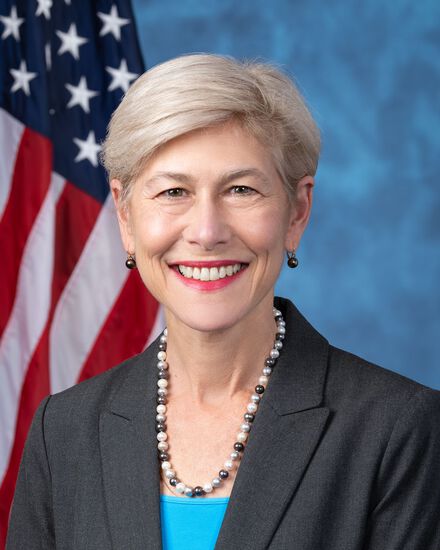
Rep. Deborah K. Ross
Sponsored bills
Maddy summaryThe Stop CMV Act of 2025 requires hospitals to screen all infants under 21 days old for congenital cytomegalovirus (CMV), a virus that can cause hearing loss and developmental delays. States must establish screening standards - including parent notification - within two years of the law’s enactment, or the federal Advisory Committee on Heritable Disorders will set them. The bill provides federal grants for states to implement screening, improve data systems, and fund research on CMV prevention, diagnostics, and treatments through the CDC and NIH.
Maddy summaryThis bill requires the 988 Suicide Prevention Lifeline to establish a dedicated "Press 3" option (via IVR) for LGBTQ+ youth seeking crisis support, directly affecting LGBTQ+ youth who face a four times higher suicide risk than peers. It mandates that at least 9% of funds allocated for the lifeline's services be reserved specifically for these specialized LGBTQ+ youth services. The bill amends existing law to formalize this dedicated resource, building on current services that handled over 1.5 million contacts from LGBTQ+ youth in 2025. This creates a concrete policy change for accessing tailored crisis support without altering other lifeline operations.
Maddy summaryThis bill ensures Medicare coverage for new medical devices designated as "breakthrough devices" during a 4-year period after FDA approval. To qualify, devices must meet specific criteria, including FDA priority review, clinical data from Medicare beneficiaries, and a safety review showing benefits outweigh risks. Medicare must finalize coverage decisions within 6 months of manufacturer applications and before the 4-year period ends. The law appropriates $10 million annually (2025-2030) for Medicare to administer this process.
Maddy summaryHRES 711 is a non-binding House resolution honoring victims of Hurricane Helene and expressing support for affected communities in western North Carolina, specifically North Carolina’s 11th Congressional District, one year after the hurricane struck on September 27, 2024. It formally recognizes the storm’s devastation - including loss of life, displaced families, and damaged infrastructure - while extending condolences to victims’ families and gratitude to first responders and recovery efforts. The resolution affirms the House’s commitment to supporting ongoing recovery and encourages federal agencies to collaborate with Congress on rebuilding. As a symbolic gesture with no new policy or funding, it focuses solely on commemoration and solidarity.
Maddy summaryThis bill permanently bans nitazenes and all structurally related synthetic opioids under federal law, creating a broad definition that covers numerous chemical variations designed to evade current restrictions. It directly affects anyone manufacturing, distributing, or possessing these substances without authorization, including illicit drug producers and users. The key mechanism is a class-wide Schedule I classification that includes specific structural features (like modified benzimidazole rings) and excludes new analogs from legal loopholes. This approach aims to prevent new nitazene variants from entering the illegal market and addresses their role in overdose deaths. Substances previously temporarily banned under similar rules will now be permanently prohibited as of the bill's enactment.
Maddy summaryHR 5399, the Equitable Arts Education Enhancement Act, provides competitive federal grants to Minority-Serving Institutions (MSIs) to expand access to arts education for Black, Indigenous, and people of color students. The bill directs grant funds toward specific activities, including financial aid for arts students, mentorship programs, career counseling, and preserving BIPOC art collections. MSIs must prioritize initiatives directly benefiting minority students, such as outreach programs, paid internships with arts organizations, and training for future arts educators. This legislation aims to address systemic underfunding and lack of diversity in arts education by supporting institutions uniquely positioned to serve diverse artists and students.
Maddy summaryThe FAMILY Act would establish a national paid family and medical leave insurance program that provides wage replacement benefits for workers needing time off for caregiving or medical reasons. It defines "qualified caregiving" to include caring for a family member with a serious health condition, personal medical needs, or recovery from violence (including domestic violence, sexual assault, or stalking). Benefits would be calculated based on earnings, with a minimum monthly benefit of $580 and maximum of $4,000, administered by a new Office of Paid Family and Medical Leave within the Social Security Administration. Eligible individuals would need to have worked for at least 8 quarters in the previous year and file an application with required documentation, while existing state paid leave programs would continue to operate alongside this federal program.
Equal COLA Act This bill applies a cost-of-living adjustment (COLA) for annuities paid under the Federal Employees Retirement System that is equal to the increase in inflation, regardless of the amount of the increase. Specifically, for any year in which the Consumer Price Index (CPI) has increased over the previous year, the COLA amount shall be increased by the change in the CPI from the previous year. Current law applies an adjustment equal to the change in CPI only if the change is 2% or less. If the change is between 2% and 3%, the adjustment is limited to 2%. If the change is more than 3%, the adjustment is limited to 1% less than the change.
Saving the Civil Service Act This bill generally prohibits changes to the classification of positions in the competitive service and excepted service unless certain conditions are met. (Competitive service positions are subject to competitive examination while excepted service positions are appointed under one of five schedules. Competitive service positions have notice and appeal requirements for adverse actions that are not applicable to most excepted positions, including those of a confidential, policy-determining, policy-making, or policy-advocating character under Schedule C.) On October 21, 2020, President Donald Trump issued an executive order that placed executive agency positions that are of a confidential, policy-determining, policy-making, or policy-advocating character, and that are not normally subject to change as a result of a presidential transition, under a new Schedule F in the excepted service. The order was subsequently revoked by President Joe Biden. The bill prohibits executive agency positions in the competitive service from being placed in the excepted service, unless such positions are placed in a schedule in the excepted service as in effect on September 30, 2020. The bill also prohibits positions in the excepted service from being placed in any schedule other than the aforementioned schedules. Additionally, agencies may not (1) transfer occupied positions from the competitive or excepted service into Schedule C without the consent of the Office of Personnel Management, or (2) transfer employees in the excepted service to another schedule or transfer employees in the competitive service to the excepted service without employee consent.