Reproductive Health Travel Fund Act of 2022 This bill authorizes the Department of Health and Human Services to award grants to pay for travel, childcare, and other expenses of an individual seeking access to abortion services. Eligible grant recipients must be nonprofit or community-based organizations that assist individuals seeking abortion services through programs that are unbiased and medically and factually accurate. The grants may not be used to pay for abortion procedures.
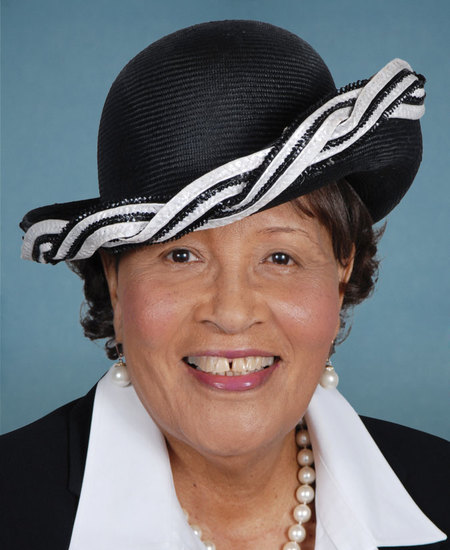
Rep. Alma S. Adams
Sponsored bills
This bill revises the management of whistleblower incentive awards for individuals providing original information relating to illegal monetary transactions, money laundering, or other financial crimes. Specifically, the bill establishes a minimum award for whistleblowers of not less than 10 percent of the collected monetary sanctions. Further, the bill establishes the Financial Integrity Fund for the payment of such awards. The fund is comprised of collected monetary sanctions and investments of the fund.
Southern Campaign of the Revolution National Heritage Corridor Act of 2021 This bill establishes the Southern Campaign of the Revolution National Heritage Corridor in North Carolina and South Carolina. The University of South Carolina, as the local coordinating entity for the corridor, shall submit a management plan for the corridor.
Ensuring Women's Right to Reproductive Freedom Act This bill prohibits anyone acting under state law from interfering with a person's ability to access out-of-state abortion services. ( Abortion services includes the use of any drugs that are approved to terminate pregnancies and any health care services related to an abortion, whether or not provided at the same time or on the same day.) Specifically, the bill prohibits any person acting under state law from preventing, restricting, impeding, or retaliating against health care providers who provide legal abortion services to out-of-state residents, any person or entity who helps health care providers to provide such services, any person who travels to another state to obtain such services, any person or entity who helps another person travel to another state to obtain such services, or the movement in interstate commerce of drugs that are approved to terminate pregnancies. The Department of Justice may enforce this bill through civil actions; the bill also establishes a private right of action for violations.
Maddy summaryHRES 1226 designates the week of July 19-25, 2022, as "Black Maternal Mental Health Awareness Week" to highlight mental health challenges during pregnancy or after childbirth that disproportionately affect Black women and families. The resolution emphasizes that Black women are 3 times more likely to die from maternal causes than White women and that 1 in 4 women of color face these conditions compared to 1 in 7 White women. It calls for raising public awareness, promoting culturally appropriate care, and encouraging government and community efforts during this designated week. As a non-binding resolution, it does not create new programs but supports existing goals to address racial disparities in maternal health outcomes.
This resolution expresses that the House of Representatives (1) demonstrates solidarity with and support for members of the community of Islam in the United States and throughout the world, (2) recognizes the importance of the Islamic faith, and (3) wishes Muslim Americans and Muslims around the world who observe Eid al-Adha a prosperous holiday.
Strengthening and Improving Public Service Loan Forgiveness Act of 2022 This bill makes changes to the Public Service Loan Forgiveness (PSLF) program, including by (1) lowering the number of monthly payments required for loan forgiveness from 120 to 60; and (2) making permanent certain limited waivers, such as a waiver that allowed certain late or partial loan payments to count as qualifying payments for PSLF loan forgiveness.
This resolution expresses support for the designation of Journeyman Lineworkers Recognition Day. (A journeyman lineworker is a person who builds and maintains electrical power systems.)
Health Equity and Accountability Act of 2022 This bill directs the Department of Health and Human Services (HHS) and others to undertake efforts to reduce health disparities. For example, the bill (1) requires more detailed reporting of demographic and health disparities data, including related to public health emergencies; (2) directs certain components of HHS to support health workforce diversity; and (3) increases access to culturally and linguistically appropriate health care. The bill also modifies eligibility and other requirements for Medicare, Medicaid, private health insurance, nutrition assistance, and other programs to reduce health disparities among vulnerable populations. The bill includes specific provisions with respect to noncitizens; maternal, infant, and child health; mental and behavioral health; specified conditions that disproportionately affect racial and ethnic minority groups, such as certain cancers, HIV/AIDS, kidney disease, and diabetes; investments in communities facing health and other inequities; and nondiscrimination in the provision of services in federally supported health programs. Additionally, the bill (1) revises health information technology programs to address health disparities, and (2) supports health impact assessments and other efforts pertaining to environmental justice and social determinants of health (i.e., nonmedical factors that influence health outcomes, such as income and educational attainment). The bill also requires various studies and reports on issues related to health care and health disparities, including a report by the Government Accountability Office on health workforce diversity.

One School, One Nurse Act of 2022 This bill directs the Department of Education (ED) to award competitive grants to eligible entities for recruiting, hiring, and retaining school nurses. An eligible entity is a local educational agency (LEA) or a partnership between a state educational agency and a consortium of LEAs in the state. Further, ED must specify in regulation the recommended nurse-to-student ratios for elementary and secondary schools.