

Maddy summaryThis bill, HR 2102 (Major Richard Star Act), allows veterans with combat-related disabilities to receive both full military retired pay and veterans' disability compensation simultaneously, without the previous offset that reduced retired pay. It directly affects veterans already eligible for both benefits due to combat-related injuries, removing the requirement that their retired pay be reduced by the disability compensation amount. The key provision amends Title 10 and Title 38 to eliminate the offset rule (sections 5304 and 5305 of Title 38) for these veterans. The change applies to payments starting after the bill’s enactment date, effective for all qualifying veterans. This is a policy change to increase financial support for affected veterans, not a new benefit.
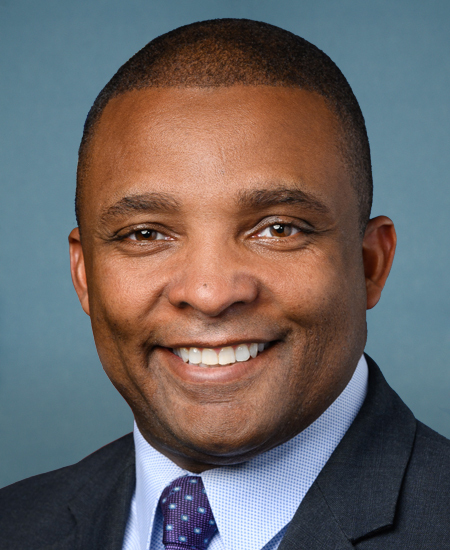
Rep. Donald G. Davis
Sponsored bills
Maddy summaryHR 2109, the Cybersecurity for Rural Water Systems Act, requires the federal rural water assistance program to provide cybersecurity help to small water systems serving under 10,000 people. It adds specific provisions for these systems to assess their cyber threat protections and implement security plans, procedures, and technologies. The bill increases annual funding for the program from $25 million to $32.5 million (2026-2030), with $7.5 million specifically allocated each year for this cybersecurity assistance. This directly affects rural water providers who lack resources to address growing cyber risks to their infrastructure.
Maddy summaryThis bill authorizes $250 million annually for four years to help schools on federally impacted lands (like tribal reservations and military bases) improve aging infrastructure. It creates two grant types: formula grants for schools with no bond capacity and competitive grants prioritizing schools with urgent safety issues like unsafe buildings or lack of clean water. Local schools must contribute 10-25% of project costs based on their "learning opportunity threshold," with the highest-priority schools receiving full federal funding. Funds can be used for construction, renovation, and repair to meet safety standards and improve learning environments. The bill addresses the significant infrastructure challenges reported by 65% of schools with facilities in poor condition.
Maddy summaryThe IDEA Full Funding Act (HR 2598) mandates specific annual federal funding levels for the Individuals with Disabilities Education Act (IDEA), directly affecting schools and students with disabilities nationwide. It requires the federal government to appropriate either a fixed dollar amount or a specified percentage (increasing annually from 4.5% to 40%) of a calculated total - based on the number of eligible students and average per-pupil costs - starting in fiscal year 2026 through 2035. The bill sets clear, escalating funding targets, with the higher of two calculated amounts (dollar figure or percentage) becoming available for obligation each fiscal year. This establishes a binding financial commitment to address long-standing underfunding of special education services under IDEA.
Maddy summaryThis bill creates a new Medicare payment model (the "Comprehensive Alternative Response for Emergencies Model") that allows Medicare Part B to cover ground ambulance services provided in response to emergency medical calls *without* a full transport. It directly affects Medicare beneficiaries receiving emergency ambulance care and ambulance providers, ensuring they are paid for services like dispatch and initial response that don't include transport. The model requires payment rates to align with standard transport payments, mandates compliance with state protocols, and operates for a 5-year test period. A report by the Comptroller General will evaluate the model's impact on beneficiary access, outcomes, and regional differences after 4 years.
Workplace Violence Prevention for Health Care and Social Service Workers Act This bill requires the Department of Labor to address workplace violence in health care, social service, and similar sectors. Specifically, Labor must issue an occupational safety and health standard that requires certain employers to take actions to protect workers and other personnel from workplace violence. The standard applies to employers in the health care sector, in the social service sector, and in sectors that conduct activities similar to those in the health care and social service sectors. Among other elements, the standard must require each employer to (1) develop a workplace violence prevention plan, (2) promptly investigate incidents of workplace violence, and (3) provide relevant training and education to employees. The bill requires certain hospitals and skilled nursing facilities to comply with this standard as a condition of Medicare participation.
Maddy summaryHR 2586, the Reentry Act of 2025, amends Medicaid rules to allow incarcerated individuals to receive Medicaid coverage during the 30 days immediately before their release from prison or jail. This directly affects people leaving correctional facilities, ensuring they can access health care as they transition back into communities. The bill requires a report within 18 months analyzing current health care standards in prisons, the number of people who would gain coverage, and current discharge practices to improve Medicaid enrollment for newly released individuals. The report will also assess how to better connect people with community health services and addiction treatment after release.
Maddy summaryThis bill clarifies when unintended radiation exposure in nuclear medicine must be reported to the Nuclear Regulatory Commission (NRC). It requires the NRC to revise regulations within 120 days to specify that a radiation dose from a leakage incident (extravasation) must be reported if it exceeds 0.5 Sv (50 rem) in either a 5 cubic centimeter tissue volume or 10 square centimeters of skin. The change directly affects hospitals and medical facilities using radioactive materials in procedures like diagnostic imaging or cancer treatment. The revised reporting threshold takes effect 18 months after the bill becomes law. This is a regulatory adjustment focused on defining specific exposure limits, not altering patient care or funding.
Maddy summaryThe Old Drugs, New Cures Act creates a new "priority research drug" designation for older medications being studied for new medical uses. It directly affects drug manufacturers who want to investigate existing drugs (approved over 10 years ago) for new indications addressing significant unmet medical needs, particularly for diseases affecting 33%+ of beneficiaries in federal health programs like Medicare, Medicaid, or VA care. Key provisions require the Secretary to designate such drugs within 60 days of a request, then exclude them from Medicaid and Medicare pricing rules that typically treat minor drug modifications as "line extensions." This exclusion allows manufacturers to potentially secure better reimbursement for these repurposed drugs under current program rules. The bill changes how these specific drugs are classified in federal healthcare programs, not the drugs' medical use.
Maddy summaryHR 2533, the EASE Act of 2025, requires Medicare and Medicaid to test a new telehealth model designed to improve specialty care access for rural and underserved Medicare/Medicaid beneficiaries. The bill mandates the Centers for Medicare & Medicaid Services (CMS) to partner with nonprofit provider networks - comprising at least 50 community health centers or rural clinics (half in rural areas) - to deliver specialty care via telehealth and coordinate with primary care providers. Eligible individuals must be enrolled in Medicare Part B, Medicaid, or CHIP and reside in designated rural or underserved areas. The model requires networks to collect and evaluate data on service delivery, with funding subject to existing program rules. This creates a structured pilot program focused on expanding remote specialty care access in underserved regions.