

Maddy summaryHR 4917, the Expanding the VOTE Act, amends the Voting Rights Act to increase language access for voters. It expands the definition of "voting materials" to include digital formats and requires states to provide language assistance (both written and oral) for minority language groups, with special provisions for American Indian and Alaska Native languages when written translations aren't feasible. The bill creates grants to help jurisdictions provide voting materials in languages that don't currently trigger Section 203 coverage, and mandates a study on lowering population thresholds for language assistance requirements. This directly affects states, local election jurisdictions, and voters who speak minority languages, including those in communities not currently covered by existing language access rules.
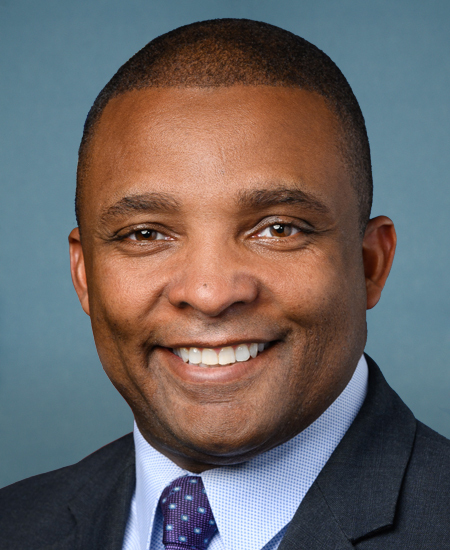
Rep. Donald G. Davis
Sponsored bills
Maddy summaryHR 4901, the WWII Nurses Congressional Gold Medal Act, authorizes a Congressional Gold Medal to honor Army and Navy nurses who served during World War II. The bill recognizes their critical service under combat conditions, including field hospital care in 6 continents, internment as prisoners of war, and contributions to saving lives (with fewer than 4% of treated soldiers dying from wounds). The medal, designed by the Treasury Secretary, will be displayed at specific military museums and historical sites like the National World War II Museum, as directed by Congress. Bronze duplicates may be sold to cover costs, with proceeds deposited into the U.S. Mint fund.
Maddy summaryHR 4863, the Fairness for Khobar Act of 2025, provides lump sum catch-up payments to victims of the 1983 Beirut barracks bombing and 1996 Khobar Towers bombing who were previously denied compensation due to confusing Department of Justice guidance. The bill requires the Special Master to authorize these payments to individuals who relied on outdated guidance stating they could not apply for lump sum payments if already eligible for regular distributions. Victims can prove their reliance through documentation, sworn statements, or other methods approved by the Special Master. Payments will be made from a reserve fund or the main compensation fund, ensuring those who were wrongly excluded can now receive full compensation they were entitled to under the law.
Maddy summaryThis bill removes a barrier preventing most low-income students from accessing SNAP benefits. It amends the Food and Nutrition Act to explicitly allow students enrolled at least half-time in recognized higher education programs to qualify for SNAP, reversing a prior exclusion. The key change eliminates the previous requirement that students meet specific exceptions (now deleted) and adds a new eligibility category under Section 3(m)(5). This directly affects low-income undergraduate and graduate students at colleges and training programs who were previously ineligible. The changes take effect January 2, 2026.
Maddy summaryThis bill updates the TRICARE Young Adult Program to make healthcare coverage more accessible for military dependents. It directly affects young adults (ages 21-26) who are children of active-duty service members, by eliminating a separate premium they previously paid for coverage. Key changes include removing an extra cost for young adults and adjusting eligibility rules to simplify enrollment. These amendments aim to reduce out-of-pocket expenses and streamline access to health insurance under the program.
Maddy summaryThe Biochar Research Network Act of 2025 establishes a national network of up to 20 research sites to study how biochar (a charcoal-like substance) improves soil health, carbon sequestration, and farming practices. It directs the Agriculture Department to fund research testing biochar across diverse soils, climates, and agricultural systems to assess its impact on crop yields, climate mitigation, and profitability for farmers, ranchers, foresters, and land managers. The bill authorizes $50 million annually from 2026 to 2030 for this research, focusing on practical, science-based guidance for sustainable biochar use. The network will generate data to help land managers adopt biochar for soil health, carbon reduction, and resilience to extreme weather.
Maddy summaryHCONRES 45 is a symbolic congressional resolution recognizing barriers to physical access in federally funded facilities for people with disabilities. It reaffirms support for the Americans with Disabilities Act (ADA) and the Architectural Barriers Act of 1968, and pledges to prioritize inclusive design in future infrastructure projects. The resolution does not create new legal requirements or funding but formally acknowledges ongoing accessibility challenges faced by over 70 million Americans with disabilities. It cites recent data on disability prevalence and existing federal guidelines for pedestrian access, emphasizing the need for equal access to public facilities.
Maddy summaryHJRES 111 is a joint resolution seeking congressional disapproval of a U.S. Fish and Wildlife Service rule on barred owl management. The rule, published in September 2024, outlined strategies to reduce barred owl populations to protect the endangered spotted owl. Under the Congressional Review Act, this resolution would nullify the rule, preventing its implementation. If enacted, the rule would have no legal effect, and the agency could not enforce the barred owl management strategy.
Maddy summaryThis resolution symbolically designates August 25-29, 2025, as "National Community Health Worker Awareness Week" for the third consecutive year. It recognizes community health workers (CHWs) as trusted frontline staff who connect underserved communities to health services, provide cultural mediation, and support health education - without creating new laws or funding. The resolution encourages federal, state, and local collaboration to highlight CHWs' roles but does not alter existing programs or require government action. It directly affects CHWs and their communities by raising public awareness of their contributions.
Maddy summaryHR 4717 creates a refundable tax credit of up to 10% of a home's purchase price (capped at $15,000) for first-time homebuyers purchasing a principal residence in the United States. The credit is subject to limitations based on modified adjusted gross income (phased out if income exceeds 150% of the area median income) and home price relative to area median purchase prices in the buyer's location. Homebuyers must meet age requirements (at least 18 years old), not have owned a home in the past three years, and purchase with a federally backed mortgage. The credit is subject to a four-year recapture period if the home is sold within that timeframe, and taxpayers may transfer the credit to their mortgage lender as a down payment or closing cost assistance.