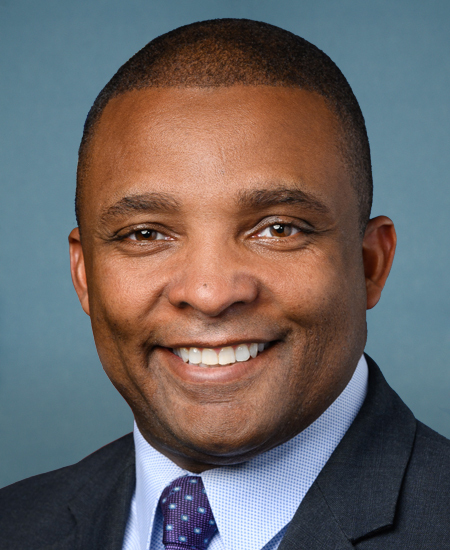
Photo of Donald G. Davis
D United States House · District 1 · North Carolina On the 2026 ballot

Rep. Donald G. Davis

Compare
Total votes
1,879
all sessions
Attendance
97%
53 missed
Near the chamber average
With party
82%
of cast votes
Among the lowest in the chamber
Bipartisan score
9%
crosses aisle rarely
Higher than 98% of chamber peers
Sponsored
1,618
bills & resolutions
Higher than 96% of chamber peers
Committees
7
assignments
1,618 bills and resolutions

Sponsored bills

Total
1,618
Primary
56
Co-sponsor
1,562
This page
1,618
matching current filters
Co-sponsor HR 5280
In committee · Indiana House · Co-sponsor
Protecting Farmers from Natural Disasters Act of 2025

Maddy summaryHR 5280, the *Protecting Farmers from Natural Disasters Act of 2025*, amends the Agricultural Credit Act of 1978 to allow the Secretary of Agriculture to permit restoration of farmland above pre-disaster conditions if it benefits the long-term health and protection of the watershed. This directly affects farmers seeking disaster recovery assistance and gives the Secretary discretion to approve such restoration projects. The key provision replaces an existing requirement with a new standard focused on watershed sustainability, rather than strictly returning land to its pre-disaster state. The bill makes a specific policy change to existing disaster recovery rules without creating new programs or funding.

In committee Jan 13, 2026 1 co-sponsor
Co-sponsor HR 5168
In committee · Indiana House · Co-sponsor
Puerto Rico Nutrition Assistance Fairness Act

Maddy summaryThis bill updates federal nutrition law to include Puerto Rico in the Supplemental Nutrition Assistance Program (SNAP), allowing it to transition from its current funding method to the same SNAP benefits available to U.S. states. Puerto Rico must submit a 180-day plan to the USDA detailing its transition to SNAP, with approval required within another 180 days. The transition period lasts up to 5 years from the bill's effective date, during which Puerto Rico would continue receiving block grants while preparing for full SNAP participation. This change directly affects Puerto Rico's 1.4 million residents who currently receive nutrition assistance under a separate funding structure.

In committee Jan 13, 2026 1 co-sponsor
Co-sponsor HR 5017
In committee · Indiana House · Co-sponsor
Greyhound Protection Act of 2025

Maddy summaryHR 5017, the Greyhound Protection Act of 2025, prohibits commercial greyhound racing, live lure training, open field coursing, and related betting across state lines. It bans activities like using live animals as bait, conducting interstate simulcast betting, and transporting greyhounds for racing purposes. The law amends the Animal Welfare Act to make these actions unlawful, with penalties including fines and up to 7 years in prison per violation. It applies to conduct occurring on or after October 1, 2027, and does not override existing state laws banning these activities. The bill directly affects greyhound racing industry participants and the animals involved in these practices.

In committee Jan 13, 2026 1 co-sponsor
Co-sponsor HR 4782
In committee · Indiana House · Co-sponsor
Local Farmers Feeding our Communities Act

Maddy summaryHR 4782, the Local Farmers Feeding our Communities Act, establishes a USDA program to connect local farmers with food distribution networks. It requires eligible entities (like state agriculture agencies) to use funds to purchase unprocessed or minimally processed local foods from covered producers - including at least 25% from small-size, mid-size, beginning, or veteran farmers - while providing technical assistance for food safety and supply chains. The bill allocates $200 million annually (2026-2030) from the Commodity Credit Corporation, mandating 10% for Tribal governments and 1% per state before distributing remaining funds. This directly supports regional food security by boosting economic opportunities for local farmers and improving access to fresh, nutritious food through established distribution channels.

In committee Jan 13, 2026 1 co-sponsor
Co-sponsor HR 909
Passed · Indiana House · Co-sponsor
Crime Victims Fund Stabilization Act of 2025

Maddy summaryHR 909, the Crime Victims Fund Stabilization Act of 2025, modifies how funds from the False Claims Act are deposited into the Crime Victims Fund. It specifies that from 2025 through 2029, certain False Claims Act proceeds (specifically those for qui tam plaintiff payments and government damage reimbursements) cannot be deposited into the fund. This change directly affects the composition of the Crime Victims Fund by excluding these specific revenue streams during the specified period. The bill does not create new benefits or alter victim services; it only adjusts fund allocation rules for existing False Claims Act revenues.

Passed Jan 13, 2026 1 co-sponsor
Co-sponsor HRES 984
In committee · Indiana House · Co-sponsor
Supporting the recognition of January 9, 2026, as "National Law Enforcement Appreciation Day".

Maddy summaryHRES 984 is a symbolic resolution designating January 9, 2026, as "National Law Enforcement Appreciation Day." It directly honors all federal, state, local, and tribal law enforcement officers across the United States for their service and sacrifices. The resolution expresses the House's support and gratitude, encourages public observance through ceremonies, and recognizes officers who have made the ultimate sacrifice. As a non-binding resolution, it does not create new laws or policies but serves as a formal expression of appreciation.

In committee Jan 9, 2026 1 co-sponsor
Co-sponsor HR 6976
In committee · Indiana House · Co-sponsor
Duty Status Reform Act

Maddy summary# Summary of Reserve Component Duty Consolidation Legislation This legislation is a comprehensive revision of military reserve component terminology and definitions throughout the U.S. Code. The primary purpose is to replace the outdated term "inactive duty training" with the more accurate and consistent term "reserve component duty" across all relevant sections of federal law. ## Key Provisions: 1. **Terminology Change**: - Replaces "inactive duty training" with "reserve component duty" in over 50 sections of the U.S. Code (primarily Titles 10, 32, and 37) - Also replaces related terms like "inactive duty" and "inactive duty for training" with "reserve component duty" 2. **Repeals**: - Repeals Chapter 13 of Title 10 - Repeals Sections 10147, 10148, 12406, 12503, 12552 of Title 10 - Repeals Sections 114, 115, and 328 of Title 32 3. **Definition Updates**: - Creates new definitions for "reserve component duty" and "remote assignment" in Title 10 - Defines "Active Guard and Reserve functions" more precisely - Clarifies that reserve component duty includes: * Training as described in sections 552(a) and 553(a) of Title 32 * Support activities authorized for members of the reserve components * Duty prescribed under sections 543 of Title 32 4. **Transition Provisions**: - Establishes a 10-year transition period from the date of enactment - Allows for earlier implementation if all relevant departments (Defense, Homeland Security, Veterans Affairs) certify readiness - Provides for early TRICARE eligibility for members ordered to active duty or full-time National Guard duty 5. **Conforming Amendments**: - Makes numerous technical changes to ensure consistent terminology throughout the U.S. Code - Updates references to training requirements, pay, and benefits to reflect the new terminology This legislation represents a significant effort to modernize military reserve component terminology, eliminate confusing and outdated references, and create a more consistent framework for understanding and managing reserve component service obligations and benefits.


In committee Jan 9, 2026 1 co-sponsor
Co-sponsor HR 6944
In committee · Indiana House · Co-sponsor
To require the Secretary of Agriculture to make cost-share grants for retrofitting agricultural tractors with rollover protection structures, and for other purposes.

Maddy summaryThis bill requires the Secretary of Agriculture to provide cost-share grants covering 70% of the costs for agricultural producers and eligible schools to retrofit tractors with approved rollover protection structures (safety frames that prevent injury if a tractor rolls over). It defines eligible schools as those offering agricultural training, including vocational programs, colleges, and secondary schools with ag-focused curricula. Grants cover purchasing, transporting, and installing these safety structures, with increased coverage for costs exceeding $500. Funding of $725,000 annually (2027-2031) is authorized, with $500,000 allocated directly to grants and the rest for administrative support.

In committee Jan 6, 2026 1 co-sponsor
Co-sponsor HR 6585
In committee · Indiana House · Co-sponsor
To direct the Secretary of Veterans Affairs to temporarily extend the period during which certain individuals may file claims for medical care under the CHAMPVA program of the Department of Veterans Affairs, and for other purposes.

Maddy summaryThis bill extends the deadline for certain veterans' dependents to file claims for medical care under the CHAMPVA program. It applies to individuals already eligible for CHAMPVA benefits who also have Medicare Part A hospital coverage. The key change ensures that after receiving official approval for retroactive care, these individuals have a full 365 days (not earlier than one year) to file their claim. The extension applies from the bill's enactment date until September 30, 2027.

In committee Jan 5, 2026 1 co-sponsor
Co-sponsor HR 6454
In committee · Indiana House · Co-sponsor
VA Zero Suicide Demonstration Project Act of 2025

Maddy summaryHR 6454 establishes a 5-year pilot program at five Department of Veterans Affairs (VA) medical centers to improve suicide care for veterans. The program requires VA staff at these sites to complete a 10-week training curriculum based on the Zero Suicide Institute's model, focusing on suicide screening, risk assessment, safety planning, and care transitions. It mandates annual reports to Congress tracking staff training completion, policy alignment with the Institute's standards, and comparisons of suicide-related outcomes (like screenings and hospitalizations) between pilot sites and other VA facilities. The pilot includes one site primarily serving rural veterans and requires site selection based on factors like regional suicide rates and staff capacity. The program will conclude after five years unless the VA extends it for up to two more years.

In committee Jan 5, 2026 1 co-sponsor
Showing 191 to 200 of 1,618 bills
Previous 1 … 19 20 21 … 162 Next