

Maddy summaryThis bill restores access to VA housing loans and educational benefits for Black World War II veterans who were denied GI Bill benefits due to racial discrimination, as well as for their living spouses, children, grandchildren, or direct descendants. It defines eligibility by requiring applicants to certify that their veteran relative was denied GI Bill benefits on racial grounds, with a five-year application window starting from the bill's enactment date. The VA must process these applications within 90 days and report to Congress on the number of recipients and total benefit value within one year. This addresses historical discrimination by creating new pathways to benefits for affected individuals and their families.
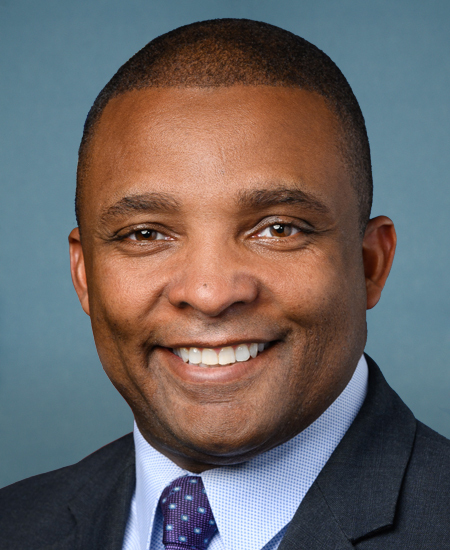
Rep. Donald G. Davis
Sponsored bills
Maddy summaryThis bill establishes new health and identification requirements for importing live dogs into the U.S. Importers must provide veterinary certification proving dogs are healthy, vaccinated, treated for parasites, and permanently identified (e.g., microchipped), with documentation from accredited veterinarians. Dogs imported for transfer (sale, adoption, etc.) must be at least 6 months old and accompanied by a Secretary-issued permit. Limited exceptions exist for research, veterinary treatment (with quarantine), and Hawaii-specific puppy imports under state regulations, with regulations to be finalized within 18 months. The bill repeals a prior section of the Animal Welfare Act and strengthens enforcement through penalties for noncompliance.
Maddy summaryThis resolution expresses congressional support for designating March 21, 2023, as "National Agriculture Day." It symbolically recognizes agriculture's economic importance as a major U.S. industry, celebrating its impact on jobs and communities. The bill does not create new laws, funding, or regulations - it is a non-binding statement of support. It directly affects the agricultural sector by highlighting its contributions through a formal congressional acknowledgment.
Honoring Our WWII Merchant Mariners Act of 2023 This bill requires the Department of Veterans Affairs to distribute a payment of $25,000 to U.S. merchant marines who engaged in qualified service during World War II. To be eligible, an individual must apply for the benefit and must not have received benefits under the Servicemen's Readjustment Act of 1944. The bill sets forth what constitutes qualified service, including time frame of service and licensing requirements.
Correcting Guam's History in the PACT Act This bill expands eligibility for a presumption of service-connection for specified diseases associated with exposure to certain herbicide agents. Under a presumption of service-connection, specific conditions diagnosed in certain veterans are presumed to have been caused by the circumstances of their military service. Health care benefits and disability compensation may then be awarded. Under the bill, service performed in Guam or its territorial waters between August 15, 1958, and July 31, 1980, provides a veteran who has a specified disease that is associated with exposure to certain herbicide agents with eligibility for a presumption of service-connection. (Under current law, the eligible time frame for service in Guam is between January 9, 1962, and July 31, 1980.)
Establishing Accreditation Grants for Law Enforcement Act of 2023 or the EAGLE Act of 2023 This bill requires the Department of Justice to provide grants to eligible local law enforcement agencies for activities related to obtaining qualified accreditation or recertification. Such accreditation or recertification shall be provided by a professional law enforcement organization involved in developing standards for law enforcement at the national, state, regional, or tribal level, such as the Commission on Accreditation for Law Enforcement Agencies.
Maddy summaryHR 1619 requires schools participating in the National School Lunch Program to provide fluid milk substitutes (like soy or almond milk) upon request by a student or their parent/guardian. The bill removes the previous requirement that substitutions needed a medical authority's written statement for most dietary needs, instead allowing requests based on the student's or parent's request alone. It aligns the definition of acceptable substitutes with current Dietary Guidelines for Americans. This change directly affects students with dietary restrictions, making it simpler for schools to accommodate their needs without extra medical documentation.
Maddy summaryHR 1503, the Prescription Information Modernization Act of 2023, allows drug manufacturers to provide FDA-approved prescribing information exclusively via digital means (like email or online portals) to doctors and pharmacists, while requiring them to still offer paper copies upon request at no extra cost. The bill directly affects drug manufacturers and distributors, who must implement this change by 2025 (or when regulations take effect), and ensures prescribers and dispensers can choose their preferred format. Key provisions include mandating manufacturers to honor paper requests promptly without additional fees and requiring the Health Secretary to issue implementing regulations within one year. The law aims to modernize how medical information is shared while maintaining accessibility for healthcare providers.
Maddy summaryThe Dental and Optometric Care Access Act of 2023 (DOC Access Act) requires health insurance plans covering dental and vision care to allow providers (like dentists and optometrists) to charge patients the usual and customary rate for uncovered services, with a specific rule limiting dental cleanings to the network fee even if it exceeds annual coverage limits. It prohibits plans from restricting providers' choices of laboratories or suppliers for patient care. This law directly affects dental and vision care providers and the health insurance plans that offer these services. The bill establishes concrete billing and coverage standards to improve access to necessary dental and vision care.
Maddy summaryHR 1591 amends the Elementary and Secondary Education Act to increase annual federal funding for impact aid programs that support school districts near military bases, national parks, and other federal properties. It authorizes specific, rising funding levels for four key areas: payments for federal land acquisitions ($90 million in 2024, growing to $150 million by 2029), basic payments to heavily impacted school districts ($1.6 billion in 2024, growing to $2.45 billion by 2029), payments for students with disabilities ($60 million in 2024, growing to $120 million by 2029), and school construction projects ($22.9 million in 2024, growing to $45.4 million by 2029). These appropriations represent incremental steps toward full federal funding for these aid programs, as specified in the bill's text. The bill directly affects school districts located near federal land, providing predictable annual funding increases for their operational and infrastructure needs.