

Maddy summaryThe Maverick Act authorizes the Secretary of the Navy to transfer three F-14D Tomcat aircraft to the U.S. Space and Rocket Center Commission in Huntsville, Alabama, without charge to the Commission. The Commission would be responsible for all costs associated with the aircraft, including conveyance, operation, and maintenance. The bill requires the aircraft to be demilitarized and used exclusively for public display, airshows, or commemorative events to preserve naval aviation heritage. The Commission must also comply with all Federal Aviation Administration regulations, and if these conditions are violated, ownership of the aircraft would revert to the United States.
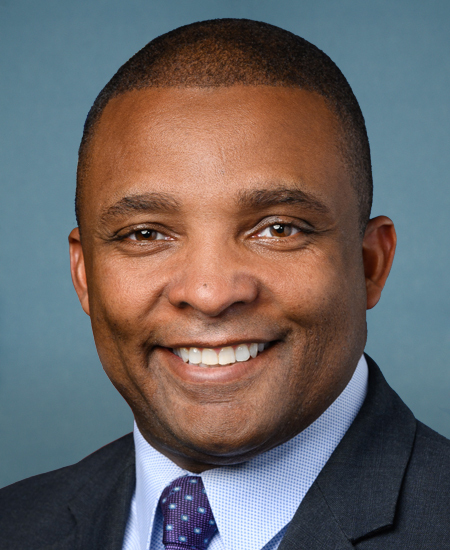
Rep. Donald G. Davis
Sponsored bills
Maddy summaryHR 8295, the Protecting Families from Fertility Fraud Act of 2026, creates a new federal crime for knowingly misrepresenting the nature or source of DNA used in assisted reproductive technology or assisted insemination. This directly affects fertility clinics, practitioners, and patients undergoing such procedures. Individuals found guilty could face up to 10 years in prison, a fine, or both. The bill defines federal jurisdiction for these offenses, primarily involving interstate commerce, and extends the statute of limitations to 10 years after identification through DNA testing. It also adds this new crime to the list of "racketeering activities" under federal law.
Maddy summaryHR 8261, the Chronic Care Management Improvement Act of 2026, aims to reduce healthcare costs for Medicare Part B beneficiaries receiving chronic care management services. Effective January 1, 2027, the bill mandates that Medicare will cover 100% of the cost for these specific services. This means individuals will no longer be responsible for any copayments or deductibles for chronic care management. The change directly affects Medicare Part B enrollees who utilize these services, making them more affordable by eliminating out-of-pocket costs.
Maddy summaryThis bill extends and expands a federal program that provides free legal and accounting services to help heirs resolve ownership disputes on farmland and forest land with multiple owners. It authorizes up to $60 million annually through 2031 to fund nonprofit organizations that offer these services at no cost to underserved heirs, who are defined as individuals with low income, members of socially disadvantaged groups, or veterans. The program requires participating organizations to report their progress annually and allows for limited expansion to heirs whose land is not currently farmland but could be used for agriculture, conservation, or forestry. Additionally, the bill updates the program's authorization period and requires annual reporting on the program's operations and outcomes to Congress.
Representing our Seniors at VA Act of 2025 This bill expands the membership of the Geriatrics and Gerontology Advisory Committee within the Veterans Health Administration by requiring the addition of one representative from the National Association of State Veterans Homes who holds a professional license in nursing home administration. Additionally, the committee must consult with the National Association of Veterans State Homes with respect to matters concerning the association.
Love Lives On Act of 2025 This bill extends entitlement for various benefit programs and services for surviving spouses of deceased members of the Armed Forces or veterans. The bill provides that the remarriage of a surviving spouse must not bar the furnishing of dependency and indemnity compensation or special pension benefits to such spouse. Additionally, the Department of Defense may not terminate the payment of an annuity for a surviving spouse under the Survivor Benefit Plan solely because the surviving spouse remarries. The bill also expands the definition of a dependent under TRICARE to include a remarried widow or widower whose subsequent marriage has ended due to death, divorce, or annulment.
Maddy summaryThe Military Financial Literacy Act of 2026 expands personalized financial and housing counseling services for members of the Armed Forces. It requires the Department of Defense to establish a one-on-one counseling program within one year that covers credit management, budgeting, anti-predatory lending, rental planning, VA home loans, and legal protections under the Servicemembers Civil Relief Act. The program must partner with HUD-approved, tax-exempt Veteran Service Organizations that have expertise in financial literacy and housing stability. The Secretary of Defense must submit a report to Congress within two years detailing the number of service members who received counseling, completion rates, and indicators of financial stress or housing instability among participants.
Maddy summaryThe Guidance Clarity Act requires federal agencies to include a clear statement on all guidance documents, explaining that the guidance does not have the force of law and is not binding on the public or the agency. This statement must be prominently displayed on the first page of the document and specify that it is intended only to clarify existing legal requirements. Agencies must begin using this statement 30 days after the Office of Management and Budget (OMB) issues implementing guidance, which OMB must provide within 90 days of the bill's enactment. The bill directly affects all federal agencies that issue guidance under specific legal authority, ensuring transparency about the non-binding nature of such communications.
Maddy summaryThis bill provides new grant and low-interest loan options (zero percent or 1 percent interest) for rural water, wastewater, and waste disposal systems. It directly assists eligible rural facilities facing public health/safety needs or financial hardship in disadvantaged or economically distressed areas. Key provisions allow the Secretary to forgive loan principal/interest, modify loan terms, or refinance existing loans - though new loans cannot be combined with these modifications for the same facility. Eligibility for hardship-based assistance requires the Secretary to establish affordability metrics based on water costs relative to median household income in each area. The bill amends existing rural water programs under the Consolidated Farm and Rural Development Act.
Maddy summaryThis bill amends the Food and Nutrition Act of 2008 to exempt veterans from work requirements when applying for SNAP (Supplemental Nutrition Assistance Program) benefits. It directly affects veterans who would otherwise face work requirements for SNAP eligibility. The key change adds "a veteran" as a specific exemption category in Section 6(o)(3), updating the existing list of exempt groups. This creates a clear, automatic exemption for veterans under current law, removing a barrier to accessing food assistance.