

Maddy summaryHR 6746, the Iron Deficiency Education and Awareness Act, creates a national public health campaign to increase screening and awareness of iron deficiency among women and children under two. The bill directs the Secretary of Health and Human Services to fund a $7 million annual campaign (2024-2028) using evidence-based media, culturally tailored resources, and partnerships with health providers and community organizations. It specifically targets high-risk groups including menstruating women, pregnant/breastfeeding individuals, women with gastrointestinal conditions, Black and Hispanic women, and parents of children under two. The campaign will disseminate information on symptoms, screening recommendations, and prevention strategies through social media, health facilities, schools, and community outreach.
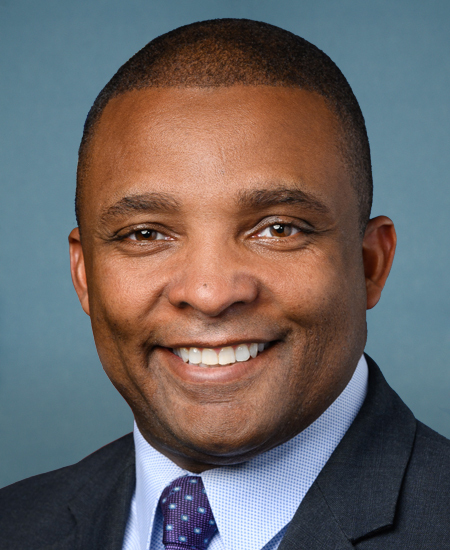
Rep. Donald G. Davis
Sponsored bills
Maddy summaryThe WARM Act of 2023 creates a national menopause public awareness program through the CDC, allocating $70 million for 2025-2028 to increase understanding of menopause symptoms, related health conditions, and treatment options through culturally competent educational materials. It provides $31.7 million for grants to train health care providers (including physicians, nurses, and pharmacists) in managing menopausal symptoms, with priority given to institutions serving rural, Tribal, and other underserved communities. The bill also establishes regional centers of excellence to develop evidence-based curricula for health professions schools to improve menopause education. The program requires reports to Congress by 2025 and 2026 on implementation and effectiveness.
Maddy summaryThe Care Across Generations Act (HR 6835) creates a competitive grant program to fund child care centers within long-term care facilities (like nursing homes and assisted living centers). It directly affects facilities that operate or partner with licensed child care centers to coordinate activities between children and seniors. Key provisions include 36-month grants for co-locating child care, mandatory evaluations of program effectiveness, and required reports to Congress on outcomes and best practices. The bill aims to test whether integrated facilities improve experiences for both children and seniors, with findings to inform future policy.
Maddy summaryThe Brittany Clardy Missing and Murdered Black Women and Girls Act establishes a new Office within the Department of Justice to address the disproportionate rates of missing and murdered Black women and girls in the U.S. The Office will collect and analyze data on these cases - including case resolution times, Amber Alert usage, and trafficking links - and create a public dashboard for tracking. It also creates a grant program for community organizations to provide culturally appropriate prevention services, law enforcement training, and victim support. The Office must submit biennial reports to Congress with findings and recommendations to improve the criminal justice response to these cases. This bill directly affects Black women and girls facing violence, law enforcement agencies, and community organizations providing related services.
Maddy summaryThis bill provides back pay and benefits to senior military officers (O-7 rank or higher) whose promotions were delayed due to a Senate confirmation suspension starting in February 2023. It requires the Secretary of Defense to retroactively pay these officers from a specific date - determined as the later of 30 days after their nomination was placed on the Senate Executive Calendar or the date they would have been appointed without the delay - and to establish their seniority from that same date. The law directly affects officers confirmed between December 5-31, 2023, who were impacted by the confirmation pause. It does not change future confirmation procedures but corrects past financial and career consequences for affected service members.
Maddy summaryThis bill reauthorizes and extends funding for programs addressing substance use disorders and opioid addiction, including residential treatment for pregnant and postpartum women, first responder training, and community recovery initiatives. It increases funding levels for these programs, adds xylazine to Schedule III of controlled substances, and requires a study on remote monitoring for patients prescribed opioids. The bill also expands Medicaid coverage requirements for medication-assisted treatment and mandates reporting on mental health condition data alongside substance use disorder data, directly affecting individuals with substance use disorders, healthcare providers, and state and tribal governments.
Maddy summaryHR 6720 creates a grant program administered by the U.S. Department of Agriculture to provide stabilization payments to farmworkers, meat processing workers, and grocery workers affected by natural or other disasters designated by the Secretary. Eligible entities - such as labor unions or membership organizations representing these worker groups - can apply for funding to support affected workers. The program is authorized to spend up to $50 million, with the Secretary required to report on its outcomes within four years. This bill directly affects workers in specific food industry sectors during disaster events, offering financial stabilization through grants administered by the Agricultural Marketing Service.
Maddy summaryHR 6664 requires the FDA to apply pediatric drug testing requirements to orphan drugs (treatments for rare diseases) that were previously exempt. It directs the FDA to issue guidance within 18 months on how these requirements will work, including when waivers for impractical studies are allowed, and increases annual funding for pediatric studies to $50 million. Drug sponsors developing orphan medications must now provide more pediatric safety data, while the FDA gains clearer enforcement rules for compliance. The bill also mandates an FDA report on compliance and a government study on the law's impact on rare disease drug development.
Maddy summaryHR 6573, the Protecting Military Servicemembers' Data Act of 2023, prohibits data brokers from selling, reselling, or sharing military servicemember lists to "covered nations" (as defined in federal law). It directly affects military members by preventing their personal information - contained in specialized lists created for compiling military service details - from being sold to specific foreign governments. The key mechanism bans the commercial transfer of these lists, with enforcement handled by the Federal Trade Commission and state attorneys general. The law takes effect within one year of enactment or when the FTC issues final rules, whichever comes first. This is a concrete policy change targeting data brokers' practices, not a procedural measure.
Maddy summaryThis bill authorizes the posthumous presentation of a Congressional Gold Medal to honor Marshall "Major" Taylor, a pioneering Black cyclist who broke racial barriers in the late 19th and early 20th centuries. It recognizes his athletic achievements, including world records and international championship wins, as well as his advocacy for equality in sports. The medal, designed by the Treasury Secretary, will be presented to Taylor's great-granddaughter, Karen Donovan, following the congressional authorization. As a commemorative act with no policy changes, it serves solely to honor Taylor's legacy as a trailblazer and role model.