

Maddy summaryThis bill requires the President's annual budget submission and congressional budget resolutions to include the ratio of public debt to estimated gross domestic product (GDP). It amends existing laws (31 U.S.C. §1105(a) and the Congressional Budget and Impoundment Control Act of 1974) to mandate this specific metric be reported. The change would standardize the inclusion of this ratio in federal budget documents, making it a formal part of fiscal planning. It is a procedural update to reporting requirements, not a policy change affecting debt levels or spending.
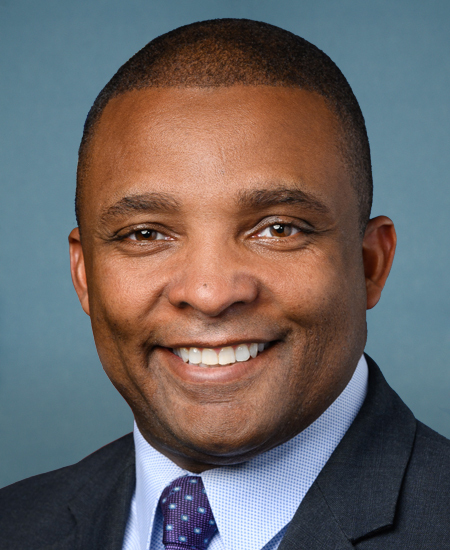
Rep. Donald G. Davis
Sponsored bills
Maddy summaryThis bill authorizes the relocation of a memorial honoring 9 Air Force crew members who died in a 1982 plane crash during a training mission over North Carolina's Cherokee and Nantahala National Forests. It directs the Secretary of Agriculture to move the memorial to a designated site at the Stratton Ridge rest area along the Cherohala Skyway in Graham County, subject to landowner consent and approval from North Carolina's transportation department and the Federal Highway Administration. The requesting party must cover all costs for relocation, installation, and maintenance, and no federal funds may be used for these purposes.
This bill establishes the Commission on National Agricultural Statistics Service (NASS) Modernization to study and provide recommendations on modernizing and streamlining data collection at NASS. (NASS conducts the Census of Agriculture and provides official statistics on agricultural production and other farm sector indicators.) The 11-member commission must include 4 specified members from the Department of Agriculture, 1 member from the Bureau of Labor Statistics, and 6 members appointed by the House and Senate Agriculture Committees. At the request of the commission chair, federal agencies must provide the commission information related to the study. The commission must submit a report to the President and Congress on the results of the study within three years of the bill's enactment. The report must include (1) an inventory of surveys conducted by NASS and their frequency; and (2) recommendations for administrative, regulatory, and legislative changes.
Maddy summaryThis bill creates a new program to provide financial assistance to struggling rural health care facilities, including hospitals, clinics, and long-term care centers in designated rural areas. Facilities may use existing USDA funds to refinance loans, upgrade telehealth technology or equipment, or cover operating costs and reserves - provided the aid preserves local health services and improves the facility's financial health. It includes a waiver allowing facilities in persistent poverty areas (20%+ poverty for 30+ years) or distressed communities to bypass standard eligibility requirements. The program applies to rural areas defined as having ≤50,000 residents not adjacent to larger cities.
Maddy summaryThe Protecting Farmers from Drought Act of 2023 modifies eligibility for prevented planting insurance in counties with severe, recurring drought. It replaces the current "1-in-4 rule" (requiring crop planting in at least one of the past four years) with a "1-in-5 rule" for counties experiencing extreme drought (D3 or worse) for three consecutive years, as documented by the U.S. Drought Monitor. This change eases qualification for insurance when drought prevents planting by extending the required planting history window from four to five years. The bill directly affects farmers in designated drought-affected counties by making insurance access more attainable during prolonged dry periods.
Maddy summaryHR 3925 establishes a federal grant program to fund youth fishing projects in coastal and Great Lakes areas. The bill authorizes $2 million annually (2024-2028) for grants to eligible entities like nonprofits, schools, state/local governments, or Tribal organizations to cover equipment, transportation, licenses, and educational components for youth. Priority is given to projects serving underserved communities, defined as groups facing systemic barriers due to race, disability, poverty, or inequality. Recipients must report annually on grant usage and participant numbers to Congress.
This resolution supports the designation of National Teach Ag Day and recognizes the important role of agricultural education and the National FFA Organization in developing the next generation of agricultural leaders.
Maddy summaryHR 6973 reauthorizes the COPS on the Beat grant program for fiscal years 2025-2034, with new provisions to support diverse hiring and better compensation for officers in rural communities. The bill provides increased federal funding (up to 90% in the first year, decreasing to 75% over four years) for jurisdictions with median household incomes below 80% of the national average. It sets a $75,000 cap on hiring costs per officer and limits compensation to 80% of the national median household income for qualifying rural areas. The legislation also requires the GAO to report on law enforcement workforce diversity and pay relative to local costs of living in 2029 and 2034. This bill directly affects local law enforcement agencies seeking federal grants to hire and retain officers, particularly in rural communities with lower median incomes.
Maddy summaryHR 6980, the DOCTORS Act, reallocates unused J-1 visa waivers that states did not use for foreign medical graduates. Each state must report unused waivers by September 30 annually, and the State Department will redistribute them equally over three years for the next fiscal year. Ten percent of redistributed waivers must support doctors working in facilities serving medically underserved communities. This directly affects state agencies managing visa waivers and impacts foreign doctors seeking permanent U.S. residency after training.
Youth Lead Act This bill reauthorizes through FY2028 National Institute of Food and Agriculture grants to the Girl Scouts of the USA, the Boy Scouts of America, the National 4–H Council, and the National FFA Organization. These grants must be used to establish pilot projects to expand the programs carried out by the organizations in rural areas and small towns.