

Maddy summaryThis bill requires the American Battle Monuments Commission (ABMC) to create a new program allowing the public to order flowers for gravesites in ABMC cemeteries within one year. It mandates a modern, secure online payment system that eliminates excessive fees or markups, accepts credit cards and electronic payments (with processing fees passed to users), and provides digital photos of decorated gravesites to requesters. The ABMC must report annually to Congress on program progress, including order data, marketing efforts, florist vetting, and cost-effectiveness. This directly affects families and the public seeking to honor fallen service members at overseas military cemeteries maintained by the ABMC.
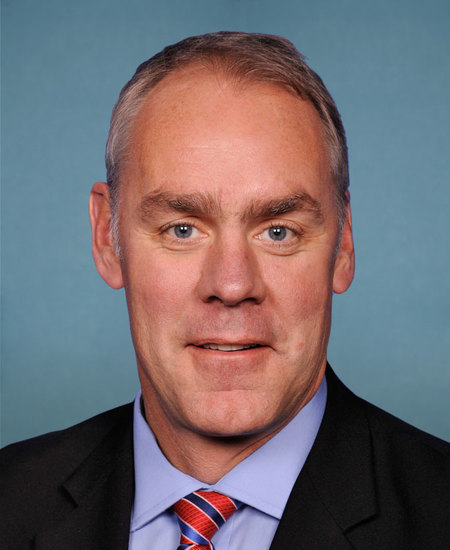
Rep. Ryan K. Zinke
Sponsored bills
Maddy summaryHJRES 188 is a joint resolution seeking to disapprove a Department of the Interior rule on conservation and landscape health. The rule, published in the Federal Register on May 9, 2024 (89 Fed. Reg. 40308), would have established new federal guidelines for managing public lands. This resolution invokes the congressional disapproval process under Title 5, U.S. Code, to prevent the rule from taking effect. If enacted, it would halt the rule's implementation, directly affecting how federal land conservation policies are applied.
Maddy summaryHJRES 164 is a congressional resolution seeking to block a rule issued by the Department of Commerce regarding firearms license requirements. It directly targets the rule published in the Federal Register (89 Fed. Reg. 34680), which would have revised licensing procedures for firearms dealers. If passed, the resolution would prevent this rule from taking effect by invoking the congressional disapproval process under federal law. The bill does not create new regulations but aims to halt an existing rule affecting gun license applicants and dealers.
Maddy summaryThis bill ends judicial deference to federal agency interpretations of laws (known as "Chevron deference"). It requires agencies to review past interpretations they relied on under Chevron, publish revised positions, and only issue rules when explicitly authorized by Congress. The bill also mandates that courts interpret statutes themselves rather than favoring agency views, requires criminal penalties to include proof of intent ("mens rea"), and ensures agency decisions are based only on publicly accessible materials. These changes directly affect federal agencies, courts, and individuals or businesses subject to agency regulations or penalties.
Maddy summaryHR 8889, the Sunset Chevron Act, requires the Government Accountability Office (GAO) to compile a list of federal court decisions that upheld agency rules using Chevron deference (a legal doctrine where courts defer to agency interpretations of laws) and are still in effect. The GAO must organize this list by agency and assign each rule a sunset date - 30 days after the list's publication for the most recent rule, with older rules getting sunsets 30 days apart. This bill directly affects federal agencies whose rules are included in the GAO's list, as it triggers automatic expiration of those rules after specific dates. The key mechanism is the mandatory GAO review and the automatic sunset schedule, not new regulations or policy changes. The bill does not alter Chevron deference itself but creates a timeline for existing rules upheld under it to expire.
Maddy summaryThis bill rescinds unspent funds from specific federal programs. It targets leftover money from pandemic relief (like the CARES Act and American Rescue Plan) and certain infrastructure initiatives (including education stabilization funds and transportation programs like the Congestion Mitigation Program). The rescission is limited to amounts already allocated for Israel, Ukraine, and Indo-Pacific security supplements under recent appropriations. Unspent funds must be returned to the Treasury, with no new spending created.
Maddy summaryThis bill amends the Northern Border Security Review Act to establish a new annual deadline for threat analysis (September 2, 2025, and each year after) and requires the Department of Homeland Security to update its northern border strategy within 90 days of each analysis. It mandates that the Secretary provide a classified briefing to congressional committees within 30 days of each threat analysis and develop performance measures for U.S. Customs and Border Protection's Air and Marine Operations to secure the northern border in air and maritime areas within six months of enactment. The bill directly affects the Department of Homeland Security and congressional committees by imposing specific reporting deadlines and review requirements. These changes focus on improving the frequency and structure of security assessments without altering existing border security operations.
Maddy summaryHR 537 authorizes a Congressional Gold Medal to honor 60 diplomats who saved Jewish lives during the Holocaust by issuing visas and passports against their governments' orders, risking expulsion and personal danger. The medal will be presented to the next of kin of these diplomats, alongside representatives from their home countries, and permanently displayed at the United States Holocaust Memorial Museum. The bill also permits the sale of bronze duplicates to cover production costs, with proceeds going to the U.S. Mint. This legislation recognizes the diplomats' humanitarian actions without creating new government programs or altering existing laws.
Maddy summaryHR 8693, the "No American Land for Communist China Act," prohibits U.S. citizens or entities from purchasing real estate adjacent to specific federal lands if owned by the Chinese government or businesses with 25%+ Chinese government ownership. It directly affects Chinese government entities and Chinese-owned businesses operating in the U.S., restricting their ability to buy land near protected federal areas. The bill requires the President to take necessary actions to block such purchases, covering lands managed by Interior, Defense, Agriculture (Forest Service), or designated Indian country. This is a policy restriction, not a funding measure, targeting land transactions near sensitive federal properties.
Maddy summaryHR 5403, the CBDC Anti-Surveillance State Act, prohibits the Federal Reserve from issuing or facilitating central bank digital currency (CBDC) directly or indirectly to individuals through financial institutions. It specifically bans Federal Reserve banks from offering digital products to individuals, maintaining individual accounts, or using CBDC for monetary policy implementation. The bill also clarifies that its restrictions do not apply to existing physical cash or private, permissionless digital payment systems. This bill directly affects the Federal Reserve's ability to develop or deploy a government-run digital dollar. The law aims to prevent the Federal Reserve from creating a digital currency that could enable transaction tracking or government oversight of personal financial activity.