

Maddy summaryThis symbolic resolution expresses congressional support for designating September 29, 2024, as "Veterans of Foreign Wars of the United States Day" to honor the organization's 125th anniversary. It requests the President issue a proclamation encouraging government agencies and the public to observe the day with ceremonies, though it creates no new laws or policy changes. The resolution recognizes the VFW's historical service to veterans but does not directly affect any individuals or programs.
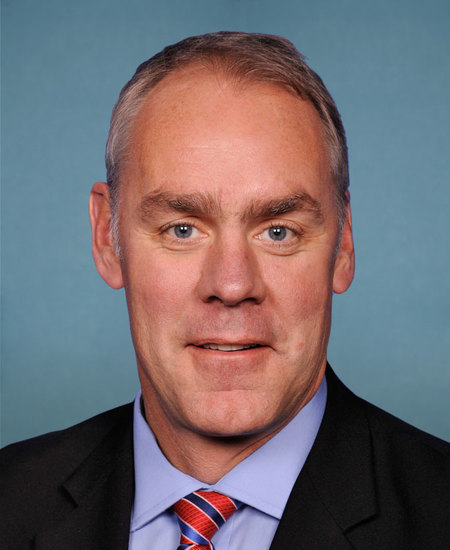
Rep. Ryan K. Zinke
Sponsored bills
Maddy summaryHR 8836 establishes a grant program to fund projects improving habitat connectivity for migratory wildlife, particularly big game species like deer, elk, and pronghorn. It provides up to 90% federal funding for initiatives such as wildlife crossings, fence modifications, habitat restoration, and coordination with landowners, administered through the National Fish and Wildlife Foundation. Eligible recipients include state and tribal wildlife agencies, landowners, nonprofits, and transportation departments. The bill explicitly prohibits requiring changes to agriculture, mining, or existing land uses and preserves state/Tribal authority over wildlife management.
Maddy summaryThis bill requires U.S. agencies to prevent taxpayer funds from indirectly supporting the Taliban in Afghanistan. It mandates that State Department and USAID implement new reporting rules for aid recipients, requiring them to track and report all payments (including taxes, fees, and duties) made to the Taliban or Afghan government entities. Agencies must create these rules within 180 days and amend existing contracts to ban such payments. Recipients must submit detailed reports to Congress every six months, identifying who paid, to whom, and the amount.
Maddy summaryHR 7430, the Public Lands in Public Hands Act, prohibits the U.S. Interior and Agriculture Secretaries from transferring title to certain federal lands to non-federal entities. It specifically blocks transfers of lands that are publicly accessible (via roads, trails, or waterways) or contiguous to such lands, protecting areas people currently use. Exceptions include small parcels under 300 acres, specific historical land transfers (like the Alaska Statehood Act), and land exchanges authorized by existing law. This bill directly affects federal land management decisions and prevents private ownership of lands near public access points.
Maddy summaryThe PROTECT Act of 2024 allows tribal courts to issue search warrants for electronic communications in Indian country using tribal procedures, rather than requiring state court warrants. It explicitly grants tribal courts jurisdiction over drug trafficking (including possession of controlled substances or paraphernalia) and firearms offenses (such as firearm use in crimes or by domestic violence offenders) within tribal lands. This directly affects tribal nations by expanding their authority to enforce laws on their territories for these specific crimes. The bill also extends a federal program for tribal prisoner reentry to include individuals convicted of drug trafficking or firearms offenses under tribal jurisdiction.
Maddy summaryThis resolution aims to block a rule issued by the National Highway Traffic Safety Administration (NHTSA) that sets new fuel efficiency standards for passenger cars, light trucks (starting in 2027), and heavy-duty pickup trucks/vans (starting in 2030). If passed, it would prevent this specific rule from taking effect by disapproving it under a congressional review process. The rule directly affects vehicle manufacturers by requiring them to meet these updated fuel economy targets for future model years. This is a procedural resolution, not a new law, focused solely on halting the implementation of the existing NHTSA rule.
Freedom from Unfair Gun Taxes Act of 2024 This bill prohibits states or localities from imposing a levy or collecting an excise tax on the sale of a firearm, ammunition, or any part or component thereof, by a manufacture or retailer.
Maddy summaryThis resolution establishes a House task force to investigate the July 13, 2024, attempted assassination of Donald J. Trump in Butler, Pennsylvania. The task force, composed of up to 11 members appointed by the Speaker (with minority leader input), will examine actions by federal, state, local, and private entities related to the incident and must issue a final report with recommendations by December 13, 2024. It has standing committee authority to hold hearings, issue subpoenas, and access relevant records, and will terminate 10 days after submitting its report. The task force directly affects the House of Representatives and the entities under investigation.
Maddy summaryThis bill amends the 2010 Crow Tribe Water Rights Settlement Act to clarify and update funding mechanisms for water infrastructure projects on the Crow Tribe's reservation in Montana. It creates two new accounts: the "MR&I Projects Account" for funding water infrastructure (like treatment plants and pipelines), land purchases with water rights, and environmental compliance, and the "Crow CIP Implementation Account" for administrative costs. The bill specifies that the Tribe retains full ownership and operation of infrastructure built with these funds, while removing federal responsibility for ongoing maintenance or replacement. It also adjusts cost-indexing rules for project funding and updates legal references to reflect these changes.
Maddy summaryHR 8791 establishes a settlement of water rights for the Fort Belknap Indian Community in Montana, ratifying a water rights compact between the tribe and the State of Montana. The bill allocates 20,000 acre-feet of water annually from Lake Elwell for the tribe's use on and off the reservation. It creates trust funds to support water management, infrastructure development, and tribal water rights administration, including $29 million for irrigation projects and $157 million for domestic water systems. The legislation also authorizes land exchanges to expand the reservation and includes provisions for improving the Fort Belknap Indian Irrigation Project.