

Maddy summaryThis bill ensures Coast Guard personnel continue receiving pay during budget gaps specific to the Coast Guard. It mandates automatic funding for military members (including reserves), qualified civilian employees, and contract workers providing essential support during a "Coast Guard-specific funding lapse" - defined as when no Coast Guard funding bill passes before the fiscal year begins. The bill covers pay and benefits for these groups until a formal funding bill is enacted or a budget resolution without Coast Guard funding passes. It does not apply to general government shutdowns but targets only Coast Guard operations. The measure aims to prevent disruptions to critical Coast Guard missions during funding delays.
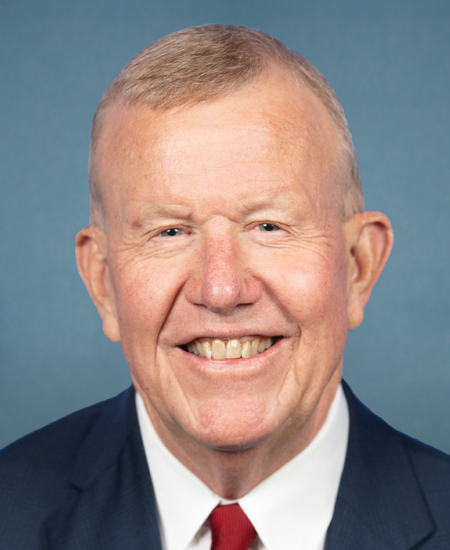
Rep. Mike Ezell
Sponsored bills
Maddy summaryThis bill ensures continued pay for certain U.S. Customs and Border Protection (CBP) and Immigration and Customs Enforcement (ICE) employees during a government funding gap in fiscal year 2024. It specifically covers CBP agents at Southwest, Northern, and maritime border ports of entry, and ICE officers conducting immigration enforcement (including detainment/removal) and investigations into criminal operations like drug trafficking and human smuggling. The funding, drawn from general Treasury funds, would apply if a budget lapse begins on October 1, 2023, and would last until January 1, 2024, or until new funding is enacted. It directly affects these frontline enforcement personnel by guaranteeing their salaries during a potential government shutdown.
Maddy summaryHJRES 11 proposes a constitutional amendment that would limit Members of Congress to serving a maximum of three terms in the House of Representatives and two terms in the Senate. If passed and ratified, it would prevent any member who has already served the maximum terms from running for re-election, including time spent filling vacancies (for more than one year in the House or three years in the Senate). This amendment directly affects current and future members of Congress by changing eligibility rules for re-election. The proposal is currently a joint resolution in the House, requiring ratification by three-fourths of state legislatures to become part of the Constitution.
Maddy summaryHRES 739 is a House resolution disapproving of a September 11, 2023, sanctions waiver that would release $6 billion in Iranian assets held in South Korea. The resolution states this waiver weakens U.S. policy by allowing Iran access to funds that could support its nuclear program and terrorism, and criticizes the delayed notification to Congress. It specifically condemns the administration's nonenforcement of mandatory sanctions and the release of assets without proper congressional review. The resolution demands the administration submit any Iran nuclear agreement to Congress before further sanctions relief. This is a procedural disapproval, not a law altering sanctions.
Maddy summaryThis bill would criminalize the prescription, dispensing, distribution, or sale of chemical abortion drugs (mifepristone and misoprostol) for abortion purposes under federal law, with penalties up to 25 years in prison. It directly affects healthcare providers, pharmacists, and patients who use these drugs for abortion. Key exceptions include contraceptive use before pregnancy confirmation, treatment of miscarriage, and life-threatening pregnancy conditions certified by a physician. The bill defines "abortion" as intentionally ending a pregnancy with intent other than live birth or treating specific medical conditions, and explicitly prohibits prosecuting women who receive chemical abortions.
Maddy summaryHR 5641, the Pay Our Troops Act, ensures military personnel and their support staff continue receiving pay during fiscal year 2024 if Congress fails to pass regular budget appropriations. It appropriates existing Treasury funds to cover pay and allowances for active-duty troops, reserve components, and civilian employees or contractors supporting military operations. The bill automatically terminates on January 1, 2025, or earlier if Congress enacts a regular budget or continuing resolution. This provision directly affects service members, Department of Defense staff, and Coast Guard personnel (when not under the Navy) during budget implementation gaps.
Maddy summaryHR 5561, the Protecting the Right to Keep and Bear Arms Act of 2023, prevents federal agencies from using emergency declarations to implement gun control measures. It specifically prohibits the President from declaring a national emergency under the National Emergencies Act or the Robert T. Stafford Act for gun control purposes, and stops the Health and Human Services Secretary from declaring a public health emergency under the Public Health Service Act for the same reason. The bill also amends the Stafford Act to explicitly prohibit any emergency-related restrictions on possessing, manufacturing, selling, or transferring firearms, ammunition, ammunition feeding devices, or firearm accessories. This directly affects how federal agencies can respond during emergencies without violating the Second Amendment. The law aims to limit executive actions during emergencies that could restrict gun rights.
Maddy summaryHR 1435, the Preserving Choice in Vehicle Purchases Act, amends the Clean Air Act to restrict states from implementing vehicle emissions rules that limit the sale or use of new gasoline-powered cars. It directly affects states with stricter emissions standards (like California) by adding a new definition that blocks state rules "directly or indirectly" limiting internal combustion engine vehicles as defined in federal regulations as of January 1, 2023. The bill requires the EPA to revoke existing state emissions waivers granted between January 2022 and the bill’s enactment if they don’t comply with this new definition. This creates a concrete federal standard preventing states from advancing policies that could reduce demand for conventional vehicles.
Maddy summaryHR 3152, the "Fight CRIME Act," aims to maintain international restrictions on Iran's missile-related activities by requiring diplomatic efforts to extend these restrictions before they expire in October 2023. The bill mandates annual reports detailing U.S. diplomatic strategies, potential impacts of expiration, and measures to deter missile technology transfers to Iran. It establishes sanctions against foreign individuals or entities that knowingly support Iran's missile or drone programs, including asset freezes and visa restrictions. These sanctions apply regardless of whether UN restrictions remain in effect after their expiration, directly affecting foreign entities involved in these activities.
Maddy summaryHR 1501, the UAS Act, bans the Department of Homeland Security (DHS) from operating, procuring, or renewing contracts for unmanned aircraft systems (UAS/drones) or related components (like flight controllers, software, or detection systems) manufactured in or using technology from "covered foreign countries" (nations identified as foreign adversaries by U.S. intelligence). DHS can request a waiver for national security reasons, but must notify Congress within 14 days. The bill requires DHS to submit a security report to Congress within 180 days detailing existing UAS systems, threat assessments, and potential security risks from foreign-made UAS. This applies solely to DHS operations, not general public drone use.