

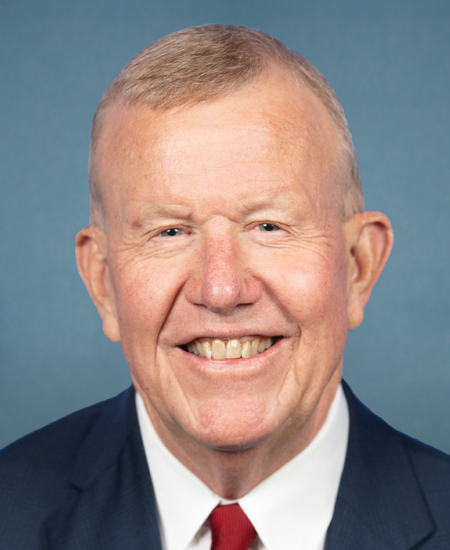
Photo of Mike Ezell
R United States House · District 4 · Mississippi On the 2026 ballot

Rep. Mike Ezell

Compare
Total votes
1,879
all sessions
Attendance
97%
57 missed
Near the chamber average
With party
95%
of cast votes
Near the chamber average
Bipartisan score
3%
crosses aisle rarely
Near the chamber average
Sponsored
481
bills & resolutions
Near the chamber average
Committees
6
assignments
481 bills and resolutions

Sponsored bills

Total
481
Primary
43
Co-sponsor
438
This page
481
matching current filters
Co-sponsor HR 2233
In committee · Indiana House · Co-sponsor
SLOT Act of 2025

Maddy summaryThe SLOT Act of 2025 raises the tax reporting threshold for slot machine winnings from $1,200 to $5,000 per play, meaning casinos no longer need to report winnings under this amount to the IRS. It directly affects slot machine players who win less than $5,000 in a single play and casino operators who previously filed tax forms for smaller wins. The threshold will automatically increase annually after 2026 based on inflation, rounded to the nearest $100. The change applies to winnings occurring after December 31, 2025.

In committee Mar 18, 2025 1 co-sponsor
Co-sponsor HR 2192
In committee · Indiana House · Co-sponsor
Air America Act of 2025

Maddy summaryThe Air America Act of 2025 authorizes one-time payments of $40,000 to individuals who worked for Air America or its affiliated companies for at least five years during 1950-1976, or to their surviving spouses, children, or dependents. Additional payments of $8,000 per full year beyond five years are allowed. The program is capped at $60 million total funding, with claims required within two years of final regulations. Payments are a single lump sum with no ongoing benefits, and the bill explicitly states it does not create new entitlements beyond this one-time award.

In committee Mar 18, 2025 1 co-sponsor
Co-sponsor HR 2202
In committee · Indiana House · Co-sponsor
End Taxpayer Funding of Gender Experimentation Act of 2025

Maddy summaryHR 2202 prohibits federal funds from being used for gender transition procedures or health plans covering them in federal programs like Medicaid and the Affordable Care Act. It does not ban these procedures but restricts federal subsidies, requiring individuals to pay for such coverage using non-federal funds (e.g., out-of-pocket or private insurance not tied to federal programs). The bill defines gender transition procedures broadly to include hormonal treatments and surgeries (e.g., mastectomy, hysterectomy), with exceptions for medically necessary treatments related to disorders of sex development or complications from such procedures. It also clarifies that ACA premium tax credits and cost-sharing reductions cannot apply to plans covering these procedures, though separate non-federal-funded coverage remains an option.

In committee Mar 18, 2025 1 co-sponsor
Co-sponsor HR 2197
In committee · Indiana House · Co-sponsor
No 340B Savings for Transgender Care Act

Maddy summaryHR 2197, the "No 340B Savings for Transgender Care Act," prohibits covered entities participating in the federal 340B drug pricing program from using savings from discounted drug purchases to pay for specific transgender healthcare services. The bill amends the Public Health Service Act to ban using 340B savings for sex reassignment surgeries or hormone treatments provided "for the purpose of gender alteration" of transgender individuals. This directly affects hospitals and clinics enrolled in the 340B program, restricting how they allocate funds saved through the program’s discounted drug pricing. The key provision is a targeted restriction on fund usage, not a ban on providing the medical services themselves. The bill focuses on reallocating program savings away from these specific care types.

In committee Mar 18, 2025 1 co-sponsor
Co-sponsor HR 2162
In committee · Indiana House · Co-sponsor
Honey Integrity Act

Maddy summaryHR 2162, the Honey Integrity Act, requires U.S. honey packers to test honey for economically motivated adulteration (EMA) - such as substitution or dilution to increase value - using scientifically validated methods like DNA and NMR testing. Qualifying commercial honey packers (those paying fees to the National Honey Board) must conduct testing, certify compliance, and report results to the FDA within 180 days of the law’s enactment. The bill mandates immediate reporting of EMA findings to authorities and prohibits accepting adulterated honey, with the FDA required to investigate and share data with agencies like Customs and Agriculture. This directly affects honey packers in interstate commerce, aiming to improve product integrity through standardized testing and enforcement.

In committee Mar 14, 2025 1 co-sponsor
Co-sponsor HR 2168
In committee · Indiana House · Co-sponsor
BO’s Act

Maddy summaryHR 2168, the BO’s Act, requires the Secretary of Health and Human Services to study home cardiorespiratory monitors used for infants. The study must assess the monitors' effectiveness in tracking heart rate and oxygen levels, evaluate new care models for safe infant sleep environments, and examine health insurance coverage criteria. A report on these findings must be submitted to Congress within one year of the bill’s enactment. This bill does not change current policy but aims to inform future decisions about monitor coverage and infant safety practices, directly affecting parents, healthcare providers, and insurers.

In committee Mar 14, 2025 1 co-sponsor
Co-sponsor HR 2126
In committee · Indiana House · Co-sponsor
FOCA Act of 2025

Maddy summaryThe FOCA Act of 2025 prohibits federal agencies from requiring or banning contractors from using union agreements in construction project bids or contracts. It directly affects federal agencies, contractors, and subcontractors working on federally funded or assisted construction projects (like buildings or infrastructure). The law requires bid documents to not favor or penalize contractors based on whether they have union agreements, aiming to promote open competition and prevent discrimination. This changes how agencies structure bids but does not affect union agreements themselves. The bill applies to all new contracts and subcontracts after enactment, with limited exemptions only for public health/safety emergencies or national security.

In committee Mar 14, 2025 1 co-sponsor
Co-sponsor HR 2166
In committee · Indiana House · Co-sponsor
Safe Routes Act of 2025

Safe Routes Act of 2025 This bill directs the Department of Transportation to waive vehicle weight limits for covered logging vehicles, thus allowing logging vehicles to travel on interstate highways in certain circumstances. The term covered logging vehicle means a vehicle that (1) is transporting raw or unfinished forest products, including logs, pulpwood, biomass, or wood chips; (2) is traveling a distance not greater than 150 air miles on interstate highways from origin to a storage or processing facility; and (3) meets state legal weight tolerances and vehicle configurations for transporting raw or unfinished forest products within the state boundaries in which the vehicle is operating.

In committee Mar 14, 2025 1 co-sponsor
Co-sponsor HRES 218
In committee · Indiana House · Co-sponsor
Recognizing and honoring teachers who have earned or maintained National Board Certification.

Maddy summaryHRES 218 is a resolution recognizing and honoring teachers who have earned or maintained National Board Certification as of March 2025. It specifically honors approximately 141,464 certified teachers nationwide, acknowledges their contributions to student learning (including research showing improved outcomes for students), and encourages school districts and states to support more teachers in pursuing this certification. The resolution has no legal effect or funding provisions - it is purely a symbolic gesture of appreciation for educators meeting rigorous teaching standards.

In committee Mar 11, 2025 1 co-sponsor
Co-sponsor HR 2089
In committee · Indiana House · Co-sponsor
Generating Retirement Ownership through Long-Term Holding

Maddy summaryThis bill changes how individual investors in mutual funds (regulated investment companies) are taxed on certain dividends. It allows investors to defer paying tax on capital gain dividends that are automatically reinvested in additional fund shares through a dividend reinvestment plan. The deferred tax is recognized later when the investor sells shares or upon their death. It also establishes that shares acquired through this reinvestment are treated as held for over one year from the start, potentially qualifying for long-term capital gains rates. The rule applies only to individual investors (not estates, trusts, or dependents claimed by others).

In committee Mar 11, 2025 1 co-sponsor
Showing 171 to 180 of 481 bills
Previous 1 … 17 18 19 … 49 Next