

Maddy summaryThe Neighborhood Homes Investment Act creates a new tax credit for developers who build or rehabilitate affordable homes in distressed communities. The credit is calculated as the lesser of (1) the difference between development costs and sale price, (2) 40% of development costs, or (3) 32% of the national median home price. It applies only to homes sold to qualified homeowners with income up to 140% of area median income in designated "qualified census tracts" (areas with high poverty rates, low median home values, and low median family income). Developers must meet quality standards and repay the credit if the home is sold within 5 years of the affordable sale. This credit aims to address the "value gap" that prevents housing development in distressed communities by incentivizing affordable home construction and rehabilitation.
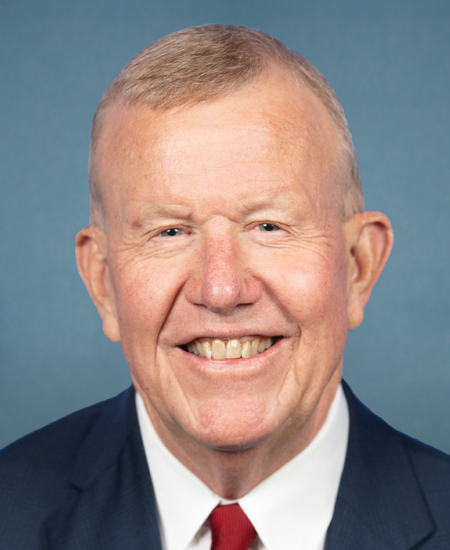
Rep. Mike Ezell
Sponsored bills
Maddy summaryThis bill extends the National Flood Insurance Program (NFIP) through December 31, 2026, maintaining existing coverage for policyholders. It directly affects homeowners and businesses in flood-prone areas who rely on NFIP policies to protect against flood damage. The key change modifies two provisions in the National Flood Insurance Act of 1968, updating the program's expiration date from September 30, 2023, to December 31, 2026. The bill does not alter the program's structure or benefits, only its operational timeline.
Maddy summaryThe Affordable Housing Credit Improvement Act of 2025 would reform the Low-Income Housing Credit program, which provides tax credits to developers of affordable housing. It would increase state allocations based on population with annual cost-of-living adjustments, modify tenant eligibility rules to allow higher income limits for some residents, and add protections for domestic violence victims in housing. The bill would simplify rules for rural and Native American housing projects, clarify credit eligibility requirements, and require greater transparency in program administration. These changes would directly affect developers, property owners, and low-income tenants in housing projects that receive LIHC tax credits.
Maddy summaryThis bill, HR 2102 (Major Richard Star Act), allows veterans with combat-related disabilities to receive both full military retired pay and veterans' disability compensation simultaneously, without the previous offset that reduced retired pay. It directly affects veterans already eligible for both benefits due to combat-related injuries, removing the requirement that their retired pay be reduced by the disability compensation amount. The key provision amends Title 10 and Title 38 to eliminate the offset rule (sections 5304 and 5305 of Title 38) for these veterans. The change applies to payments starting after the bill’s enactment date, effective for all qualifying veterans. This is a policy change to increase financial support for affected veterans, not a new benefit.
Maddy summaryThis bill clarifies the U.S. Coast Guard's leadership structure by formally establishing a dedicated "Secretary of the Coast Guard" position. The Secretary, appointed by the President with Senate confirmation, will directly lead the Coast Guard and receive direct reports from the Commandant, bypassing intermediate departmental layers. This change streamlines command reporting to the Secretary of Homeland Security, as the Coast Guard operates within that department. The bill does not alter Coast Guard missions or create new policies - it only formalizes existing leadership reporting lines.
Maddy summaryThe SHORT Act (HR 2395) redefines federal firearm definitions to exclude antique and collector firearms from being classified as firearms, and removes distinctions between short-barreled rifles and shotguns in federal regulations. It prevents state laws from imposing taxes or registration requirements on short-barreled rifles and shotguns, requiring state rules to align with federal compliance instead. The bill also mandates the federal government to destroy specific records related to these firearms within one year of enactment.
Maddy summaryThe Freedom from Unfair Gun Taxes Act of 2025 would prohibit states and local governments from imposing taxes on the sale of firearms, ammunition, or firearm parts during interstate or foreign commerce. This bill directly affects state tax policies and manufacturers or dealers selling these items across state lines. It explicitly states that the bill does not change the existing federal tax on firearms and ammunition that funds wildlife conservation programs. The key provision bans state-level taxes for these sales in interstate transactions while preserving current federal funding mechanisms.
Maddy summaryThe Cellphone Jamming Reform Act of 2025 allows state and federal correctional facilities to operate jamming systems that block cell signals from entering or leaving the facility, specifically targeting contraband devices used by inmates. It directly affects prisons and jails by enabling them to disrupt unauthorized wireless communications without FCC approval, provided the jamming is limited to housing areas within the facility. Key requirements include state facilities covering all costs themselves, consulting with local law enforcement before implementation, and notifying the Bureau of Prisons. The law aims to address security risks from smuggled phones while restricting jamming to only necessary areas and requiring transparency.
This joint resolution nullifies the final rule issued by the Consumer Financial Protection Bureau titled Overdraft Lending: Very Large Financial Institutions and published on December 30, 2024. The rule revises provisions regarding charges for insufficient funds in a customer’s bank account (i.e., overdrafts) at very large financial institutions. Under the rule, these institutions must (1) cap overdraft charges at $5; (2) with justification, cap charges at a higher amount; or (3) handle overdrafts as credit and comply with applicable Truth in Lending Act disclosure requirements.
Maddy summaryThe Don’t Penalize Victims Act amends the Stafford Act to prevent disaster victims from having their federal aid reduced or denied if they also receive assistance from other sources, such as state programs or private insurance. It directly affects individuals seeking disaster relief under the Robert T. Stafford Disaster Relief Act, ensuring they can access full federal support without penalty for other aid. The key change removes the phrase "or any other source" from Section 312(a), eliminating a provision that previously restricted aid eligibility. This policy update applies to all federal disaster assistance programs administered under the Stafford Act.