

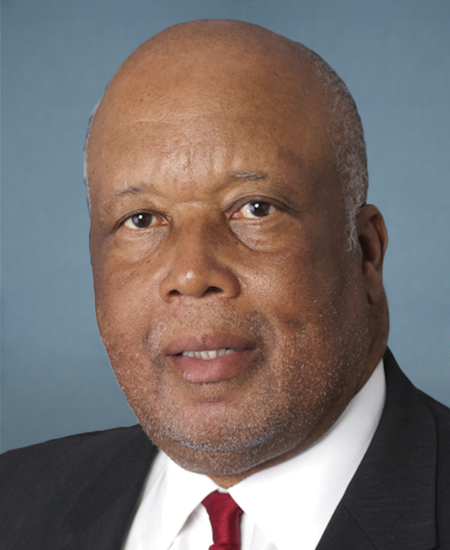
Photo of Bennie G. Thompson
D United States House · District 2 · Mississippi On the 2026 ballot

Rep. Bennie G. Thompson

Compare
Total votes
2,837
all sessions
Attendance
98%
63 missed
Near the chamber average
With party
98%
of cast votes
Higher than 77% of chamber peers
Bipartisan score
1%
crosses aisle rarely
Lower than 78% of chamber peers
Sponsored
1,263
bills & resolutions
Higher than 78% of chamber peers
Committees
1
assignment
1,263 bills and resolutions

Sponsored bills

Total
1,263
Primary
43
Co-sponsor
1,220
This page
1,263
matching current filters
Co-sponsor HR 8582
In committee · Indiana House · Co-sponsor
Protecting Human Rights and Public Health in Foreign Assistance Act

Maddy summaryThis bill, titled the Protecting Human Rights and Public Health in Foreign Assistance Act, aims to cancel specific regulations issued by the Department of State. It directly affects the federal government by prohibiting any department or agency from enforcing, implementing, or proposing rules related to protecting life, combating discriminatory equity ideology, and combating gender ideology in foreign aid programs. The legislation treats these cancelled rules as if they never existed, effectively nullifying their impact on future foreign assistance policies.

In committee Apr 29, 2026 1 co-sponsor
Co-sponsor HR 8555
In committee · Indiana House · Co-sponsor
Living Wage For All Act

Maddy summaryThe Living Wage For All Act raises the federal minimum wage in a tiered schedule, requiring large corporations to reach $25 per hour by 2031 while giving smaller businesses a longer timeline to catch up. Once the standard is met, the law automatically indexes the minimum wage to two-thirds of the national median hourly wage to ensure it keeps pace with economic changes. The bill also eliminates the lower minimum wage for tipped employees and youth workers, phasing them out until they match the general standard, and extends similar protections to incarcerated workers. Additionally, the legislation restricts the issuance of special minimum wage certificates for workers with disabilities and mandates that employers provide technical assistance during the transition period.

In committee Apr 28, 2026 1 co-sponsor
Co-sponsor HR 8505
In committee · Indiana House · Co-sponsor
Veterinary Education Equity Act

Maddy summaryThe Veterinary Education Equity Act amends the National Agricultural Research, Extension, and Teaching Policy Act to include 1890 Institutions in a veterinary services grant program. Under this change, the Secretary of Agriculture must give higher priority to grant projects submitted by these historically Black colleges and universities. The bill directly affects 1890 Institutions by increasing their chances of receiving federal funding for veterinary education and research initiatives.

In committee Apr 27, 2026 1 co-sponsor
Co-sponsor HR 8504
In committee · Indiana House · Co-sponsor
Rural Health Resilience Act of 2026

Maddy summaryThe Rural Health Resilience Act of 2026 creates a new program to provide loans and loan guarantees to struggling health facilities in rural areas to prevent them from closing or cutting essential services. This assistance is available to various types of rural hospitals, clinics, and behavioral health centers that demonstrate financial distress through metrics like low operating margins or insufficient cash reserves. The funds can be used for facility repairs, covering operational costs such as payroll and supplies, paying down debt, or bridging gaps in insurance reimbursements. Additionally, the program prioritizes support for sole community providers and areas with high poverty rates, and requires the Secretary of Agriculture to report on the program's outcomes to Congress within 18 months.

In committee Apr 27, 2026 1 co-sponsor
Co-sponsor HR 8503
In committee · Indiana House · Co-sponsor
Save SNAP Act of 2026

Maddy summaryThe Save SNAP Act of 2026 modifies how federal funding is allocated to states for the Supplemental Nutrition Assistance Program. It creates a hardship exception that allows the federal government to cover the full cost of food benefits for any state that cannot pay its required share due to financial difficulties. This change ensures that states facing unexpected budget shortfalls will not be forced to reduce or delay SNAP benefits for their residents. The new provisions take effect on October 1, 2026.

In committee Apr 27, 2026 1 co-sponsor
Co-sponsor HRES 1209
In committee · Indiana House · Co-sponsor
Recognizing the significance of "Community College Month" in April as a celebration of more than 1,000 institutions throughout the United States supporting access to higher education, workforce training, and more, broadly sustaining and advancing the Nation's economic prosperity.

Maddy summaryThis resolution designates April as "Community College Month" to recognize the significance of community colleges across the United States. It celebrates over 1,000 institutions for their role in providing accessible higher education and workforce training, and for contributing to the nation's economic prosperity.

In committee Apr 23, 2026 1 co-sponsor
Co-sponsor HR 8411
In committee · Indiana House · Co-sponsor
Original Legislation to Give TSA Employees a Raise

Maddy summaryThis bill proposes a 15 percent pay increase for career employees of the Transportation Security Administration, including agents and officers who are not senior executives or high-level appointees. The raise would take effect starting with the first pay period following the law's enactment and would apply to both basic pay rates and compensation bands under the TSA's core system. The legislation directly affects TSA staff members who fall under the career employee definition, ensuring they receive the salary adjustment in their next eligible paycheck.

In committee Apr 22, 2026 1 co-sponsor
Co-sponsor HR 7973
In committee · Indiana House · Co-sponsor
Momnibus Act

Maddy summaryThe Momnibus Act is a comprehensive legislative bill designed to improve maternal health outcomes across the United States by addressing social determinants of health, expanding access to care, and reducing disparities among pregnant and postpartum individuals. The bill establishes a federal task force to coordinate efforts between agencies and stakeholders to eliminate preventable maternal mortality and severe morbidity, while providing sustained funding to community-based organizations to address nonclinical factors like housing, nutrition, and transportation. Key provisions include extending WIC eligibility to 24 months postpartum, creating grants to grow and diversify the perinatal workforce, implementing respectful maternity care training for all healthcare employees, and establishing compliance programs to track and address bias in maternity care settings. The legislation also includes specific measures for incarcerated mothers, veterans, and vulnerable populations affected by climate change, alongside funding for maternal mental health services and technology-enabled care models to expand access in underserved areas.

In committee Apr 20, 2026 1 co-sponsor
Co-sponsor HRES 1183
In committee · Indiana House · Co-sponsor
Supporting the designation of the week of April 11 through April 17, 2026, as "Black Maternal Health Week", founded by Black Mamas Matter Alliance, Inc. (BMMA), to bring national attention to the maternal and reproductive health crisis in the United States and the importance of reducing maternal mortality and morbidity among Black women and birthing people.

Maddy summaryThis House Resolution supports designating the week of April 11 through April 17, 2026, as "Black Maternal Health Week." The resolution aims to bring national attention to the maternal and reproductive health crisis in the United States, specifically highlighting the importance of reducing maternal mortality and morbidity among Black women and birthing people.

In committee Apr 16, 2026 1 co-sponsor
Co-sponsor HR 8041
In committee · Indiana House · Co-sponsor
Supporting VA Families Act

Maddy summaryThe Supporting VA Families Act grants unpaid parental leave to Department of Veterans Affairs employees. This provision allows employees to take four weeks of unpaid leave within a 12-month period for the birth of a child or for adoption and foster care placements. The leave is designed to supplement existing leave policies rather than replace them, ensuring employees can balance family needs with their work responsibilities. The act defines eligible employees and children according to existing federal definitions found in Title 5 of the United States Code.

In committee Apr 15, 2026 1 co-sponsor
Showing 71 to 80 of 1,263 bills
Previous 1 … 7 8 9 … 127 Next