

Maddy summaryThis bill creates federal financial assistance for landowners and businesses affected by pine beetle outbreaks on privately owned forests. It provides cost-sharing payments covering up to 85% of outbreak response measures (like tree thinning, debris removal, or insecticide treatment) for landowners, and up to 50% of eligible service costs for timber businesses (e.g., logging or tree care companies). To qualify, land must have had tree cover before the outbreak, be in a drought-designated disaster area, and have confirmed pine beetle infestations. The bill also authorizes emergency loans covering at least 75% of response costs for landowners, with repayment options using cost-share payments, and grants for state/local governments to aid outbreak response.
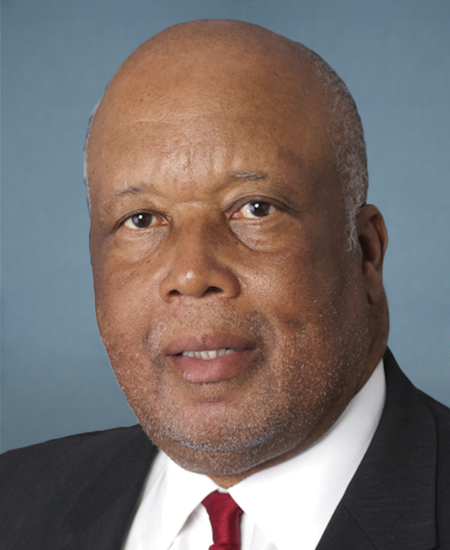
Rep. Bennie G. Thompson
Sponsored bills
Maddy summaryThis resolution expresses the House of Representatives' sense that the U.S. Postal Service should issue a commemorative stamp honoring Lt. Col. Charity Adams Earley. It specifically directs the Citizens' Stamp Advisory Committee (a USPS entity) to recommend such a stamp to the Postmaster General. The resolution highlights her historic role as the first Black officer in the Women’s Army Corps and her leadership of the 6888th Central Postal Directory Battalion during WWII, which cleared critical mail backlogs in Europe. This is a symbolic measure with no binding effect on USPS policy.
Maddy summaryHRES 1394 is a non-binding resolution celebrating the U.S.-India partnership based on shared democratic values, religious pluralism, and human rights, while highlighting the contributions of the Indian diaspora in the United States. It specifically recognizes the 50th anniversary of BAPS Swaminarayan Sanstha's community work, including its spiritual centers (mandirs) and volunteer efforts across the country. The resolution does not create legal obligations but formally acknowledges these ties and achievements.
Maddy summaryHR 9166, the RISE Act, requires the Small Business Administration, Appalachian Regional Commission, and Delta Regional Authority to create a coordination agreement within 120 days of enactment. This agreement aims to expand support for rural entrepreneurs and small businesses in the Appalachian and Delta regions by improving how these agencies work together. The bill mandates a joint report to Congress within two years detailing coordination efforts, the number of businesses assisted, and future collaboration plans. It does not create new funding but focuses on better coordination between existing federal agencies serving these specific rural areas.
Maddy summaryH.J. Res. 193 proposes a constitutional amendment to eliminate legal immunity for federal officials, including the President, from criminal prosecution for actions taken while performing official duties. It also prohibits the President from granting a pardon to themselves. The amendment would apply to all federal officers (such as the President, Vice President, and members of Congress) except for Congress members acting in their legislative role as defined in the Constitution. If ratified by 38 states, this change would become part of the U.S. Constitution, requiring no further congressional action.
Maddy summaryHRES 1381 is a symbolic resolution that commemorates the United States Olympic and Paralympic Teams' historical achievements, including over 5,300 total medals across past Games. It expresses congressional support for U.S. athletes competing in the 2024 Summer Olympics and Paralympics in Paris, France, and commends the Government of France for hosting the events. The resolution also commits to ensuring a safe environment for the 2028 Los Angeles Olympic and Paralympic Games. As a non-binding expression of support, it does not create new laws or allocate funds.
Maddy summaryHRES 1355 is a non-binding resolution supporting the designation of July 10 as Journeyman Lineworkers Recognition Day. It honors lineworkers who maintain electrical infrastructure under hazardous conditions, including during disasters, and commemorates Henry Miller, the first president of the International Brotherhood of Electrical Workers, who died on July 10, 1896, while troubleshooting an electrical outage. The resolution encourages public recognition of these workers' contributions but does not create new laws or policies.
Maddy summaryHR 8825, the Right to Vote Act, establishes a fundamental right for all citizens of legal voting age to vote in federal elections. It directly affects voters across all states and territories by prohibiting government actions that make voting harder (like restrictive ID laws or reduced polling places) unless those actions are the least restrictive way to serve a significant government interest. The bill creates two legal standards: "retrogression" (diminishing voting access) and "substantial impairment" (making voting significantly harder), allowing voters to sue in federal court to challenge such restrictions. Courts must expedite these cases, and the law applies to all federal elections occurring on or after September 1, 2024.
Maddy summaryHCONRES 118 is a symbolic congressional resolution recognizing the wage disparity faced by Black women in the U.S. It specifically highlights that Black women earn 69 cents for every dollar earned by White, non-Hispanic men, as noted in Census Bureau data. The resolution marks July 9, 2024, as Black Women’s Equal Pay Day to symbolize how long into 2024 Black women must work to earn what White men earned in 2023. It does not create new laws or policies but formally acknowledges this disparity and reaffirms congressional support for equal pay for equal work.
Maddy summaryHR 8911, the Worker Rights and Support Act, requires most employers to provide specific breaks to employees under the Fair Labor Standards Act. It mandates 30-minute meal breaks after 6 hours of work (unpaid unless work continues), 10-minute rest breaks every 4 hours (paid), and medical breaks (up to 20 minutes per need, paid) for documented health conditions. The bill ensures breaks are paid if employees aren't fully relieved of work duties or can't leave the premises. It does not override collective bargaining agreements or stricter state laws, and adds enforcement penalties for violations of these break requirements.