

Maddy summaryThis bill removes a barrier for parents who borrowed Federal Direct PLUS loans to pay for their dependent children's education. It amends the Higher Education Act to make these PLUS loans eligible for income-contingent repayment (ICR) and income-based repayment (IBR) plans - previously excluded from both. As a result, affected parents can now use income-driven repayment options that adjust payments based on their earnings, rather than being limited to standard repayment. The change applies to existing PLUS loans for dependent students and related consolidation loans, effective upon the bill's enactment.
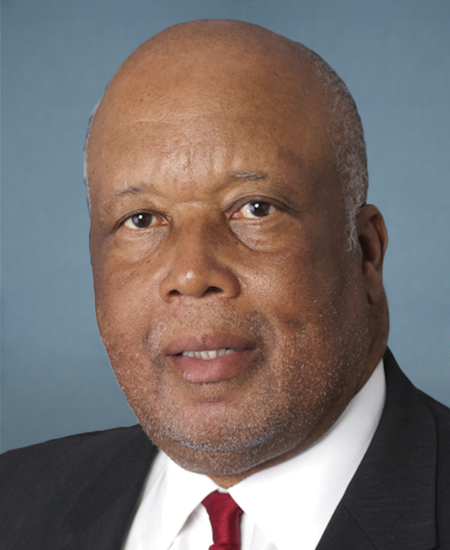
Rep. Bennie G. Thompson
Sponsored bills
Maddy summaryThe Counter-UAS Authority Security, Safety, and Reauthorization Act establishes a framework for federal agencies to detect, identify, and mitigate unauthorized drones that threaten aviation safety. It creates a process for approving counter-UAS systems that meet safety requirements, requires coordination between the FAA, Department of Homeland Security, and Department of Justice, and mandates annual reporting on all counter-UAS activities. The bill directly affects covered entities like airports and large public gatherings, requiring them to work with law enforcement to deploy approved counter-UAS systems. It includes privacy protections for communications intercepted during counter-UAS operations and expires on October 1, 2028.
Maddy summaryThis bill amends the Justice for United States Victims of State Sponsored Terrorism Act to establish a fifth round of payments for eligible victims of state-sponsored terrorism, requiring all authorized payments to be distributed by December 31, 2024. It directs specific funds into the Victims of State Sponsored Terrorism Fund, including $898 million from the Binance case settlement and 50% of annual unobligated balances from DOJ and Treasury forfeiture funds starting December 1, 2024. The bill mandates annual payments beginning January 1, 2025, for eligible claimants and requires the Special Master to submit annual reports on fund activity to Congress, including detailed deposit and disbursement records. It directly affects victims of state-sponsored terrorism, the Special Master administering the fund, and federal agencies managing forfeiture funds.
Maddy summaryThis bill directs the U.S. government to immediately restore funding to the United Nations Relief and Works Agency for Palestine Refugees (UNRWA), reversing a temporary funding pause. It repeals two appropriations acts that halted payments and requires the Secretary of State to resume UNRWA funding under existing authorities. The legislation specifically aims to support UNRWA’s critical humanitarian work - providing shelter, education, healthcare, and aid to Palestinian refugees across Gaza, the West Bank, Syria, Lebanon, and Jordan - during an acute famine risk in Gaza. It also mandates quarterly reports to Congress on UNRWA’s implementation of reforms from an independent review, ensuring accountability for its humanitarian mission.
Maddy summaryHR 9647, the President Jimmy Carter Congressional Gold Medal Act, authorizes Congress to award a single gold medal to former President Jimmy Carter in recognition of his service. The bill directs the Treasury Secretary to design and strike the medal, with bronze duplicates available for sale to cover costs. It does not create new policies or affect any government programs or individuals beyond this ceremonial honor. The medal is intended to commemorate Carter's presidency, humanitarian work through the Carter Center, and his Nobel Peace Prize. This is a procedural bill with no substantive legislative impact.
Maddy summaryHRES 1448 is a non-binding House resolution stating that the House believes every person has the right to emergency health care, including abortion care, during medical emergencies. It specifically addresses concerns that abortion restrictions force medical providers to choose between treating patients in life-threatening situations or risking criminal charges. The resolution highlights that such restrictions disproportionately harm Black, Indigenous, people of color, immigrants, low-income individuals, and LGBTQI+ patients. It does not change existing laws but expresses congressional support for ensuring access to emergency care without legal barriers. The resolution was introduced by multiple House members and referred to the Energy and Commerce Committee.
Maddy summaryHR 9458 requires the Department of Homeland Security (DHS) to improve outreach and support for grantees receiving funds under two key programs: the Urban Area Security Initiative and the State Homeland Security Grant Program. It mandates that DHS conduct annual surveys with State, local, Tribal, and territorial governments to gather feedback on grant processes and outreach effectiveness, then share summaries of this feedback and how it influenced future grant notices. The bill also requires DHS to provide ongoing technical assistance and engagement before, during, and after grants are awarded. These changes aim to make grant programs more responsive to the needs of communities receiving federal preparedness funding, with reports on implementation due to Congress within two to three years.
Maddy summaryHRES 1432 designates September 10, 2024, as "National Firearm Suicide Prevention Day" to raise public awareness about firearm suicides and promote safe storage practices. The resolution encourages healthcare professionals to discuss safe firearm storage with patients and supports the day's goals of reducing firearm suicides through education. It directly affects the general public and healthcare providers by highlighting evidence that safe storage lowers suicide risk, referencing statistics like 54.6% of U.S. suicides in 2022 involving firearms. The bill is symbolic, with no new legal requirements, and aligns with existing awareness efforts like Firearm Suicide Prevention Day.
Maddy summaryHRES 1436 is a symbolic resolution (not a law) introduced in the U.S. House of Representatives. It recognizes suicide as a preventable public health crisis by citing statistics from the CDC, VA, and SAMHSA showing rising suicide rates across age groups, including veterans and adolescents. The resolution formally supports designating September as "National Suicide Prevention Month" and September 10, 2024, as "World Suicide Prevention Day." It does not create new policies, allocate funding, or directly affect any individuals - its purpose is solely to express congressional support for suicide prevention awareness and efforts.
Maddy summaryThis bill prioritizes funding for rural healthcare facilities through the USDA's Community Facilities Program. For fiscal years 2025-2031, the Secretary of Agriculture must give priority to rural hospitals and healthcare providers seeking loans or grants to develop essential facilities. Funds can be used for medical supplies, telehealth expansion, staffing support, or renovating closed facilities. Additionally, 10% of guaranteed loan funds under the program must be reserved annually to support these rural healthcare projects.