

Maddy summaryHRES 230 is a non-binding resolution expressing Congress's sense that the U.S. Congress and administration must urgently collaborate on food and agricultural trade policies. It directly affects U.S. farmers, ranchers, and the $9.6 trillion agricultural sector, which supports millions of jobs and generates significant exports. The resolution calls for concrete actions including securing new market access, enforcing trade agreements, eliminating unjustified trade barriers (like tariffs and nontariff restrictions), and using science-based approaches to strengthen global trade. It emphasizes addressing a 9% decline in 2023 agricultural exports and a projected $37 billion trade deficit, contrasting with historical trade surpluses.
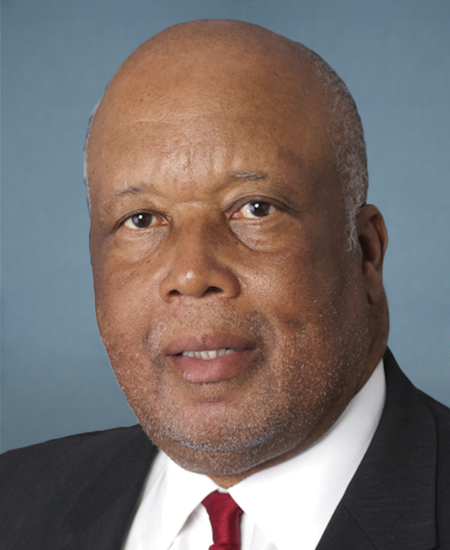
Rep. Bennie G. Thompson
Sponsored bills
Maddy summaryThe Air America Act of 2025 authorizes one-time payments of $40,000 to individuals who worked for Air America or its affiliated companies for at least five years during 1950-1976, or to their surviving spouses, children, or dependents. Additional payments of $8,000 per full year beyond five years are allowed. The program is capped at $60 million total funding, with claims required within two years of final regulations. Payments are a single lump sum with no ongoing benefits, and the bill explicitly states it does not create new entitlements beyond this one-time award.
Maddy summaryHR 2108, the TANF State Expenditure Integrity Act of 2025, strengthens oversight of state spending under the Temporary Assistance for Needy Families (TANF) program. It creates a new TANF Program Integrity Unit at the Administration for Children & Families to monitor how states use federal TANF funds, requiring states to report misuse findings and submit annual reports to Congress. If a state intentionally misuses funds, the bill mandates that the state repay the misused amount directly as cash assistance to families earning below 100% of the poverty line. This bill directly affects states administering TANF programs and ensures misused funds are redirected to low-income families.
Maddy summaryHRES 216 is a resolution condemning the leadership of the House Republican Conference for allowing a social media post that falsely questioned the immigration status and patriotism of Congressman Adriano Espaillat (Chairman of the Congressional Hispanic Caucus). The resolution specifically names House Speaker Mike Johnson, Majority Leader Steve Scalise, Majority Whip Tom Emmer, and other top Republican leaders as responsible for the post. It characterizes the post as xenophobic and inappropriate, stating such rhetoric violates the standards of conduct expected of members of Congress.
Maddy summaryThis bill requires the Transportation Security Administration (TSA) to transition its workforce from a special personnel management system to the standard federal personnel system under Title 5 of the U.S. Code by December 31, 2025. It protects TSA employees by ensuring no reduction in pay, benefits, or retirement rights during the transition, while preserving collective bargaining rights for screening agents. The legislation also mandates consultation with labor unions during the process and requires several reports on workforce issues including recruitment, harassment policies, and workplace safety.
Maddy summaryHR 2040, the NEWBORN Act, creates federal grants for local health departments to run infant mortality pilot programs in the 50 highest-risk counties. The $10 million annual funding (2025-2029) requires grantees to develop community-specific plans addressing causes like preterm birth, maternal complications, and infant injuries. Programs must include outreach to at-risk mothers, standardized services (postpartum care, smoking cessation, nutrition counseling), rural health initiatives, and public education campaigns. Grantees must report annually on program outcomes, with funds limited to 10% for evaluation. The bill directly affects communities with high infant mortality rates and at-risk mothers and infants through these targeted, evidence-based interventions.
Maddy summaryThis bill would expand Medicare to cover dental, vision, and hearing services for beneficiaries 65 and older (and some younger people with disabilities), effective January 1, 2026. It would provide 100% coverage for preventative dental services in 2026, with basic and major dental services gradually increasing to 80% coverage by 2029. Vision benefits would include 80% coverage for annual eye exams and specific limits on eyeglasses, frames, and contact lenses ($100 per year for lenses, $100 every two years for frames, $200 every two years for contacts). Hearing services would include 80% coverage for hearing exams and hearing aids, with a limit of one hearing aid per ear every 48 months. The bill also adds oral health professionals to the United States Preventive Services Task Force to help guide coverage decisions.
Maddy summaryHR 1374, the Securing the Cities Improvement Act, amends the Homeland Security Act to reform the State and Local Security Grant Program (STC). It changes eligibility so cities qualify based on their actual preparedness capacity and threat vulnerability - not just being labeled "high-risk urban areas" - and requires the federal government to establish clear performance metrics for the program. The bill mandates that participating cities track progress against these metrics and report annually to Congress on program performance and future plans. This directly affects local governments receiving federal security funding by making eligibility and oversight more specific and data-driven.
Maddy summaryHRES 210 is a symbolic resolution recognizing National Women and Girls HIV/AIDS Awareness Day on March 10. It highlights that women, especially women of color (including Black and Latina women), are disproportionately affected by HIV in the U.S. and globally, with data showing they account for significant shares of new diagnoses and deaths. The resolution calls for greater focus on HIV vulnerabilities among women and girls, improved access to prevention tools like PrEP, and stronger investment in care, treatment, and research to reduce health disparities. It urges support for evidence-based programs addressing gender-based violence, discrimination, and barriers to sexual health services.
American Teacher Act This bill establishes grants to increase the minimum salary of public elementary and secondary school teachers. It also authorizes a national campaign regarding the value of the teaching profession. First, the bill directs the Department of Education (ED) to award four-year grants to state educational agencies (SEAs) and, through them, subgrants to local educational agencies to establish a minimum annual salary of $60,000 (to be adjusted annually for inflation) for these teachers. Second, the bill directs ED to award grants to eligible SEAs to provide cost-of-living adjustments to the annual base salary of teachers. Finally, the bill authorizes ED to carry out a national campaign to (1) increase awareness about the importance of teachers and the value of the teaching profession, (2) encourage secondary school and college students to consider teaching as a professional career, and (3) diversify the pool of individuals who enter the teaching profession.