

Maddy summaryThe Family Violence Prevention and Services Improvement Act of 2026 amends federal law to enhance support for victims of family violence, domestic violence, and dating violence. The bill authorizes $270 million annually for fiscal years 2027-2031 to fund state, tribal, and community programs, with specific funding reserved for tribal programs (12.5%), national hotlines ($20.5 million for general hotline, $4 million for Indian hotline), and services for underserved populations. It requires grantees to provide trauma-informed, culturally appropriate services while prohibiting discrimination and protecting victim confidentiality, and mandates accessibility for people with disabilities and limited English proficiency. The bill also establishes new technical assistance centers, Tribal resource centers, and community-based prevention programs to address the needs of underserved populations including Native Hawaiians, Alaska Natives, and racial and ethnic minorities.
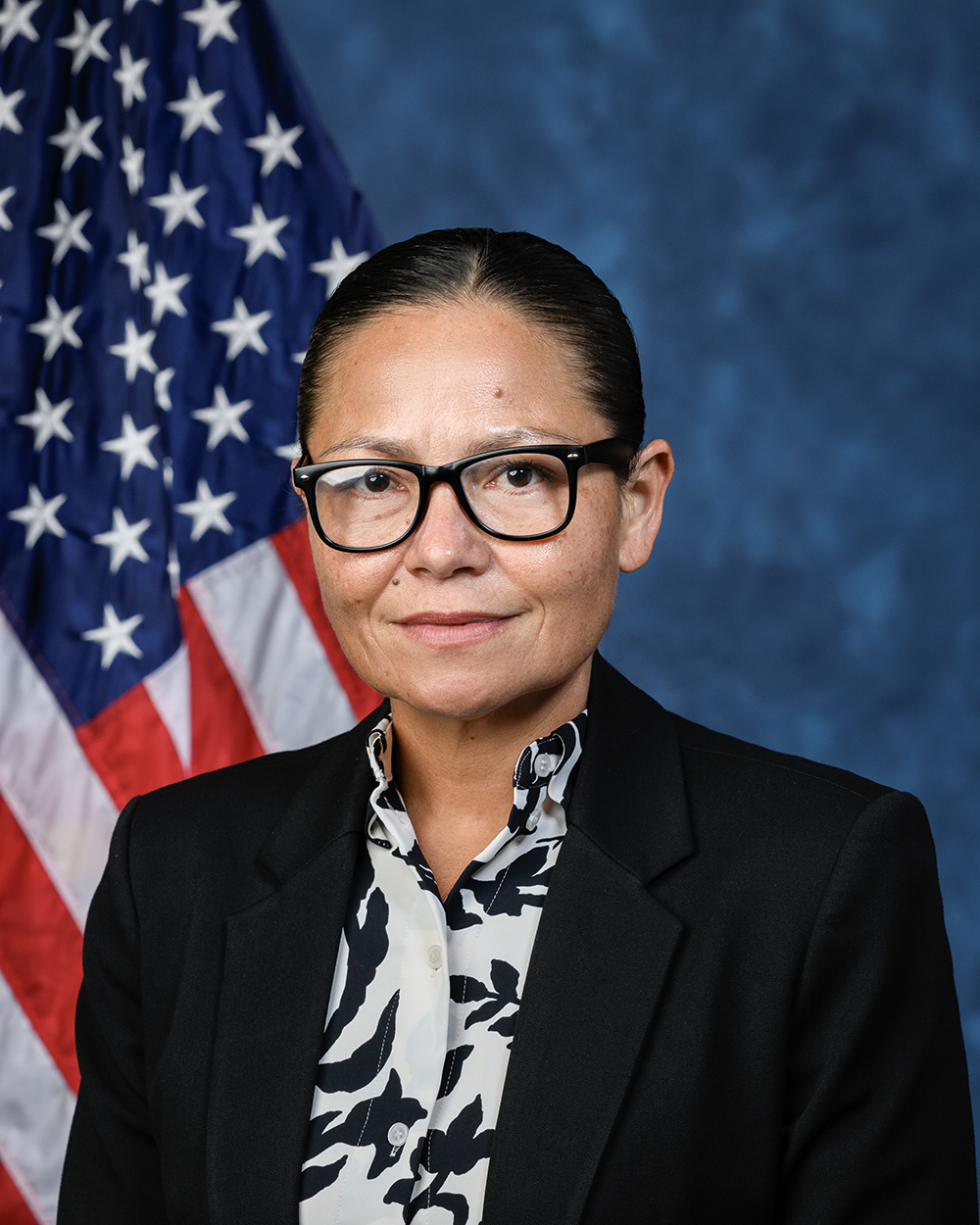
Rep. Kimberlyn King-Hinds
Sponsored bills
Maddy summaryThe Northern Mariana Islands Small Business Access Act expands eligibility for the federal microloan program to include the Commonwealth of the Northern Mariana Islands (CNMI), which was previously excluded. This change, made by amending the Small Business Act, allows small businesses in the CNMI to access low-interest loans through the same program currently available to businesses in Guam. The bill updates two sections of the law to insert "the Commonwealth of the Northern Mariana Islands" after "Guam" in eligibility requirements. As a result, CNMI small business owners will gain access to federal funding to support startup costs, equipment purchases, or business expansion.
Maddy summaryThis bill increases the Small Business Administration's (SBA) guarantee rate to 90% for certain loans made to businesses in U.S. territories (like Puerto Rico or Guam) under the SBA's standard 7(a) loan program. It directly affects businesses operating in these territories by making it easier for them to secure loans with higher federal backing. The key provision amends the Small Business Act to set this 90% guarantee rate as the default for covered territory loans, with exceptions for specific existing loan types (e.g., certain disaster loans or pilot programs). This change aims to improve access to capital for territorial businesses without altering other SBA loan terms.
This bill designates a portion of Interstate Route 680 in Omaha, Nebraska, as the Hal Daub Freeway. Harold John Daub Jr. served in the House of Representatives from 1981-1989 and as the mayor of Omaha, Nebraska, from 1995-2001.
Maddy summaryHR 6662, the Department of Defense and Department of Veterans Affairs Medical Credentialing Integration Act of 2025, requires the Defense and Veterans Affairs departments to create a single, unified system for medical provider credentialing and privileging. It directly affects military and VA medical staff (like doctors and nurses) by replacing separate, non-interoperable systems currently used by each department. Key provisions mandate a joint report on existing systems within 120 days, selection of one unified system by January 2027, and full implementation by January 2028, ensuring seamless sharing of provider credentials across both departments. This eliminates redundant credentialing processes and improves administrative efficiency for medical providers working across DoD and VA facilities.
Maddy summaryThis bill allows U.S. territories - American Samoa, Guam, the Northern Mariana Islands, Puerto Rico, and the U.S. Virgin Islands - to contribute statues to the National Statuary Hall Collection, which currently features statues from states. It amends existing law to define "State" in relevant statutes to include these territories, enabling their statues to be placed alongside state statues. The Architect of the Capitol will manage acquiring and installing these statues. The bill does not change voting rights or policy for residents but updates procedural rules for statue placement.
Maddy summaryThe Renewed Hope Act (HR 6998) requires the Department of Homeland Security to hire 200 new staff, including 40 forensics analysts and 30 child exploitation investigators for the Victim Identification Laboratory, plus 130 additional personnel for the Child Exploitation Investigations Unit, to improve identification and rescue efforts for victims of child sexual exploitation. It establishes a mandatory training program for law enforcement and related organizations to use updated victim identification techniques and mandates coordination between DHS and the National Center for Missing and Exploited Children to streamline investigations. The bill also includes strict privacy rules to secure victim information and allows temporary hiring of experts for forensic analysis at specified rates.
Maddy summaryThis bill establishes new standards for transporting livestock across state lines. It prohibits moving livestock deemed "unfit to travel" under specific criteria defined by international animal welfare standards, including animals that are sick, unable to stand, blind, recently giving birth, or in poor health due to weather. The bill requires the Transportation and Agriculture Secretaries to create an inspection system within 180 days to enforce these rules, including checking vehicles and records. It directly affects livestock transport companies, farmers, and ranchers moving animals interstate, with an exception allowing transport for veterinary care. The law aims to prevent suffering during transport by defining clear welfare standards.
Maddy summaryThe RTCP Revitalization Act amends funding provisions for geographically disadvantaged farmers and ranchers under the Food, Conservation, and Energy Act of 2008. It establishes mandatory annual funding from the Commodity Credit Corporation, starting at $10 million for fiscal year 2026 and increasing to $15 million annually through 2031 and beyond. The bill removes payment limits for eligible farmers when sufficient funds are available, ensuring they receive full payments without arbitrary caps. This directly affects farmers and ranchers in geographically disadvantaged areas who qualify for these payments. The changes provide predictable funding and protect payment access for this specific group.
Maddy summaryThis bill updates federal nutrition law to include Puerto Rico in the Supplemental Nutrition Assistance Program (SNAP), allowing it to transition from its current funding method to the same SNAP benefits available to U.S. states. Puerto Rico must submit a 180-day plan to the USDA detailing its transition to SNAP, with approval required within another 180 days. The transition period lasts up to 5 years from the bill's effective date, during which Puerto Rico would continue receiving block grants while preparing for full SNAP participation. This change directly affects Puerto Rico's 1.4 million residents who currently receive nutrition assistance under a separate funding structure.