

Maddy summaryThis bill, HR 1097 (Everett Alvarez, Jr. Congressional Gold Medal Act of 2023), authorizes the award of a Congressional Gold Medal to Everett Alvarez, Jr., in recognition of his service as a U.S. Navy pilot and Vietnam War prisoner of war. It directly honors Alvarez, who was the first U.S. pilot shot down in the Vietnam War, spent over 8.5 years in captivity, and later served in the Peace Corps and Veterans Administration. The bill’s key mechanism is directing the U.S. Mint to strike a gold medal bearing his name and image, with bronze duplicates available for sale to cover costs. It does not create new policies or affect any group beyond the honoree.
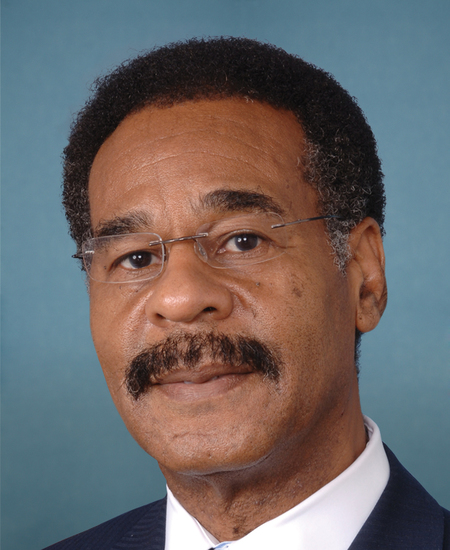
Rep. Emanuel Cleaver
Sponsored bills
Maddy summaryHRES 1625 is a symbolic resolution supporting the recognition of "World Basketball Day" on December 21 each year, following a 2023 UN resolution. It does not create new laws or directly affect specific groups, but formally honors basketball's role in fostering global unity, sports diplomacy, and community impact. The resolution highlights basketball's worldwide reach (over 585 million annual players), the NBA's international diversity (125+ players from 43 countries in 2024), and its humanitarian contributions. It encourages continued growth of basketball programs that build community leadership and opportunities globally. The resolution is purely ceremonial, expressing the House's support for the sport's unifying values.
Maddy summaryHR 2367, the Truck Parking Safety Improvement Act, creates a federal grant program to address commercial truck parking shortages on highways. It provides competitive grants (totaling $175M-$320M over three years) for projects like building new rest areas, expanding parking at ports or truck stops, or improving safety at existing facilities. The program requires all funded parking to be free, publicly accessible to all truck drivers, and maintained without user fees. This directly affects commercial truck drivers, motor carriers, and highway safety by aiming to improve parking access, reduce traffic congestion, and enhance safety on federal-aid highways.
Maddy summaryThe Good DEED Act (HR 10475) establishes a federal grant program to combat deed fraud - forgery, impersonation, or false authority in property transfer documents - directly benefiting low-income individuals affected by such fraud. It requires states to implement fingerprinting for in-person notarizations and 10-year retention of video/audio recordings for remote notarizations of property transfers. Grant funds must cover legal aid for low-income victims, title-clearing costs, and technology to prevent/detect fraud, with at least 35% allocated to legal services. The bill also mandates adding deed fraud to FBI crime reporting and creating sentencing guidelines for related offenses.
Maddy summaryHR 4428, the Guidance Clarity Act, requires federal agencies to include a specific statement on all guidance documents they issue. This statement must clearly state that the document has no legal force, does not bind the public or the agency, and is only for clarifying existing laws or policies. Agencies must display this statement prominently on the first page of such guidance, effective 30 days after the Office of Management and Budget issues implementing instructions. The bill directly affects federal agencies and the public receiving these documents, ensuring transparency about the non-binding nature of agency guidance.
Maddy summaryHRES 1618 is a non-binding resolution designating November 20-December 20, 2024, as "National Survivors of Homicide Victims Awareness Month." It expresses support for raising awareness about survivors of homicide victims and encourages communities to provide them with support services and resources. The resolution calls for promoting survivor-centered initiatives, addressing trauma through behavioral health services, and fostering community engagement to honor victims and support families affected by homicide.
Maddy summaryHR 8796, the "Stop Comstock Act," removes outdated restrictions from federal law that previously banned the distribution of materials related to contraception and abortion as "obscene" or "indecent." The bill amends Title 18 and the Tariff Act by deleting references to "indecent," "immoral," "unlawful abortion," and "procuring abortion" from provisions governing obscene materials. It clarifies that the law only prohibits "obscene materials" in commerce, eliminating broad restrictions on reproductive health information. This directly affects internet platforms, healthcare providers, and individuals sharing reproductive health resources by removing legal barriers to their distribution.
Maddy summaryThis bill requires Medicare Advantage plans to implement electronic prior authorization systems by 2027 and publish detailed data on their approval and denial rates for medical services by 2026. It directly affects Medicare Advantage plans (private insurers offering Medicare coverage) and their enrollees (seniors 65+), mandating transparency about prior authorization decisions, processing times, and appeal outcomes. Key provisions include requiring plans to report annual statistics on request approvals/denials, average processing times, and use of technology, with this data published publicly by the Centers for Medicare & Medicaid Services. The bill also sets timelines for plan responses to prior authorization requests and mandates reports to Congress on implementation and impacts.
Maddy summaryThe MEGOBARI Act directs the U.S. government to investigate and address democratic backsliding in Georgia. It requires reports within 90 days on Georgian corruption tied to Russian interests, sanctions evasion, and Russian intelligence assets, followed by potential sanctions against Georgian officials deemed responsible for undermining democracy or advancing Russian-style laws. The bill also establishes a U.S. democracy monitoring task force in Georgia and links additional U.S. aid - including trade negotiations, visa liberalization, economic packages, and defense support - to Georgia's progress toward fair elections and a free political environment. These provisions directly affect Georgia's government officials (who could face sanctions) and Georgia's eligibility for U.S. assistance. The bill does not impose new sanctions but mandates U.S. agencies to identify and sanction specific Georgian individuals under existing legal authorities.
Maddy summaryThe End Polluter Welfare Act of 2024 eliminates numerous subsidies and tax benefits for fossil fuel companies by repealing provisions that provide royalty relief, reducing royalty rates, and ending tax incentives for oil, natural gas, and coal production. The bill prohibits federal funding for fossil fuel projects by restricting international financial institutions, the Export-Import Bank, and the Department of Transportation from supporting fossil fuel infrastructure. It also repeals recent legislation that provided fossil fuel subsidies, including parts of the Fiscal Responsibility Act and Inflation Reduction Act. This comprehensive approach directly affects oil, gas, and coal producers by removing financial benefits that have historically supported the fossil fuel industry, while directing studies to identify and eliminate additional fossil fuel subsidies.