

Maddy summaryHR 5921, the "No U.S. Financing for Iran Act of 2023," prohibits U.S. financial institutions from authorizing transactions related to Iran's imports or exports (excluding agricultural goods, food, medicine, and medical devices for civilians). It also requires the U.S. to oppose International Monetary Fund (IMF) financial aid to Iran and block Iran's access to IMF Special Drawing Rights. The bill amends the Export-Import Bank Act to ban U.S. financing for Iran's government or state-controlled entities. The law expires either 30 days after the President certifies Iran has stopped supporting international terrorism and is no longer a major money laundering concern, or 10 years from enactment.
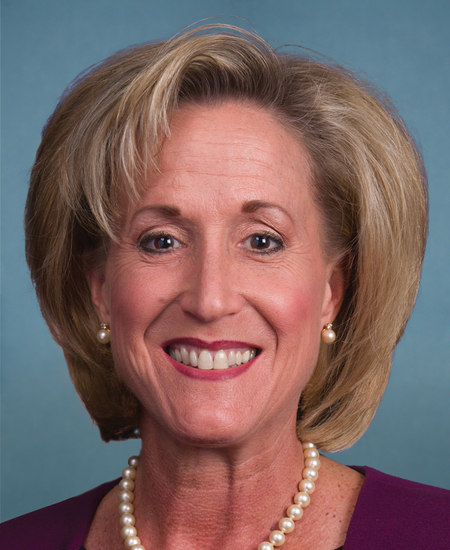
Rep. Ann Wagner
Sponsored bills
Maddy summaryThis bill requires the Secretary of Agriculture to annually assess U.S. reliance on critical farm inputs - such as fertilizers, seeds, veterinary drugs, and agricultural equipment - that could be disrupted if China exploits supply chains. It mandates identifying domestic production capacity, supply chain vulnerabilities, and recommending ways to reduce dependency through onshore or nearshore production. The assessment must protect private company data, prohibiting disclosure of identifiable information and ensuring only anonymized aggregate data is used or shared. The law focuses on supply chain security for American agriculture without compelling businesses to provide sensitive information.
Maddy summaryThis bill establishes the Financial Stability Oversight Council's Advisory Committee on Economic Fallout From Chinese Military Aggression Towards Taiwan. The committee, composed of financial regulators, market participants, and geopolitical experts, will study market vulnerabilities related to potential Chinese military action against Taiwan. It must annually produce reports analyzing risks to U.S. banking systems, market volatility, economic costs, and recommendations for improving market resilience. These reports will include specific assessments of impacts on U.S. markets, Treasury holdings, and potential responses to disruptions like a Taiwan invasion or blockade. The committee's work aims to prepare U.S. financial systems for economic shocks without making direct policy changes.
Maddy summaryHRES 1084 is a non-binding resolution condemning the death of Russian opposition leader Alexei Navalny in a Russian prison and demanding the release of all political prisoners in Russia. It specifically calls on the U.S. State and Treasury Departments to impose sanctions on Russian officials responsible for Navalny’s death and ongoing imprisonment of political prisoners, including U.S. citizens like Evan Gershkovich. The resolution expresses solidarity with Navalny’s family and other imprisoned activists, highlighting Russia’s systemic abuse of prisoners and politically motivated detentions. It does not create new laws but urges U.S. and allied governments to prioritize the release of political prisoners through diplomatic and economic pressure.
Maddy summaryHR 7747, the Federal Judiciary Stabilization Act of 2024, reclassifies existing federal district court judgeships in specific jurisdictions under a new section of law (28 U.S.C. § 133). It directly affects the courts in Hawaii, Kansas, Missouri, Alabama, Arizona, California, Florida, New Mexico, North Carolina, and Texas by updating their authorized judge counts, such as adding 4 judgeships for Hawaii and increasing California's Central District to 28. The bill modifies the official table in federal law to reflect these new numbers without creating new permanent positions. It authorizes necessary funding to implement these changes. This is a procedural adjustment to judgeship authorizations, not a policy change affecting the public.
Maddy summaryHR 4723 requires the U.S. President to impose sanctions on foreign individuals and entities that threaten Bosnia and Herzegovina's territorial integrity, democratic institutions, or the Dayton Peace Agreement. The President must submit a list of such persons every 90 days, triggering sanctions that block their U.S. assets and ban entry into the United States. The bill codifies existing sanctions from two executive orders and allows limited national security waivers (up to 180 days each, expiring after two years). It specifically targets actions like forming unauthorized government structures that disrupt Bosnia's central authority, violating court rulings, or engaging in government corruption.
Maddy summaryThis resolution (HRES 149) is a symbolic congressional statement condemning Russia's actions in Ukraine, specifically the forcible transfer and abduction of Ukrainian children. It directly addresses the Russian government, citing evidence including Ukrainian reports of over 2,300 children kidnapped and Russia's policy granting citizenship to children born in occupied territories after February 24, 2022. The resolution formally declares these actions violate the Genocide Convention (Article II(e)) and claims Russia is attempting to erase Ukrainian identity by targeting children. As a non-binding resolution, it holds no legal force but expresses the House's official stance against these practices.
Maddy summaryHR 7564 amends the Justice for United States Victims of State Sponsored Terrorism Act to provide catch-up payments for specific victims of the 1983 Beirut barracks bombing and 1996 Khobar Towers bombing. It creates a process for victims who had a final judgment issued and an application accepted by the Fund before December 29, 2022, but missed one or more of the first four payment rounds. These victims will receive lump-sum catch-up payments calculated using the same methodology as the Fairness for 9/11 Families Act, adjusted for any prior payments they already received. The bill also requires the Comptroller General to conduct an audit within 30 days and publish proposed payments in the Federal Register.
Maddy summaryThis bill reauthorizes and enhances anti-trafficking programs through several key provisions. It establishes "Frederick Douglass Human Trafficking Prevention Education Grants" for schools to implement evidence-based, culturally responsive training for K-12 students, teachers, and school personnel on recognizing and preventing child trafficking. It also creates a Human Trafficking Survivors Employment and Education Program to help trafficking victims gain job skills, education, and life skills for self-sufficiency. The bill extends funding for these programs through 2028 with increased authorization levels and modifies international trafficking reporting standards.
Maddy summaryThe Uyghur Policy Act of 2023 establishes a U.S. Special Coordinator for Uyghur Issues within the State Department to coordinate policy and advocate for the protection of Uyghur cultural, religious, and linguistic identity in Xinjiang. It authorizes $250,000 annually for Uyghur human rights advocates to speak at public diplomacy events in Muslim-majority countries and mandates Uyghur language training for U.S. diplomats. The bill also directs the U.S. government to support United Nations monitoring of Xinjiang human rights issues and oppose efforts to block discussions of Xinjiang at the UN. These provisions focus on diplomatic advocacy and information-sharing, not direct sanctions or enforcement actions against China.