

Heartbeat Protection Act of 2021 This bill makes it a crime for a physician to knowingly perform an abortion (1) without determining whether the fetus has a detectable heartbeat, (2) without informing the mother of the results, or (3) after determining that a fetus has a detectable heartbeat. It provides an exception for an abortion that is necessary to save the life of a mother whose life is endangered by a physical (but not psychological or emotional) disorder, illness, or condition. A physician who performs a prohibited abortion is subject to criminal penalties—a fine, up to five years in prison, or both. A woman who undergoes a prohibited abortion may not be prosecuted for violating or conspiring to violate the provisions of this bill.
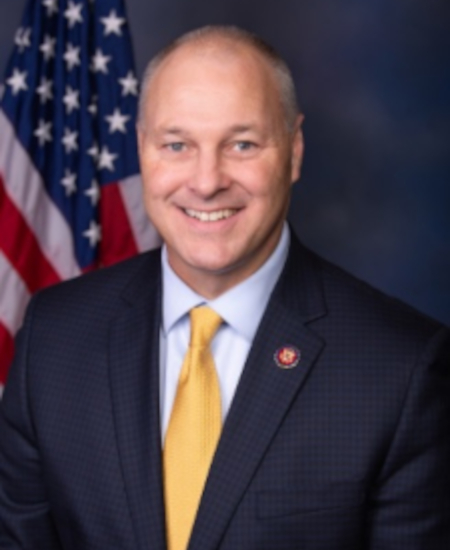
Rep. Pete Stauber
Sponsored bills
Recognition of Local Interests in NEPA Decision Making This bill sets forth requirements for determining the venue for judicial review of an agency action under the National Environmental Policy Act of 1969 (NEPA). Specifically, the bill requires a proceeding for judicial review of an agency's compliance with NEPA to be brought in the U.S. district court for a district in which the authorized activity is proposed to be carried out or the U.S. District Court for the District of Columbia.
Abby Honold Act This bill directs the Office on Violence Against Women within the Department of Justice to make competitive grants to law enforcement agencies and victim services organizations to implement evidence-based, trauma-informed approaches in responding to and investigating domestic violence, dating violence, sexual assault, or stalking.
Just and Unifying Solutions To Invigorate Communities Everywhere Act of 2021 or the JUSTICE Act This bill addresses policies and issues regarding policing practices and law enforcement accountability. The bill funds state and local grants, incentivizes state and local reporting on the use of certain policing practices, creates new federal offenses for certain misconduct, and establishes best practices and training requirements. The bill funds state and local grants, including to support the use of body-worn cameras, to implement information sharing systems for disciplinary records of law enforcement officers, and to prohibit officers from engaging in sexual acts under color of the law. Further, it requires state and local governments that receive grants under the Edward Byrne Memorial Justice Assistance Grant program to report information related to use-of-force incidents and the use of no-knock warrants. At the federal level, the bill establishes new criminal offenses related to falsifying police reports and engaging in sexual acts under color of law. The bill directs the Department of Justice to develop training on de-escalation tactics, behavioral health crises, alternatives to the use of force, and the duty to intervene when another officer uses excessive force. Finally, the bill establishes and funds the National Criminal Justice Commission. Among other tasks, the commission must develop best practices for policing tactics and procedures.
Born-Alive Abortion Survivors Protection Act This bill establishes requirements for the degree of care a health care practitioner must provide in the case of a child born alive following an abortion or attempted abortion. Specifically, a health care practitioner who is present must (1) exercise the same degree of care as would reasonably be provided to any other child born alive at the same gestational age, and (2) ensure the child is immediately admitted to a hospital. Additionally, a health care practitioner or other employee who has knowledge of a failure to comply with the degree-of-care requirements must immediately report such failure to law enforcement. A health care practitioner who fails to provide the required degree of care, or a health care practitioner or other employee who fails to report such failure, is subject to criminal penalties—a fine, up to five years in prison, or both. An individual who intentionally kills or attempts to kill a child born alive is subject to prosecution for murder. The bill bars the criminal prosecution of a mother of a child born alive under this bill and allows her to bring a civil action against a health care practitioner or other employee for violations.
Whole Milk for Healthy Kids Act of 2021 This bill revises requirements for milk provided by the National School Lunch Program of the Department of Agriculture (USDA). Currently, schools participating in the program must provide milk that is consistent with the most recent Dietary Guidelines for Americans; USDA regulations require milk to be fat-free or low-fat and allow only fat-free milk to be flavored. The bill removes these restrictions and instead permits schools to offer students whole, reduced-fat, low-fat, and fat-free flavored and unflavored milk.
TRICARE Fairness for National Guard and Reserve Retirees Act This bill aligns eligibility for TRICARE health coverage with the age at which personnel of the Retired Reserve (former National Guard and Reserve members) begin receiving retired pay. Specifically, personnel of the Retired Reserve who are not yet age 60 but are receiving their retirement pay may purchase TRICARE health coverage for retired military personnel, rather than the presently allowed TRICARE Retired Reserve. Under current law, Reserve Component personnel may retire below age 60, but not below 50, based on active duty performance.
Storing CO2 And Lowering Emissions Act or the SCALE Act This bill establishes programs within the Department of Energy that provide financial support and incentives to develop infrastructure for carbon dioxide capture, transport, utilization, and storage.
Global War on Terrorism Memorial Location Act This bill authorizes the establishment of a National Global War on Terrorism Memorial in the area of the National Mall.
Stronger Child Abuse Prevention and Treatment Act This bill reauthorizes through FY2027 and revises the Child Abuse Prevention and Treatment Act and the Child Abuse Prevention and Treatment and Adoption Reform Act of 1978 to expand services for preventing and treating child abuse. Specifically, the bill establishes requirements concerning collecting and exchanging data about child abuse and neglect. For instance, the bill requires the Department of Health and Human Services (HHS) to (1) establish uniform national standards for tracking and reporting child fatalities and near fatalities resulting from maltreatment, and (2) develop an electronic interstate data exchange system that allows states to share information from their child abuse and neglect registries with other states. The bill also addresses child abuse and neglect related to families impacted by substance use disorders, racial bias in the child protective services system, and child sexual abuse. Further, the bill revises the community-based grants program to emphasize access to effective services for diverse populations and to promote the development of statewide strategies to scale up family strengthening services. Finally, the bill requires HHS to examine unregulated custody transfers and make recommendations for preventing, identifying, and responding to such transfers.