

This resolution urges the Department of State to take action on unpaid Peruvian agrarian reform bonds by encouraging Peru to negotiate in good faith with U.S. bondholders regarding payment of these bonds.
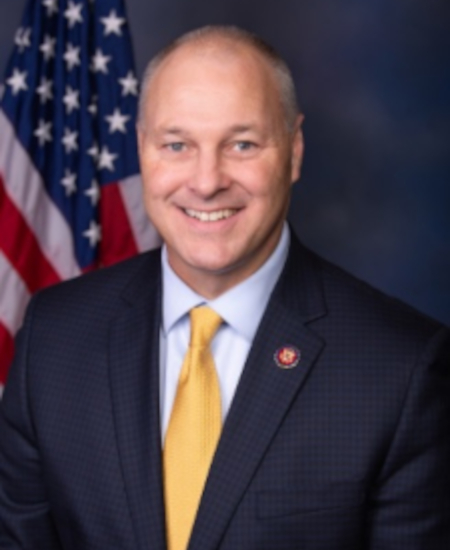
Rep. Pete Stauber
Sponsored bills
Supporting Apprenticeship Colleges Act of 2021 This bill directs the Department of Education to award grants to institutions of higher education that sponsor construction and manufacturing-oriented registered apprenticeship programs for (1) expanding or supporting outreach to high schools, local businesses, and local workforce development boards; and (2) providing advising and support services to students who are enrolled in these apprenticeship programs.
Supporting Accurate Views of Emergency Services Act of 2021 or the 911 SAVES Act This bill requires the Office of Management and Budget, by 30 days after the bill's enactment, to categorize public safety telecommunicators as a protective service occupation under the Standard Occupational Classification System.
PPP Extension Act of 2021 This bill extends the Paycheck Protection Program, established to support small businesses in response to COVID-19 (i.e., coronavirus disease 2019), through June 30, 2021. Currently, the program is set to expire on March 31, 2021. For the final 30 days of the program (i.e., from June 1 until June 30), the Small Business Administration may only process applications submitted prior to June 1, and it may not accept any new loan applications. The bill excludes the budgetary effects of this bill from PAYGO scorecards under the Statutory Pay-As-You-Go Act of 2010 and from Senate PAYGO scorecards.
Stop the Shutdowns Act This bill requires the Small Business Administration to submit a report analyzing the impact on small businesses of any prospective requirement relating to COVID-19 (i.e., coronavirus disease 2019) that would restrict or prevent those businesses from operating at normal capacity.
Willie O'Ree Congressional Gold Medal Act This bill provides for the award of a Congressional Gold Medal to Willie O'Ree or, if unavailable, to a member of his family, in recognition of his contributions and commitment to hockey, inclusion, and recreational opportunity.
Motorcyclist Advisory Council Reauthorization Act This bill provides statutory authority for the establishment of the Motorcyclist Advisory Council whose duties are to advise the Department of Transportation on transportation issues of concern to motorcyclists, including (1) barrier design; (2) road design, construction, and maintenance practices; and (3) the architecture and implementation of intelligent transportation system technologies.
Neighborhood Homes Investment Act This bill establishes a new business-related tax credit to finance home building and rehabilitation in neighborhoods that meet certain eligibility criteria relating to poverty rates, income, and home values. The credit is limited to 35% of the lesser of the qualified development cost (i.e., the cost of construction, substantial rehabilitation, demolition, and environmental remediation of residential properties) or 80% of the national median sale price for new homes. The credit applies to single family homes containing four or fewer residential units, condominiums, or houses or apartments owned by cooperative housing corporations.
Providing Americans with LNG Safely Act or the PALS Act This bill prohibits the Department of Transportation (DOT) from issuing any regulation or order that (1) prohibits the transportation of liquefied natural gas (LNG) by rail, or (2) restricts the transportation of LNG by rail in DOT-113 tank cars. The bill does not limit the authority of DOT to issue short-term emergency orders related to the transportation of LNG by rail.
VA Billing Accountability Act This bill authorizes the Department of Veterans Affairs (VA) to waive the requirement that a veteran make co-payments for medications, hospital care, nursing home care, and medical services in certain situations. Specifically, a veteran may have such co-payments waived if (1) an error committed by the VA or a non-VA facility delayed co-payment notification to the veteran, and (2) the veteran received such notification later than 180 days (18 months in the case of a non-VA facility) after the date on which the veteran received the care or services. In requiring a veteran to make a co-payment for care or services provided at a VA or a non-VA medical facility, the VA shall notify the veteran not later than 180 days (18 months in the case of a non-VA facility) after the date on which the veteran received the care or services. If the VA does not provide notification by such date, it may not collect the payment, including through a third-party entity, unless the veteran is provided with (1) information about applying for a waiver and establishing a payment plan with the VA, and (2) an opportunity to make a waiver or establish a payment plan. Finally, the bill requires the VA to review and improve its co-payment billing internal controls and notification procedures.