

Maddy summaryThis bill requires state agencies administering the SNAP (food stamp) program to provide recipient-level data to the USDA Secretary upon request. It directly affects state SNAP agencies, which must submit this data within 30 days (or sooner for urgent cases) in secure electronic formats. Key provisions include mandatory data sharing for program oversight and integrity, strict privacy safeguards under the Privacy Act, and potential withholding of federal funds for non-compliance. The bill also clarifies that this does not limit the USDA's existing authority to access state data for program administration.
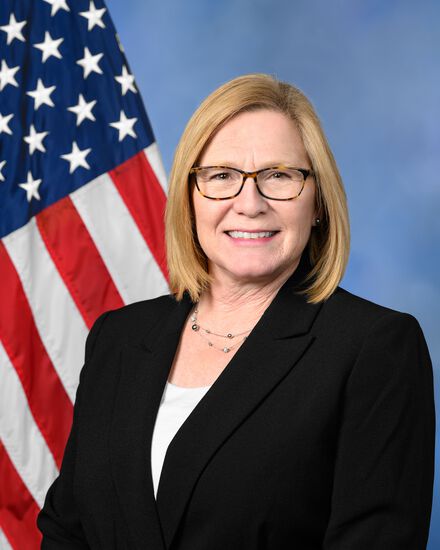
Rep. Michelle Fischbach
Sponsored bills
Maddy summaryHR 5038, the American Protein Processing Modernization Act, creates a formal process for meat and poultry processing plants to request operating at "alternate inspection rates" (higher than standard government-mandated rates) while meeting USDA food safety criteria. The bill requires the USDA Secretary to publish food safety criteria within 90 days and respond to facility requests within 90 days (with automatic approval if no response is given). Existing facilities already using alternate rates can continue if they maintain food safety standards or until their request is reviewed. The bill also outlines procedures for addressing noncompliance, including written notices, 180-day correction periods, and timelines for reverting to standard inspection rates if needed, while minimizing impacts on operations and animal producers.
Maddy summaryHR 909, the Crime Victims Fund Stabilization Act of 2025, modifies how funds from the False Claims Act are deposited into the Crime Victims Fund. It specifies that from 2025 through 2029, certain False Claims Act proceeds (specifically those for qui tam plaintiff payments and government damage reimbursements) cannot be deposited into the fund. This change directly affects the composition of the Crime Victims Fund by excluding these specific revenue streams during the specified period. The bill does not create new benefits or alter victim services; it only adjusts fund allocation rules for existing False Claims Act revenues.
Maddy summaryHRES 984 is a symbolic resolution designating January 9, 2026, as "National Law Enforcement Appreciation Day." It directly honors all federal, state, local, and tribal law enforcement officers across the United States for their service and sacrifices. The resolution expresses the House's support and gratitude, encourages public observance through ceremonies, and recognizes officers who have made the ultimate sacrifice. As a non-binding resolution, it does not create new laws or policies but serves as a formal expression of appreciation.
Maddy summaryHR 6855 reauthorizes the White House Conference on Small Business, updating the 1995 law to require the President to hold the conference between December 2025 and December 2026. It directly affects small business owners (as delegates), state governors, and congressional members by changing delegate selection rules (including 100 presidential appointees) and mandating an electronic system for ongoing collaboration among delegates. Key provisions include revising the conference's purpose to prioritize small business impact on the national economy, requiring a 4-year post-conference communication system for delegates, and funding the event solely through collected fees (not new appropriations). The bill also clarifies that SBA cosponsorships with entities do not constitute endorsements.
Maddy summaryThis bill, titled "Pet and Livestock Protection Act," is misleading; it actually focuses on gray wolf management. It requires the Secretary of the Interior to reissue a 2020 rule removing gray wolves from the endangered species list within 60 days of enactment. The bill also prohibits courts from reviewing this reissuance. This directly affects gray wolf populations and management policies in states where wolves are present, shifting regulatory control away from federal endangered species protections.
Essential Caregivers Act of 2025 This bill prohibits certain health care facilities from limiting the access of essential caregivers to residents of those facilities, including during designated emergency periods. Specifically, the bill generally prohibits Medicare skilled nursing facilities, Medicaid nursing facilities, Medicaid intermediate care facilities, and associated inpatient rehabilitation facilities from restricting the access of essential caregivers to residents of the facilities, including during emergency periods in which visitation rights are otherwise restricted. During emergency periods, facilities may restrict access for an initial period of up to seven days and for one additional maximum seven-day period (if the additional period is approved by the state health department). Facilities may restrict access for a total of 7 days (or 14 days with the approval of the state health department) during an emergency period. Essential caregivers must agree to comply with any safety protocols set by the facility, which may be no more stringent for caregivers compared to those for staff. Caregivers who fail to comply with these requirements may be denied access, subject to an appeals process.
Maddy summaryThis bill allows groups of small businesses or self-employed individuals to form a single health plan that treats all members as one employer for coverage purposes. It directly affects small business associations and self-employed people who can join such groups to access pooled health coverage, provided they meet specific requirements (e.g., 51+ total employees, 2+ years in existence, no health-based discrimination). Key mechanisms include permitting modified community rating for premiums (based on pooled claims) while prohibiting health status-related discrimination in enrollment, premiums, or pre-existing condition coverage. The plan remains subject to federal ERISA rules, and self-employed members must meet defined criteria to participate as both employers and employees.
Maddy summaryThis bill exempts multiemployer pension plans from automatic enrollment requirements under the Internal Revenue Code. Specifically, it amends Section 414A(c)(3) to explicitly exclude multiemployer plans (defined under Section 414(f)) from rules requiring automatic enrollment in retirement plans. This change directly affects workers enrolled in union-sponsored multiemployer pension plans, allowing these plans to avoid automatic enrollment obligations. The amendment applies to taxable years beginning after December 31, 2024.
Miracle on Ice Congressional Gold Medal Act This act provides for the award of Congressional Gold Medals to the members of the 1980 U.S. Olympic men's ice hockey team in recognition of the team's achievement at the 1980 Winter Olympic Games.