

Precision Medicine Answers for Kids Today Act This bill establishes programs and requires reporting relating to Medicaid coverage of genetic and genomic testing, particularly for children. Specifically, the bill establishes a demonstration program for up to 15 state Medicaid programs to cover genetic and genomic testing for certain individuals under the age of 21 (or a lower age, if the state chooses) and for former foster youth under the age of 26. Additionally, the Centers for Medicare & Medicaid Services must report on overall Medicaid coverage of such services and issue guidance for states on ways to increase coverage for children; the National Academy of Medicine must study the impact of this guidance as well as the general utility of genetic and genomic testing.
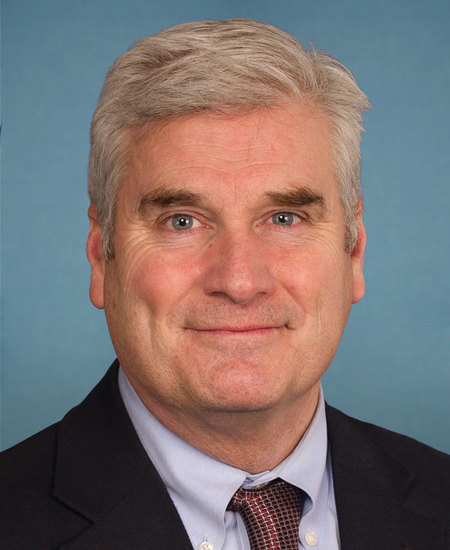
Rep. Tom Emmer
Sponsored bills
Credit Union Governance Modernization Act of 2021 This bill revises the procedure for expelling members from a federal credit union. Specifically, a member may be expelled for cause pursuant to a policy adopted by a majority vote of a quorum of the directors of a credit union. Currently, a member may be expelled by a two-thirds vote of the credit union membership present at a special meeting. The member may request a hearing from the board of directors. After the hearing, the board shall hold a vote on expelling the member. The expelled member may request reinstatement through a two-thirds vote of the members present at a meeting. Member conduct that may be cause for expulsion includes a material loss to the credit union, a violation of the credit union membership agreement, a substantial disruption to the operations of a credit union, fraud or attempted fraud, and other illegal or inappropriate behavior.
Inpatient Opioid Safety Act of 2021 This bill requires hospitals, as a condition of Medicare and Medicaid participation, to use specified technology to monitor patients for opioid-induced respiratory depression for 12 hours after the administration of an opioid or until the patient is discharged, whichever is earlier, unless a health care practitioner determines before administering an opioid that such monitoring should not be used and records this determination in the patient's record.
This concurrent resolution declares that Congress should not impose any new performance fee, tax, royalty, or other charge relating to the public performance of sound recordings on a local radio station for broadcasting sound recordings over the air, or on any business for such public performance of sound recordings.
This bill requires the Department of Homeland Security (DHS) to negotiate with the Canadian government to establish travel corridors at land-based ports of entry along the U.S.-Canada border. If DHS and the Canadian government reach an agreement, DHS must establish such travel corridors. Specifically, DHS must seek to enter into negotiations with the Canadian government to establish (1) travel corridors based on guidance from the Centers for Disease Control and Prevention and the Public Health Agency of Canada, and (2) documentation requirements for travelers using such travel corridors.
National Patient ID Repeal Act This bill repeals the requirement that the Department of Health and Human Services adopt a standard unique health identifier for each individual, employer, health plan, and health care provider. The provision has not been implemented to date because language included in annual appropriations acts has prohibited the use of federal funds for developing a unique identifier. However, some appropriations bills introduced in recent years have not included this funding restriction.
Maddy summaryHRES 754 is a non-binding resolution expressing the House of Representatives' opposition to proposed "punitive natural gas taxes" on U.S. businesses, families, and workers. It cites claims that such taxes would raise average energy bills by 17%, reduce GDP by $9 billion, and eliminate 90,000 jobs, while disproportionately harming low-income households. The resolution argues that opposing these taxes supports U.S. energy security, national security, and continued leadership in reducing emissions through domestic natural gas production. As a procedural resolution, it does not create law but formally states the House's position against this policy approach.
Main Street Growth Act This bill allows for the registration of national venture securities exchanges for the purpose of trading the securities of certain small companies, such as startups and emerging growth companies. Individuals and existing national securities exchanges may apply to the Securities and Exchange Commission for approval to register such an exchange, or to register a listing tier within an existing exchange. The bill sets forth requirements for these venture exchanges, including required disclosures, trading limits, and trading privileges.
CFPB Whistleblower Incentives and Protection Act This bill requires the Consumer Financial Protection Bureau to provide awards to whistleblowers who report information relating to a violation of consumer financial law resulting in certain monetary sanctions exceeding $1 million. Specifically, the bureau must award compensation to whistleblowers (1) not less than the greater of 10% of the collected monetary sanctions, or $50,000; and (2) not more than 30% of the collected monetary sanctions. The compensation to any single whistleblower is capped at $5 million. The bill also sets forth requirements regarding the legal representation of a whistleblower and provides for confidentiality regarding the whistleblower's identity.
Prince Congressional Gold Medal Act This bill provides for the award, posthumously, of a Congressional Gold Medal to Prince Rogers Nelson, better known as Prince, in recognition of his achievements as a musician and contributions to American culture.