Critical Infrastructure Manufacturing Feasibility Act This bill requires the Department of Commerce to study and report on products that are in high demand across the critical infrastructure sectors. Critical infrastructure sectors are those whose assets, systems, and networks are vital to national security, the economy, public health or safety, or any combination of those matters. The study must (1) identify the products in high demand across those sectors that are being imported due to manufacturing, material, or supply chain constraints; and (2) analyze the costs, benefits, and feasibility of manufacturing those products in the United States.
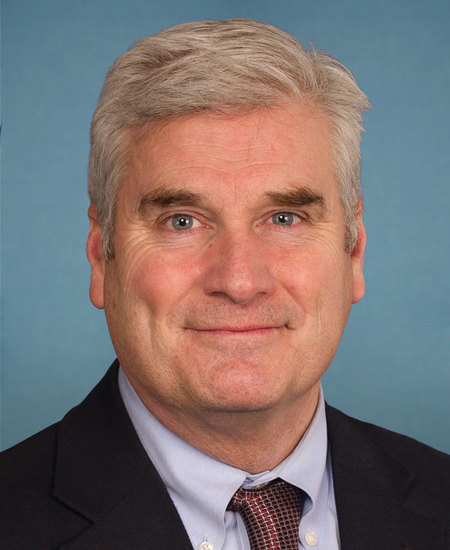
Rep. Tom Emmer
Sponsored bills
Employee Retention Tax Credit Reinstatement Act This bill provides for a reinstatement of the employee retention tax credit through 2021. The credit was established to compensate employers whose businesses were negatively impacted by the COVID-19 pandemic for wages paid to their employees.
Maddy summaryThis non-binding resolution (HRES 811) expresses congressional support for designating November 18, 2021, as "National Rural Mental Health Day." It highlights statistics showing rural Americans face higher suicide rates, fewer mental health providers, and greater barriers to care compared to urban areas. The resolution commits the House to addressing mental health disparities in rural communities and maintains support for existing programs like the Farm and Ranch Stress Assistance Network. It does not create new funding, policies, or mandates - only a symbolic gesture to raise awareness.
Restoring Benefits to Defrauded Veterans Act This bill requires the Department of Veterans Affairs (VA) to pay certain reissued benefits (i.e., benefits that were misused by a fiduciary) to a beneficiary's estate in situations where a beneficiary predeceases a payment. The VA must pay such benefits to an individual or entity in the following order: the estate of the beneficiary, a successor fiduciary serving the beneficiary when the beneficiary died, or the next inheritor determined by a court of competent jurisdiction.
Conscience Protection Act of 2021 This bill provides statutory authority for certain protections for health care providers that refuse to participate in abortions based on religious beliefs or other convictions. Health care providers include individual professionals, medical facilities, health insurance organizations, and social services providers that refer clients to health care services. The federal government and entities that receive federal funding for health-related activities, including state and local governments, may not discriminate against a health care provider that refuses to be involved in, or provide coverage for, abortions. Currently, similar requirements apply to various related activities, including certain employment or personnel decisions (the Church Amendments), abortion services training (the Coats-Snowe Amendment), qualified health plans offered through health insurance exchanges, and annual appropriations bills for the Department of Health and Human Services (HHS) and other federal agencies (the Weldon Amendment). The HHS Office for Civil Rights must investigate complaints of this kind of discrimination. Furthermore, HHS may terminate or reduce HHS funding for health-related activities if a person or entity fails to comply with nondiscrimination requirements. Additionally, the Department of Justice or any entity adversely affected by such discrimination may bring a civil action to obtain appropriate relief. A plaintiff does not need to seek or exhaust administrative remedies before bringing the action. A plaintiff may also bring an action, including one for money damages, against a governmental entity. In many cases, principles of sovereign immunity shield states and some localities from these kinds of actions.

Parents Bill of Rights Act This bill outlines various rights of parents and guardians regarding the elementary or secondary school education of their children. Among other requirements, the bill (1) directs local educational agencies to publicly post the curriculum for each elementary and secondary school grade level; and (2) requires schools to notify parents and guardians of their rights, including the right to review the school's curriculum and budget.
Bureau of Consumer Financial Protection-Inspector General Reform Act of 2021 or the CFPB-IG Act of 2021 This bill establishes a separate Office of Inspector General for the Consumer Financial Protection Bureau (CFPB). Currently, such oversight of the CFPB is combined with the Office of Inspector General for the Board of Governors of the Federal Reserve System.
Pregnancy Loss Mental Health Research Act of 2021 This bill expands research and related activities that address mental health complications following a pregnancy loss (i.e., miscarriage, stillbirth, or abortion). Specifically, the National Institutes of Health and the National Institute of Mental Health (NIMH) must expand and intensify research on mental health complications following pregnancy loss. In particular, NIMH must conduct a longitudinal study to determine the prevalence and other information about such mental health complications. Additionally, the Department of Health and Human Services must award grants to health providers, state or local governments, or other appropriate nonprofits to deliver services to individuals with mental health conditions following a pregnancy loss. Funding made available under this bill may not be provided to an entity (or an entity's affiliate, subsidiary, successor, or clinic) that performs abortions other than in the case of a pregnancy (1) that is the result of rape or incest; or (2) when the life of the woman is in danger due to a physical disorder, injury, or illness.
This joint resolution nullifies a Department of Labor emergency temporary standard for preventing the transmission of COVID-19 in employment settings. Under the standard issued on November 5, 2021, employers with 100 or more employees must require their onsite employees to either be fully vaccinated against COVID-19 or undergo weekly COVID-19 testing.
Keep Innovation in America Act This bill modifies provisions enacted by the Infrastructure Investment and Jobs Act relating to the definitions of broker and digital assets and their reporting requirements. The bill redefines broker , for tax reporting purposes, to mean any person who (for consideration) stands ready in the ordinary course of business to effect sales of digital assets at the direction of their customers. The bill redefines digital asset to mean any digital representation of value which is recorded on a cryptographically secured distribution ledger (this revised definition eliminates the discretion of the Department of the Treasury to include similar technology in the definition of digital asset). The bill eliminates the cash reporting requirement for digital assets (i.e., receipt of more than $10,000) but requires Treasury to conduct a study of, and report on, the effect of expanding the definition of cash to include any digital asset.