

TCJA Permanency Act This bill makes permanent provisions affecting individual and business taxpayers that were enacted in 2017 by the Tax Cuts and Jobs Act and are scheduled to expire at the end of 2025. The bill makes permanent reductions in individual and capital gain tax rates. The bill increases the standard tax deduction for individual taxpayers. It also increases and modifies the child tax credit and raises the contribution base for the tax deduction for charitable contributions. The bill allows additional contributions to ABLE accounts (tax-exempt accounts designed to enable individuals with disabilities to save and pay for disability-related expenses). It exempts from taxation combat zone benefits of members of the Armed Forces serving in the Sinai Peninsula of Egypt and limits the deduction for moving expenses to active duty members of the Armed Forces. Additionally, the bill expands the types of elementary and secondary school expenses eligible for payment from qualified tuition programs (529 programs); lowers to $750,000 the amount of mortgage debt eligible for an interest expense tax deduction; reinstates after 2023 the exclusion of income from the gross income of student loan borrowers for loan debt discharged due to death or total and permanent disability; makes permanent the limitation on the tax deduction for state and local taxes and denies a deduction for foreign real property taxes; makes permanent the tax deduction of the income of certain pass-through business entities; repeals the tax deduction for personal tax exemptions and the exclusion of employer-provided bicycle commuter fringe benefits; terminates certain miscellaneous itemized tax deductions; doubles the estate and gift tax exemption amount; and makes permanent the increase of the alternative minimum tax exemption amount for individual taxpayers.
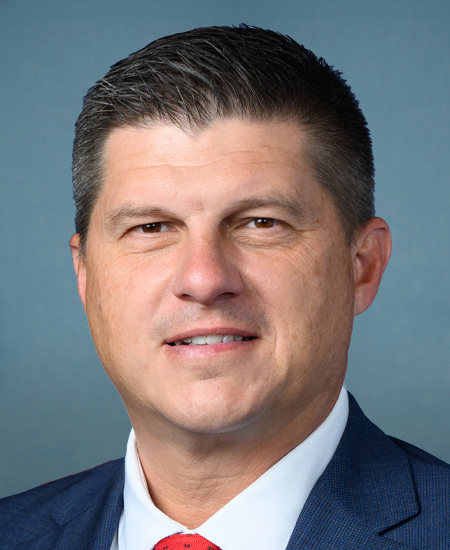
Rep. Brad Finstad
Sponsored bills
IRS Reduction Act This bill rescinds all unobligated amounts appropriated by the Inflation Reduction Act of 2022 for the improvement of the Internal Revenue Service (IRS). The Department of the Treasury must report on how the IRS plans to improve the efficiency of its services, including the processing of tax returns.
VA Loan Informed Disclosure Act of 2022 or the VALID Act of 2022 The bill requires a Federal Housing Administration mortgage notice to a veteran to contain comparative rate and fee information about loans available under the Veterans Affairs home loan program.
Creating Opportunities to Thrive and Advance Act or the COTA Act This bill authorizes state workforce development agencies to provide guidance and raise public awareness about career options in high-skill, high-wage, or in-demand industry sectors or occupations in current or emerging professions.
Reducing Farm Input Costs and Barriers to Domestic Production Act This bill addresses various provisions related to the regulation of domestic agricultural products, including by requiring the Department of Agriculture to publish criteria for considering requests from meat and poultry establishments to operate at line speeds in excess of the current regulatory limitations. The bill also nullifies the final rule issued by the Council on Environmental Quality on April 20, 2022, that reinstated various National Environmental Policy Act regulatory provisions.
Military Spouse Hiring Act This bill expands the Work Opportunity Tax Credit (WOTC) to include the hiring of a qualified military spouse. (The WOTC permits employers who hire individuals who are members of a targeted group such as qualified veterans, ex-felons, or long-term unemployment recipients to claim a tax credit equal to a portion of the wages paid to those individuals.) A qualified military spouse is any individual who is certified by the designated local agency as being (as of the hiring date) a spouse of a member of the Armed Forces.
Farm Credit Administration Independent Authority Act This bill prohibits the Consumer Financial Protection Bureau from issuing, implementing, or continuing any policy or guidance issued after January 1, 2021, that affects the Farm Credit Administration (FCA), Farm Credit System, or FCA Board.
Amplifying Processing of Livestock in the United States Act or the A-PLUS Act This bill directs the Department of Agriculture to revise federal regulations related to market agencies owning, financing, or participating in the operation of a meat packing entity. Specifically, this bill allows market agencies to have an ownership interest in, finance, or participate in the management or operation of a packing entity if such packing entity has a cumulative slaughter capacity of less than 2,000 animals per day or 700,000 animals per year.
Supply Chain Disruptions Relief Act This bill modifies the treatment of liquidations of new motor vehicle inventory as qualified LIFO (last in first out accounting method) inventory. It allows new motor vehicle dealers to elect to wait until the end of 2025 to replace their inventory for purposes of determining income attributable to the sale of such inventory during 2020 and 2021.
Firearm Industry Non-Discrimination Act or the FIND Act This bill prohibits the federal government from entering into contracts with an entity that discriminates against firearm trade associations or businesses that deal in firearms, ammunition, or related products. Specifically, the bill requires a federal agency to include in each contract for the procurement of goods or services awarded by the agency a clause requiring the prime contractor to certify that it (1) has no policy, practice, guidance, or directive that discriminates against a firearm entity or firearm trade association; and (2) will not adopt a policy, practice, guidance, or directive that discriminates against a firearm entity or firearm trade association during the term of the contract. The bill establishes (1) a similar requirement with respect to subcontracts, and (2) penalties for violations. The bill makes such prohibition inapplicable to a contract for the procurement of goods or services that is a sole-source contract.