

Maddy summaryThe Warehouse Worker Protection Act establishes new requirements for employers in warehouse facilities to protect workers from harmful quotas and workplace surveillance practices. It requires employers to provide written descriptions of quotas and workplace monitoring to workers, prohibits quotas that interfere with breaks, safety compliance, or anti-discrimination rights, and gives workers the right to access their work speed data. The bill creates a Fairness and Transparency Office within the Department of Labor to enforce these requirements and investigate violations, with enforcement also involving the Federal Trade Commission. Employers with more than 200 employees at covered warehouse facilities (including distribution centers, couriers, and warehouses) are directly affected by these new requirements, which include new protections against retaliation for workers who exercise these rights.
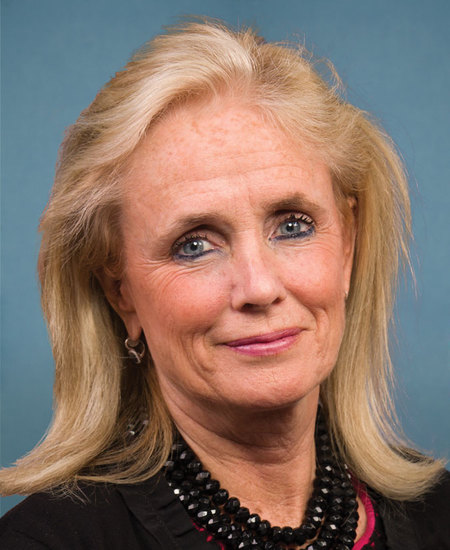
Rep. Debbie Dingell
Sponsored bills
Maddy summaryThis bill adjusts health insurance subsidies by modifying the premium tax credit structure under the Internal Revenue Code. It replaces previous income thresholds with a sliding-scale formula, increasing subsidies for households earning between 150% and 400% of the federal poverty level - reducing their required premium payments as income rises within these tiers. The changes apply to tax years beginning after December 31, 2025, directly affecting middle-income individuals and families purchasing coverage through health insurance marketplaces. It also repeals specific provisions from a prior reconciliation law related to health care.
Maddy summaryThe Protect Our Hospitals Act (HR 4807) repeals a specific provision (Section 71115 of Public Law 119-21) that altered Medicaid provider tax rules. This bill restores the prior tax structure for Medicaid providers, including hospitals and clinics that accept Medicaid, returning them to the tax treatment that existed before the change. As a result, these providers will no longer be subject to the modified tax rules enacted by the repealed provision. The bill does not affect Medicaid eligibility, benefits, or coverage - it solely reverts a tax policy change without introducing new requirements.
Maddy summaryThis bill removes a barrier preventing most low-income students from accessing SNAP benefits. It amends the Food and Nutrition Act to explicitly allow students enrolled at least half-time in recognized higher education programs to qualify for SNAP, reversing a prior exclusion. The key change eliminates the previous requirement that students meet specific exceptions (now deleted) and adds a new eligibility category under Section 3(m)(5). This directly affects low-income undergraduate and graduate students at colleges and training programs who were previously ineligible. The changes take effect January 2, 2026.
Maddy summaryHR 4791, the Keep USGS Strong Act, prevents the U.S. Geological Survey (USGS) from facing hiring freezes, staff cuts, or lease cancellations without approval, specifically exempting it from a January 2025 presidential hiring freeze and related restrictions. This protects USGS employees and operations when Congress has appropriated funds for their salaries and expenses. The bill directly affects USGS staff and its ability to maintain ongoing scientific work critical to monitoring natural hazards, water resources, ecosystems, and geospatial data used by communities and agencies nationwide. It ensures continuity in the USGS’s essential data collection and research, which supports public safety, environmental management, and informed decision-making.
Maddy summaryHR 4763, the PTO Act, requires most employers to provide employees with at least 1 hour of paid annual leave for every 25 hours worked, with a maximum of 80 hours per year. It applies to private-sector workers and certain government employees, protecting their right to use paid leave for any purpose without disclosing the reason. The bill mandates employers to maintain health benefits during leave, allow carryover of up to 40 hours of unused leave, and pay out unused leave upon separation. It also prohibits employers from discriminating against employees for using paid leave or requiring them to find replacements while on leave. The law includes enforcement mechanisms, allowing employees to file complaints with the Department of Labor or pursue private lawsuits.
Maddy summaryHCONRES 45 is a symbolic congressional resolution recognizing barriers to physical access in federally funded facilities for people with disabilities. It reaffirms support for the Americans with Disabilities Act (ADA) and the Architectural Barriers Act of 1968, and pledges to prioritize inclusive design in future infrastructure projects. The resolution does not create new legal requirements or funding but formally acknowledges ongoing accessibility challenges faced by over 70 million Americans with disabilities. It cites recent data on disability prevalence and existing federal guidelines for pedestrian access, emphasizing the need for equal access to public facilities.
Maddy summaryHRES 602 is a symbolic resolution recognizing the role of the Americans with Disabilities Act (ADA) in enabling independent living and economic self-sufficiency for people with disabilities. It does not create new laws but calls on specific federal agencies to take action, including the Department of Labor to boost employment opportunities, the Federal Communications Commission to improve accessible technology, and the Department of Housing and Urban Development to expand inclusive housing. The resolution highlights ongoing challenges like high poverty rates (nearly 25% of people with disabilities living below the poverty line) and inaccessible workplaces, urging bipartisan efforts to address these barriers. It directly affects individuals with disabilities by advocating for systemic changes in employment, healthcare access, and community integration.
Maddy summaryHR 4752, the Reducing Hereditary Cancer Act, requires Medicare to cover genetic testing for germline mutations in individuals with a family history of hereditary cancer or suspicious personal/family history. It mandates coverage for risk-reducing surgeries (like mastectomies or hysterectomies) when guided by evidence-based clinical guidelines, and increases the frequency of cancer screenings (such as mammograms, colonoscopies, and breast MRI) for Medicare beneficiaries confirmed to have hereditary cancer gene mutations - ensuring screenings occur at least annually. The bill applies to Medicare beneficiaries with specific high-risk profiles, aligning coverage with guidelines from recognized oncology organizations like the National Comprehensive Cancer Network. It does not change eligibility but modifies Medicare’s existing coverage rules to expand access to these preventive services.
Maddy summaryThis bill prohibits companies from using automated systems to set prices or wages based on surveillance data about consumers or workers. It bans "surveillance-based price setting" (personalized pricing based on consumer tracking) and "surveillance-based wage setting" (using personal data to determine worker pay), with limited exceptions for standard discounts like student or senior citizen rates when properly disclosed. Companies must publish clear procedures about how their automated systems work, including how data is used and how consumers/workers can challenge inaccuracies. The Federal Trade Commission and Equal Employment Opportunity Commission will enforce the law, and individuals can file lawsuits to challenge violations. The bill also prohibits pre-dispute arbitration agreements that would prevent class action lawsuits.