

Facilitating the Deployment of Infrastructure with Greater Internet Transactions And Legacy Applications Act or the Facilitating DIGITAL Applications Act This bill requires the National Telecommunications and Information Administration (NTIA) to periodically report on the development of online portals for the acceptance, processing, and disposal of applications for communications use authorizations. Communications use authorizations are requests for easements, rights-of-way, leases, licenses, or other authorizations to locate or modify a transmitting device, support structure, or other communications facility on public lands or National Forest System land. Specifically, the NTIA must report to Congress about (1) whether the Department of the Interior and the Forest Service have each established a portal, and (2) any barriers to establishing the portals. The NTIA must submit the first report within 90 days of the enactment of the bill and additional reports every 60 days thereafter until the portals are established. Additionally, Interior and the Forest Service must notify the NTIA within three business days of establishing their respective portals.
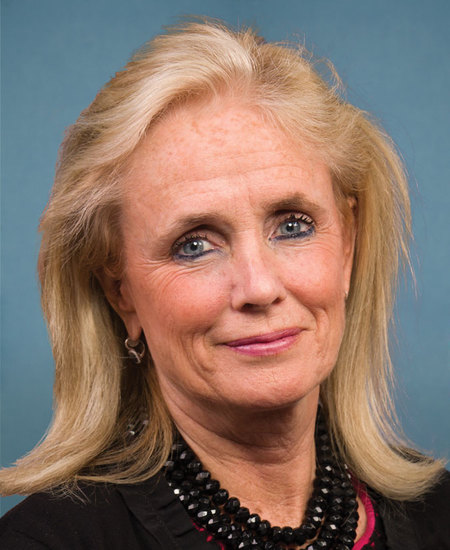
Rep. Debbie Dingell
Sponsored bills
Maddy summaryThe Family Violence Prevention and Services Improvement Act of 2026 amends federal law to enhance support for victims of family violence, domestic violence, and dating violence. The bill authorizes $270 million annually for fiscal years 2027-2031 to fund state, tribal, and community programs, with specific funding reserved for tribal programs (12.5%), national hotlines ($20.5 million for general hotline, $4 million for Indian hotline), and services for underserved populations. It requires grantees to provide trauma-informed, culturally appropriate services while prohibiting discrimination and protecting victim confidentiality, and mandates accessibility for people with disabilities and limited English proficiency. The bill also establishes new technical assistance centers, Tribal resource centers, and community-based prevention programs to address the needs of underserved populations including Native Hawaiians, Alaska Natives, and racial and ethnic minorities.
Maddy summaryThis bill amends existing port infrastructure funding programs to require fair geographic distribution of projects across U.S. regions. It adds new requirements to two key programs: the Port and Intermodal Improvement Program (46 U.S.C. § 54301(a)(6)(B)) and assistance for small inland river/coastal ports (46 U.S.C. § 54301(b)(4)). The key provision mandates that selected projects must ensure equitable representation among all U.S. regions, preventing concentration of funds in specific areas. This directly affects how federal port funding is allocated, requiring the Department of Transportation to consider regional balance when approving projects.
Maddy summaryHR 6704 establishes a $45 million prize competition to accelerate development of passive, in-vehicle technology that prevents operation by drivers with high blood alcohol levels (e.g., breath or touch sensors). It also creates a Traffic Safety Enforcement Center of Excellence to provide states and law enforcement with data-driven strategies for targeting drunk and drug-impaired driving, and mandates a national drug-involved crash data system to track non-alcohol impairments in fatal and serious injury crashes. The bill directly affects vehicle manufacturers (through tech integration incentives), states (via enforcement training and data grants), and law enforcement agencies (through new protocols and resource targeting). Key provisions include requiring standardized toxicology data collection, prioritizing rural/underserved states for grants, and de-identifying public crash data to comply with privacy laws.
Maddy summaryThis bill mandates federal research into health conditions affecting descendants of veterans exposed to toxins during military service, with a specific focus on descendants of veterans who served in Operation Ranch Hand (a Vietnam War unit exposed to Agent Orange). It requires the Department of Veterans Affairs to conduct a study collecting biological samples, health records, and surveys from these descendants to analyze genetic factors, birth defects, and preventative measures linked to toxic exposures. The study must produce a report detailing findings on correlations between exposure and health outcomes, including genetic markers and environmental factors. The research aims to inform future health policies but does not provide direct benefits or compensation to affected individuals.
Maddy summaryThis House resolution designates January 2026 as "National Stalking Awareness Month" to promote public education about stalking. It encourages government agencies, schools, victim services, and organizations to increase awareness and support for stalking victims. The resolution does not create new laws or funding but provides a designated period for coordinated awareness efforts.
Maddy summaryThe Trafficking Survivors Relief Act (HR 4323) allows victims of human trafficking to petition courts to vacate convictions for non-violent federal crimes (level A offenses) or expunge arrest records if those offenses were directly related to their trafficking victimization. The bill establishes clear procedures for filing these motions, requires courts to consider testimony from anti-trafficking service providers, and ensures confidentiality for petitioners. It also adds a new "human trafficking defense" that permits defendants to claim duress due to trafficking victimization in criminal cases. The law mandates reports to Congress on implementation, including the number of petitions filed and outcomes, to assess its impact on trafficking survivors.
Maddy summaryHCONRES 68 would require the President to remove U.S. military forces from Venezuela unless Congress has explicitly authorized their use through a declaration of war or a specific law. This applies to any U.S. Armed Forces currently stationed in Venezuela without such authorization. The resolution is based on the War Powers Resolution, which mandates congressional oversight of military deployments. It directs the immediate withdrawal of unapproved forces without adding new time limits or conditions.
Maddy summaryHR 7227, the Mental Health and MAMA Act of 2026, eliminates cost-sharing (like copays or deductibles) for mental health and substance use treatment services during pregnancy and for one year after childbirth. It directly affects pregnant and postpartum individuals covered by group health plans or individual insurance policies, requiring these plans to cover such services with no out-of-pocket costs from pregnancy diagnosis through the 12-month period following birth. The law applies to in-network providers and includes telehealth services, with implementation delayed until two years after enactment. It amends key laws including the Public Health Service Act, ERISA, and the Internal Revenue Code to standardize this coverage requirement across health insurance systems. This policy change aims to improve access to care during a critical health period without altering existing coverage definitions.
Maddy summaryHRES 1013 proposes creating a Permanent Select Committee on Aging in the U.S. House of Representatives. This committee would study aging-related issues affecting older Americans - including income, health, housing, employment, and long-term care - without having the power to pass laws. It would also work to coordinate government and private programs supporting seniors and review recommendations from the President or White House Conference on Aging. The resolution, introduced by Rep. Magaziner and Rep. Salazar, is currently referred to the House Rules Committee.