

Maddy summaryHJRES 45 is a congressional disapproval resolution targeting a specific Department of Education rule about federal student loans. It seeks to block the rule implementing "One-Time Federal Student Loan Debt Relief" (including modifications to Perkins, FFEL, and Direct Loan programs) by invoking the Congressional Review Act. If passed, this resolution would nullify the rule, preventing the Department of Education from using it to modify or waive student loan obligations. The bill directly affects borrowers who might have qualified for debt relief under the targeted rule.
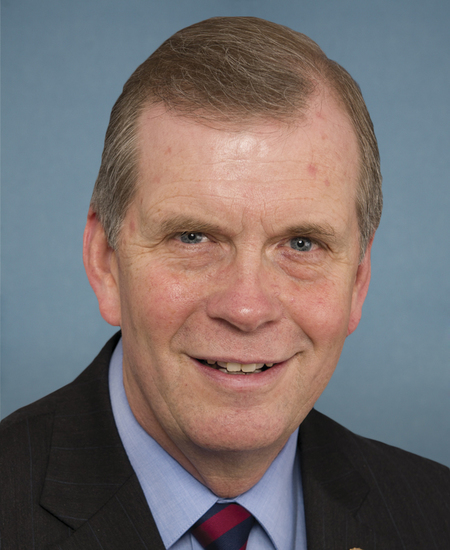
Rep. Tim Walberg
Sponsored bills
Maddy summaryHR 277 would require Congress to approve major federal regulations before they take effect. Major rules are defined as those with significant economic impact ($100 million+ annually), major cost increases for consumers or industries, or significant adverse effects on competition, employment, or innovation. Agencies must submit detailed information about these rules to Congress, including cost-benefit analyses, before they can take effect. Congress would have 70 session days to approve the rule with a joint resolution; if they don't act within that timeframe, the rule would not take effect. This would increase congressional oversight of federal regulations and require more detailed information about proposed rules before they become law.
Maddy summaryHJRES 69 is a resolution seeking to disapprove an Environmental Protection Agency (EPA) rule published on June 5, 2023, which established a "Federal Good Neighbor Plan" for the 2015 ozone air quality standards. The rule aimed to address ozone pollution crossing state lines, particularly affecting southeastern states and industries subject to the 2015 ozone standards. This resolution would block the rule from taking effect by invoking the Congressional Review Act, preventing it from being enforced. If enacted, it would directly stop the EPA from implementing this specific plan, impacting states and businesses that would have had to comply with the rule.
Maddy summaryThis bill prohibits providing, facilitating, or possessing wireless devices (like cell phones) in U.S. detention facilities (e.g., prisons, jails) if such actions violate existing federal or state laws. It imposes civil fines up to $50,000 per violation (capped at $1 million total) or criminal fines up to $50,000 for intentional violations. The law explicitly excludes lawful law enforcement activities and state enforcement powers, and defines "detention facility" broadly to include all correctional and penal institutions. It applies to conduct occurring after enactment.
Maddy summaryHR 1640, the Save Our Gas Stoves Act, prevents the Department of Energy from implementing energy efficiency standards for gas stoves that would make them unavailable in the U.S. market. It amends federal law to require that any new standard for gas stoves must not result in the unavailability of gas stove types, directly affecting gas stove manufacturers and consumers who rely on these appliances. The bill specifically blocks the implementation of the 2023 proposed rule (Energy Conservation Program: Energy Conservation Standards for Consumer Conventional Cooking Products) and any similar rule. This is a policy change focused on maintaining the availability of gas stoves by altering the criteria for energy standard approval.
Maddy summaryHRES 272 is a non-binding resolution passed by the U.S. House of Representatives calling on Russia to immediately release Paul Whelan, a U.S. citizen and Michigan resident imprisoned since 2018 on espionage charges without evidence. It demands Russia provide Whelan with consular access, ensure due process rights, and release him from his 16-year labor camp sentence. The resolution also thanks Canada, Ireland, and the U.K. for their efforts to secure his freedom and expresses sympathy to his family. As a formal statement of congressional position, it does not compel action but underscores the House's stance on Whelan's case.
Maddy summaryThis bill allows small businesses and self-employed individuals to form shared health insurance plans across different industries, rather than being limited to their own industry. To qualify, the group must exist for at least two years, not discriminate based on health status, and have a governing board with 75% employer representation. These plans must offer equal coverage regardless of health conditions and can adjust premiums based on employer risk pools, while still prohibiting pre-existing condition exclusions. It directly affects small business owners and self-employed people seeking affordable group health options outside traditional industry boundaries.
Maddy summaryHR 1525, the FAIR Act of 2023, reforms federal civil forfeiture laws to require all property seizures to go through a court process rather than allowing agencies to take property without judicial review. It raises the evidence standard from "preponderance of the evidence" to "clear and convincing evidence" for the government to prove forfeiture, and mandates courts to review cases within 7 days of seizure. The bill also requires courts to appoint attorneys for low-income individuals unable to afford legal representation and ensures property owners receive timely notice of their rights. These changes directly affect individuals whose property is seized in civil forfeiture cases, particularly those with limited financial means.
Maddy summaryHR 3942, the Lifetime Income For Employees Act, modifies retirement plan rules to allow employees to invest in specific annuity contracts within their workplace retirement plans (like 401(k)s). The bill creates "covered annuity contracts" with key requirements: no liquidity restrictions for 180 days after initial investment, mandatory written notices to participants explaining investment details and transfer rights, and a limit of 50% of plan assets allocated to these annuities. It directly affects employees participating in retirement plans and the fiduciaries managing those plans. The law requires clear, plain-language notices about annuity features and participant rights before investment and before any liquidity restrictions apply.
This resolution declares that the life of each human person begins at fertilization and calls upon Congress to enact legislation to enforce the Fourteenth Amendment's guarantee of equal protection for unborn children nationwide.