

Maddy summaryHR 252, the Inflation Prevention Act of 2023, would require Congress to block any new spending bill or amendment that could increase inflation above 4.5%, as measured by the Consumer Price Index (CPI). If current inflation exceeds 4.5%, the bill would prevent consideration of new spending measures unless a three-fifths Senate supermajority votes to override the rule. The Congressional Budget Office (CBO) would estimate the inflation impact of proposed spending and notify Congress if inflation rises above 4.5%. This rule applies to all spending bills, amendments, and conference reports in both the House and Senate, directly affecting how Congress processes budget-related legislation. The bill focuses on procedural rules for spending decisions, not on specific policies or affected groups.
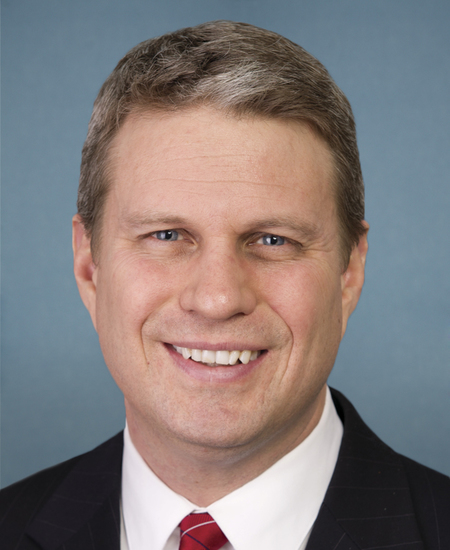
Rep. Bill Huizenga
Sponsored bills
Maddy summaryThis bill requires colleges and universities receiving federal funding to ban TikTok (and related ByteDance apps) on all school-owned electronic devices - including computers, tablets, and smartphones - within 90 days of enactment. It prohibits federal funding for institutions that fail to implement such a ban, with an exception for research related to national security, law enforcement, or cybersecurity. The policy directly affects all public and private higher education institutions that accept federal funds, including grants and student aid programs. It does not restrict TikTok use on personal devices or apply to non-federal funding sources.
Maddy summaryHR 263, the STOVE Act, prohibits federal agencies from creating or implementing rules that ban or restrict gas-powered stoves, cooktops, ranges, or ovens in the United States. It blocks agencies like the EPA or DOE from proposing or finalizing regulations that would limit the sale or use of these appliances. The bill directly affects federal rulemaking processes related to home energy appliances, preventing new restrictions from being enacted. This is a policy change that stops federal action on appliance bans, not a change to existing appliance use.
Maddy summaryHJRES 8 proposes a constitutional amendment to permanently set the Supreme Court's size at nine justices. The bill would require any future changes to the Court's composition to follow this specific number, locking in the current structure. It does not alter the existing Court size (which has been nine since 1869) but aims to prevent future adjustments through legislative action. The amendment must be ratified by three-fourths of state legislatures within seven years to take effect. This is a procedural proposal focused on constitutional structure, not a direct policy affecting citizens or programs.
Maddy summaryThis bill establishes nationwide recognition for valid concealed carry permits. It allows permit holders from any state to carry concealed handguns in states that either issue such permits or don't ban concealed carry, provided they carry a photo ID and their valid permit. Key provisions include making presentation of a valid permit and ID prima facie evidence of compliance, shifting the burden of proof to prosecutors if challenged, and requiring courts to award attorney fees to successful defendants. It does not override state laws prohibiting concealed carry on private property or government lands, nor does it affect restrictions on federal lands like national parks.
Maddy summaryHR 53 (FIND Act) requires federal contractors to certify they do not refuse to work with firearm manufacturers, dealers, ammunition sellers, or related safety device companies based on bias. It prohibits main contractors from awarding subcontracts exceeding 10% of a contract’s value to entities that fail to make this certification, and bans efforts to circumvent the rule through complex subcontract tiers. The law applies to all federal procurement contracts, directly affecting businesses bidding on government work. Violations risk contract termination and suspension from future government contracts.
Maddy summaryHR 49, the REVIEW Act of 2023, requires federal agencies to delay implementing new rules that cost the economy over $1 billion annually. Specifically, agencies must submit such "high-impact rules" to the Office of Management and Budget for review before publication. The rule cannot take effect until after all judicial review challenges are resolved, unless no one challenges it within 60 days of publication. This directly affects federal agencies creating major economic regulations and delays their implementation to allow for legal scrutiny. The bill does not change existing judicial review timelines but adds a mandatory delay period for high-cost rules.
This act designates the facility of the United States Postal Service located at 2050 South Boulevard in Bloomfield Township, Michigan, as the Dr. Ezra S. Parke Post Office Building.
This act designates the facility of the United States Postal Service located at 23200 John R Road in Hazel Park, Michigan, as the Roy E. Dickens Post Office.
This resolution promotes increased public awareness of motorcyclist profiling. The resolution also encourages the motorcyclist community and law enforcement to collaborate and communicate on efforts to end motorcyclist profiling.