

Maddy summaryHR 8100 would authorize a special semipostal stamp sold at a 25% surcharge above regular first-class postage. The extra revenue from stamp sales would directly fund the Great Lakes Restoration Initiative through the Environmental Protection Agency, supporting habitat restoration, invasive species control, and algal bloom mitigation. The stamp would be available for at least five years, with proceeds guaranteed to not offset existing federal funding for the initiative. This policy change creates a dedicated public funding stream for Great Lakes conservation, benefiting the 40+ million people relying on the lakes' water and the region's ecosystem.
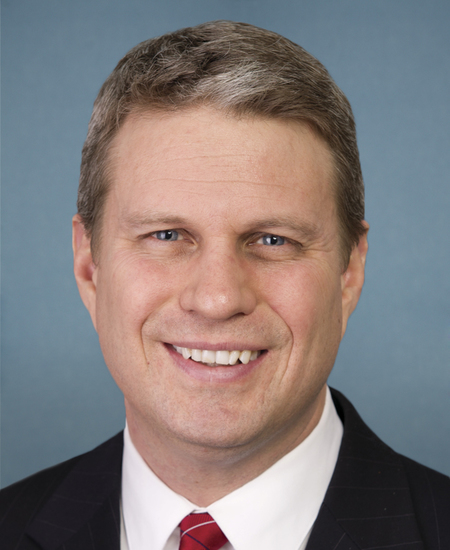
Rep. Bill Huizenga
Sponsored bills
Maddy summaryHR 8061, the Crime Victims Fund Stabilization Act of 2024, ensures stable funding for the Crime Victims Fund by directing certain False Claims Act collections into it from 2024 through 2029. Specifically, it adds a provision requiring that amounts collected under the False Claims Act (excluding whistleblower rewards and government reimbursement for damages) be deposited into the fund during this period. This directly affects crime victims who rely on the fund for services like counseling and emergency aid, as it prevents potential shortfalls in funding. The bill makes a concrete policy change by redirecting specific federal civil penalties into the fund, rather than altering the fund's existing purposes or eligibility rules.
Maddy summaryHR 5947 terminates specific U.S. waivers and licenses related to Iran, ending a 2023 waiver that allowed funds transfer from South Korea to Qatar. It prohibits the Treasury Department from reissuing similar waivers or licenses for the same purpose and blocks the President from granting Iran access to certain designated financial accounts established under prior laws. The bill directly affects U.S. foreign policy implementation by restricting how Treasury handles Iran-related financial transactions. It enacts concrete policy changes by ending existing authorizations and preventing future approvals for Iran to access specific accounts.
Maddy summaryThis bill requires the Department of Veterans Affairs to provide annual preventative health evaluations to veterans with spinal cord injuries or disorders. The evaluations cover health risk assessments, chronic pain management, dietary needs, prosthetic equipment functionality, and assistive technology options (like mobility devices or speech generators). The VA must also report annually to Congress on how many veterans receive these evaluations and assistive technologies, and consider these evaluations when assessing VA network performance. The law directly affects veterans with spinal cord injuries/disorders by mandating proactive health checks focused on preventing complications and improving mobility.
Maddy summaryHR 5923, the Iran-China Energy Sanctions Act of 2023, requires the President to annually determine if Chinese financial institutions are purchasing Iranian petroleum or petroleum products. If such transactions are found, the President must report the findings to specific congressional committees within 180 days of enactment and annually for five years. This bill directly affects Chinese financial institutions engaging in significant transactions involving Iranian oil. The key mechanism adds these institutions to the scope of existing sanctions under the 2012 National Defense Authorization Act, mandating regular reporting to Congress rather than imposing immediate penalties.
Maddy summaryHR 5921, the "No U.S. Financing for Iran Act of 2023," prohibits U.S. financial institutions from authorizing transactions related to Iran's imports or exports (excluding agricultural goods, food, medicine, and medical devices for civilians). It also requires the U.S. to oppose International Monetary Fund (IMF) financial aid to Iran and block Iran's access to IMF Special Drawing Rights. The bill amends the Export-Import Bank Act to ban U.S. financing for Iran's government or state-controlled entities. The law expires either 30 days after the President certifies Iran has stopped supporting international terrorism and is no longer a major money laundering concern, or 10 years from enactment.
Maddy summaryHR 3649 establishes a 5-year pilot program to provide hyperbaric oxygen therapy (HBOT) to veterans diagnosed with traumatic brain injury (TBI) or post-traumatic stress disorder (PTSD). The program, limited to three Veterans Health Administration networks, offers HBOT through VA-approved providers using FDA-approved or investigational medical devices. Funding comes solely from donations to a dedicated VA HBOT Fund, with no annual budget constraints. This bill directly affects eligible veterans seeking this specific treatment option, but does not guarantee long-term coverage beyond the pilot's five-year term.
Accurate Credit Reporting for Homebuyers Act This bill requires lenders at government-sponsored enterprises (i.e., Fannie Mae and Freddie Mac) to obtain a borrower’s consumer report and credit score from all three of the national credit reporting agencies when purchasing a residential mortgage loan. Currently, lenders are allowed to use either two or three credit reports.
Maddy summaryThe Great Lakes Mapping Act requires the National Oceanic and Atmospheric Administration (NOAA) to complete high-resolution mapping of all Great Lakes lakebeds by December 31, 2029. This includes creating detailed depth maps, collecting bathymetric data, developing data processing methods, and building a public digital system to catalog and share all collected information. NOAA must make preliminary map sections available during the project and release the full map with supporting data within 180 days of completion. The bill authorizes $200 million to fund this effort, which directly affects NOAA, Great Lakes bordering states, and the public through increased access to lakebed data.
Maddy summaryThis resolution (HRES 1086) is a symbolic gesture expressing the House's support for designating March 19, 2024, as "National Agriculture Day." It does not create new laws or policies, but instead formally recognizes agriculture as a vital industry in the U.S. economy. The resolution celebrates agriculture's broad economic impact without imposing any requirements or changes on farmers, consumers, or government programs. It is a commemorative statement, not a substantive legislative action.