

Maddy summaryHR 5755, the No Budget, No Pay Act, requires Congress to pass a budget resolution and all regular appropriations bills by October 1 each fiscal year, or members of Congress (excluding the Vice President) will not receive pay starting October 2. The bill mandates that pay is withheld for each day after October 1 until both chambers approve the budget resolution and all appropriations bills. It explicitly prohibits retroactive payment for any withheld pay period and establishes procedures for Senate and House committees to certify compliance with the deadlines. The law takes effect February 1, 2027, and directly affects congressional members' salaries based on budget process deadlines.
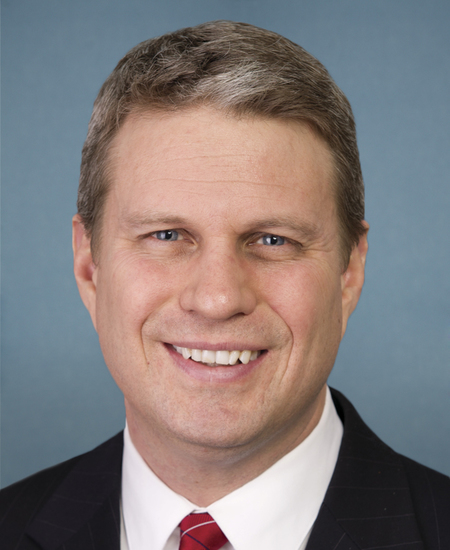
Rep. Bill Huizenga
Sponsored bills
Maddy summaryThis bill adds Medicare coverage for multi-cancer early detection screening tests (blood or biological tests analyzing cell-free DNA) starting January 1, 2028. It directly affects Medicare beneficiaries aged 68 and older (starting in 2028, with the age limit increasing by 1 year annually), requiring tests to be FDA-cleared and deemed reasonable/necessary by the Secretary for early cancer detection across multiple organ sites. Payment will initially match current stool DNA test rates before 2031, then shift to a lower rate or new payment system after 2031, with limits preventing more than one test per year. The bill explicitly states it does not alter coverage for existing cancer screenings like breast, colorectal, or prostate cancer tests.
Maddy summaryThis bill would require all states to recognize valid concealed carry permits issued by other states, allowing permit holders to carry concealed handguns (excluding machine guns) in any state that either issues such permits or doesn't prohibit concealed carry. It directly affects law-abiding gun owners with valid permits from their home state, ensuring they can carry in states with similar permit systems or no prohibitions. Key provisions include treating valid permit documents as proof of legal carry (reducing officer stops), shifting the burden of proof to prosecutors if challenged, and allowing civil lawsuits for violations with attorney's fee awards. The bill does not override state laws restricting firearms on private property or government land, nor does it affect federal gun restrictions like those in section 922(q).
Maddy summaryThis bill changes how federal homeless assistance funds are distributed. It prevents the government from blocking grants to programs that require supportive services (like job training or addiction treatment) for residents, or that set occupancy conditions (such as sobriety requirements), and protects faith-based organizations from exclusion. At least 50% of funds must go to grantees offering wraparound services, and the government must report annually to Congress on compliance. It directly affects homeless assistance providers receiving McKinney-Vento funds. The bill focuses on funding rules, not new services or outcomes.
Maddy summaryHR 5596, the FARMS Act, freezes the current wage rate for H-2B visa workers for two years after enactment. It directly affects H-2B nonimmigrant workers and their employers by preventing increases to the required wage rate during this period. The bill allows the Secretary of Labor to retain the existing wage rate if they determine a valid calculation method for the new rate is unavailable. This provides temporary stability to employers hiring H-2B workers without requiring immediate changes to wage payments.
Maddy summaryHRES 719 is a House resolution honoring Charles "Charlie" James Kirk, the founder of Turning Point USA who was assassinated on September 10, 2025. The resolution condemns his assassination and all political violence, extends condolences to his family, and calls on Americans to reject violence while promoting civil discourse. It specifically recognizes Kirk's legacy as a defender of constitutional principles and his role in inspiring youth through free speech and faith-based civic engagement. As a commemorative resolution, it does not enact policy changes but formally expresses the House's stance on honoring his life and legacy.
Maddy summaryThis bill requires health plans and insurers to create a clear, timely process for patients or doctors to request exceptions when step therapy protocols (which force patients to try cheaper drugs first) might harm them. It mandates approval for exceptions in six specific cases, such as when prior treatments failed, delaying care risks severe harm, or the required drug causes adverse reactions. Plans must respond within 72 hours (24 hours for emergencies) and cover the requested drug for at least one year if approved. Additionally, health plans must report annual data on exception requests, approvals, denials, and reasons to the government for transparency.
Maddy summaryThis bill, the Protect Adoptees and American Families Act (PAAF Act), automatically grants U.S. citizenship to certain internationally adopted children who meet specific criteria. It directly affects children adopted by U.S. citizen parents before age 18, who were living in the U.S. under legal custody before turning 18, and who were not already U.S. citizens. The key mechanism provides automatic citizenship for those already residing in the U.S. on the bill's effective date, and for those outside the U.S. upon lawful entry, subject to a criminal background check for visa issuance. It clarifies citizenship eligibility under immigration law without requiring additional naturalization steps for qualifying adoptees.
Maddy summaryThis bill requires a GAO study to evaluate early detection methods for pediatric liver disease, including adding bilirubin measurement to newborn screening panels and assessing trends in transplant wait-list mortality. It also mandates a public education program to inform families about early signs of liver disease and the safety of living liver donation, using existing HHS resources without new funding. The law directly affects infants and children with liver conditions like biliary atresia and liver cancer, aiming to improve early intervention. Key provisions include a study on cost-effective screening and a program to educate pediatric providers and families about warning signs.
Maddy summaryThis bill establishes an Under Secretary for Public Diplomacy within the Department of State to oversee global public diplomacy, strategic communications, and information operations targeting foreign audiences. It creates two new Assistant Secretary positions: one for Educational and Cultural Affairs (managing exchange programs like Fulbright) and one for Strategic Communications (handling media, internet freedom, and countering foreign censorship). The bill authorizes funding for these roles and their bureaus for fiscal years 2026-2027, requiring coordination across State Department bureaus and interagency partners. The changes streamline oversight of U.S. public diplomacy efforts but do not alter existing program content or funding levels.