

Maddy summaryHR 6519, the "No PFAS in Cosmetics Act," prohibits the intentional addition of perfluoroalkyl or polyfluoroalkyl substances (PFAS) to cosmetics sold in the United States. It directly affects cosmetic manufacturers and suppliers who currently use PFAS for functional properties like water resistance. The bill amends the Federal Food, Drug, and Cosmetic Act to make cosmetics containing intentionally added PFAS "adulterated" and illegal to sell, effective January 1, 2025. It also repeals a prior provision from the Modernization of Cosmetics Regulation Act of 2022 that had addressed PFAS. This is a substantive regulatory change targeting product ingredients, not a procedural measure.
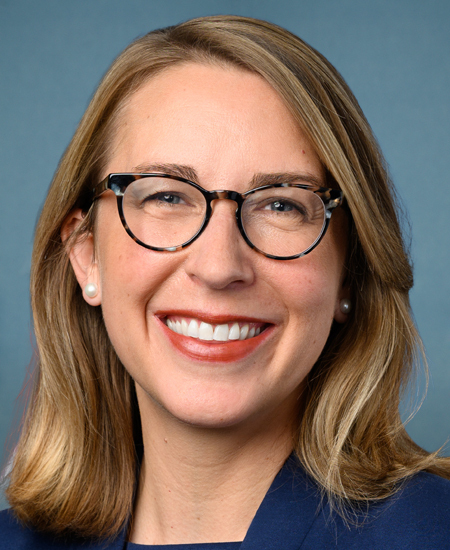
Rep. Hillary J. Scholten
Sponsored bills
Maddy summaryHR 4670, the Small Business Contracting Transparency Act of 2023, requires the Small Business Administration (SBA) to submit annual reports starting May 1, 2024, to congressional committees on three categories of small businesses: women-owned, HUBZone-owned, and service-disabled veteran-owned. The reports must detail certification rates, contract awards (including dollar amounts and percentages), decertifications, and other specific metrics for each category. These reports aim to increase transparency around federal contracting practices for these businesses, using existing SBA funding without new appropriations. The bill directly affects the SBA, federal agencies awarding contracts, and congressional oversight committees by mandating standardized data collection and disclosure.
Maddy summaryThe POST IT Act of 2023 requires federal agencies to include hyperlinks on the Small Business Administration's Ombudsman website to compliance guides they produce for small businesses. These guides explain how to follow specific rules, making it easier for small business owners to access clear guidance. The bill specifies that hyperlinks must be added for guidance related to rules where agencies create small entity compliance guides under existing law. It also ensures confidential information remains protected and does not require new funding, using existing resources to implement the website updates.
Maddy summaryHRES 893 designates November 2023 as "National Homeless Children and Youth Awareness Month" to highlight the issue of homelessness among children and youth in the U.S. The resolution does not create new programs or funding but encourages businesses, governments, schools, and organizations to raise awareness about the causes and solutions to child and youth homelessness. It cites statistics showing high rates of homelessness among students (e.g., 68% high school graduation rate for homeless youth vs. 85.5% overall) and links homelessness to health, education, and mental health challenges. The bill formally supports existing efforts to address homelessness through awareness and prevention, urging continued collaboration to support affected youth. This is a symbolic resolution with no direct policy changes or affected individuals beyond raising public attention.
Maddy summaryHRES 793 is a resolution passed by the U.S. House of Representatives calling on Hamas to immediately release all 199 hostages taken during Hamas' October 7, 2023 attack on Israel. The resolution condemns Hamas for the attack, the taking of hostages, and threats against hostages, while stating that holding hostages violates international humanitarian law under the Geneva Conventions. It demands the immediate release of all hostages and expresses sympathy for victims and their families. As a symbolic resolution, it does not create legal obligations but formally expresses the House's position.
Maddy summaryHR 6451, the Mental Health Justice Act of 2023, provides $250 million in federal grants to states, tribes, and localities to hire mental health professionals as first responders for specific emergencies. It directs these professionals to replace police in situations involving mental health crises, substance use, or intellectual/developmental disabilities - such as when a 911 caller describes a mental health emergency or a first responder identifies someone needing mental health support. The bill requires grantees to train responders in de-escalation techniques, link individuals to community-based services (not incarceration), and report on outcomes like reduced arrests or use of force. It also mandates data collection on demographics and prevents funneling people into institutional settings, with annual reports to Congress on program effectiveness.
Maddy summaryHR 6415, the CARE for First Responders Act, creates targeted mental health support for first responders, including law enforcement, firefighters, EMTs, and 911 operators (previously excluded from many services). It establishes a 24/7 confidential mental health hotline integrated with the 988 Suicide Lifeline, funds mobile crisis teams for disaster response, and mandates specialized training to reduce stigma and improve access to culturally competent care. The bill requires the development of peer support programs and education for responders and their families on mental health coping strategies. It authorizes $5 million annually (2024-2028) for grants to states and organizations to implement these services, specifically addressing the higher rates of mental health challenges and suicide among first responders compared to the general population.
Maddy summaryThe SHIP Act imposes sanctions on foreign entities that knowingly handle Iranian petroleum, targeting those involved in port operations, transportation, refining, or ship-to-ship transfers of Iranian oil. Starting 90 days after enactment, the President must block assets, deny visas, and impose penalties on individuals or companies engaging in these activities, including family members or owners of sanctioned entities. It requires annual reports tracking Iran's oil exports, revenues, and key players like shipping companies and ports. The sanctions terminate if the President certifies Iran has stopped supporting terrorism and dismantled weapons programs.
Maddy summaryHR 6145 creates a specialized "Children's Court" within U.S. immigration courts to handle cases involving unaccompanied children under 18. The bill requires immigration judges assigned to this court to complete mandatory training on child development, trauma-informed practices, and child-appropriate procedures - including explaining court processes in simple terms, providing breaks during testimony, and ensuring access to legal counsel. It also prohibits sharing sensitive personal information about children without their consent, protecting privacy during proceedings. Annual reports will track case processing, appearance rates, and the court's effectiveness in upholding due process for these children.
Maddy summaryHR 5983, the Clean Water Act of 2023, redefines "protected water resources" under federal law to explicitly include all interstate and intrastate waters (such as intermittent and ephemeral streams), wetlands, and their tributaries. This directly affects federal agencies like the EPA, states managing water quality, and developers or landowners needing permits for activities near these waters. The bill eliminates the Supreme Court’s narrow "navigable waters" definition from Sackett v. EPA (2023), restoring protections for tens of millions of acres of wetlands and millions of miles of small streams. Key mechanisms require the EPA to annually review and adjust exclusions from protections based on scientific evidence, ensuring water bodies critical to drinking water, flood control, and ecosystems remain safeguarded.