

Washington, D.C. Admission Act This bill provides for the establishment of the State of Washington, Douglass Commonwealth, and its admission into the United States. The state is composed of most of the territory of the District of Columbia (DC), excluding a specified area that encompasses the U.S. Capitol, the White House, the U.S. Supreme Court building, federal monuments, and federal office buildings adjacent to the National Mall and the U.S. Capitol. The excluded territory shall be known as the Capital and serve as the seat of the government of the United States, as provided for in Article I of the Constitution. The state may not impose taxes on federal property except as Congress permits. The bill provides for the DC Mayor to issue a proclamation for the first elections to Congress of two Senators and one Representative of the state. The bill eliminates the office of Delegate to the House of Representatives. The bill applies current DC laws to the state. DC judicial proceedings and contractual obligations shall continue under the state’s authority. The bill also provides for specified federal obligations to transfer to the state upon its certification that it has funds and laws in place to assume the obligations. These include maintaining a retirement fund for judges and operating public defender services. The bill establishes a commission that is generally comprised of members who are appointed by DC and federal government officials to advise on an orderly transition to statehood.
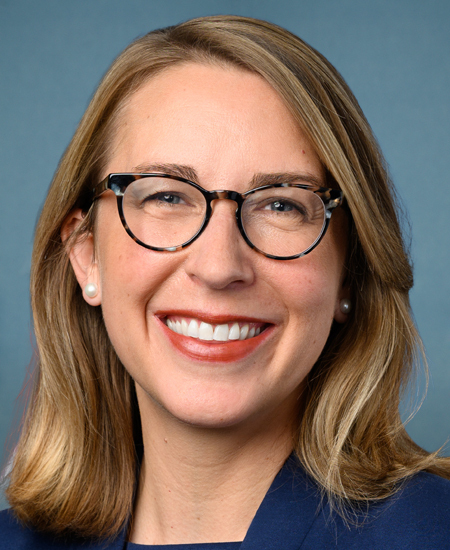
Rep. Hillary J. Scholten
Sponsored bills
Maddy summaryThe Treat and Reduce Obesity Act of 2023 expands Medicare coverage for obesity treatment by allowing a wider range of healthcare providers - including nurse practitioners, dietitians, psychologists, and community-based counseling programs - to deliver intensive behavioral therapy for obesity, provided they coordinate with primary care providers. It also adds Medicare Part D coverage for medications used to treat obesity or for weight loss management in overweight individuals with related health conditions like diabetes or high blood pressure. These changes directly affect Medicare beneficiaries, particularly older adults (65+), who face higher obesity rates and associated costs, including $50 billion annually in Medicare spending for obesity-related care. The bill requires annual reports to Congress on implementation to improve coordination of obesity care across federal health programs.
Maddy summaryThis bill updates federal law to ensure tribal child support enforcement agencies have the same access to tax information as state agencies. It amends the Social Security Act and Internal Revenue Code to explicitly include tribal organizations receiving federal grants under Section 455(f) in provisions allowing the use of tax refund data to collect overdue child support payments. Tribal agencies will now be treated equally with state agencies for accessing tax information and receiving reimbursement for enforcement reports. This change directly affects Native American tribes operating child support programs and the parents and children they serve, enabling more effective collection of overdue support.
Maddy summaryThis bill, HR 1097 (Everett Alvarez, Jr. Congressional Gold Medal Act of 2023), authorizes the award of a Congressional Gold Medal to Everett Alvarez, Jr., in recognition of his service as a U.S. Navy pilot and Vietnam War prisoner of war. It directly honors Alvarez, who was the first U.S. pilot shot down in the Vietnam War, spent over 8.5 years in captivity, and later served in the Peace Corps and Veterans Administration. The bill’s key mechanism is directing the U.S. Mint to strike a gold medal bearing his name and image, with bronze duplicates available for sale to cover costs. It does not create new policies or affect any group beyond the honoree.
Maddy summaryHRES 1625 is a symbolic resolution supporting the recognition of "World Basketball Day" on December 21 each year, following a 2023 UN resolution. It does not create new laws or directly affect specific groups, but formally honors basketball's role in fostering global unity, sports diplomacy, and community impact. The resolution highlights basketball's worldwide reach (over 585 million annual players), the NBA's international diversity (125+ players from 43 countries in 2024), and its humanitarian contributions. It encourages continued growth of basketball programs that build community leadership and opportunities globally. The resolution is purely ceremonial, expressing the House's support for the sport's unifying values.
Maddy summaryHR 8505, the Household Goods Shipping Consumer Protection Act, requires household goods motor carriers, brokers, and freight forwarders to designate a "principal place of business" and disclose recent ownership relationships during registration. It gives states the option to use federal grant funds to enforce federal household goods shipping regulations for both interstate and intrastate transport, if state laws align with federal rules. The bill also ensures states retain fines and penalties collected from shipping companies for violations, rather than forwarding them to the federal government. These changes aim to improve regulatory oversight and accountability in the household goods shipping industry.
Maddy summaryHR 2367, the Truck Parking Safety Improvement Act, creates a federal grant program to address commercial truck parking shortages on highways. It provides competitive grants (totaling $175M-$320M over three years) for projects like building new rest areas, expanding parking at ports or truck stops, or improving safety at existing facilities. The program requires all funded parking to be free, publicly accessible to all truck drivers, and maintained without user fees. This directly affects commercial truck drivers, motor carriers, and highway safety by aiming to improve parking access, reduce traffic congestion, and enhance safety on federal-aid highways.
Maddy summaryThe White Oak Resilience Act establishes a voluntary coalition of federal agencies, states, private groups, and landowners to coordinate nationwide efforts restoring white oak forests. It creates a "White Oak Restoration Initiative Coalition" to address policy barriers, recommend improvements, and coordinate cross-boundary projects, while directing the USDA and Interior Departments to conduct assessments and launch 5 pilot restoration projects on federal lands. The bill also creates a dedicated fund through the National Forest Foundation to support white oak reforestation, nursery expansion, and seedling research, and requires a national strategy to address tree seedling shortages affecting restoration. This primarily affects federal land managers, private forest landowners, and tree nurseries by streamlining existing resources to improve white oak regeneration and resilience.
Maddy summaryThe ROCR Value Based Program Act establishes a new Medicare payment system for radiation oncology services, replacing the current fee-for-service model with a per-episode payment structure. This program affects radiation therapy providers (hospital outpatient departments) and suppliers (physician practices or freestanding centers) treating Medicare beneficiaries with specific cancer types (including breast, prostate, lung, and brain metastases). Key provisions include 80% of the payment being paid upfront within 30 days of treatment start, with the remaining 20% paid later; a health equity add-on payment of $500 per patient for transportation services to patients reporting transportation insecurity (using ICD-10 code Z59.82); and quality incentives for accredited providers through a 0.5% payment increase for meeting accreditation requirements. The program aims to stabilize payments, improve access to radiation therapy, enhance quality, leverage technology, and contain costs while maintaining Medicare savings.
Maddy summaryThe Essential Caregivers Act of 2024 requires nursing homes and similar facilities to allow residents to designate essential caregivers who provide emotional support or assistance with daily activities. During emergencies when regular visitation is restricted, facilities must permit at least one essential caregiver access to residents daily and cannot deny access without following specific procedures. Facilities may deny access for a maximum of 7 days during emergencies (or 14 days with state approval), and must provide a written explanation and appeal process if access is denied. The bill establishes a 48-hour appeal process for residents and caregivers to challenge denials, with facilities required to prove violations during appeals. This law applies to Medicare skilled nursing facilities, Medicaid nursing facilities, intermediate care facilities, and certain inpatient rehabilitation facilities.