

Maddy summaryThe Keep the Heat On Act of 2025 ensures low-income households continue receiving home energy assistance during a federal government shutdown in fiscal year 2026. It directs the use of unused Treasury funds to maintain the same payment rates for the home energy assistance program as in fiscal year 2025, preventing service interruptions. This applies specifically to any shutdown period during the 2026 fiscal year, guaranteeing consistent support for vulnerable families. The bill addresses a funding gap without altering existing program eligibility or requirements.
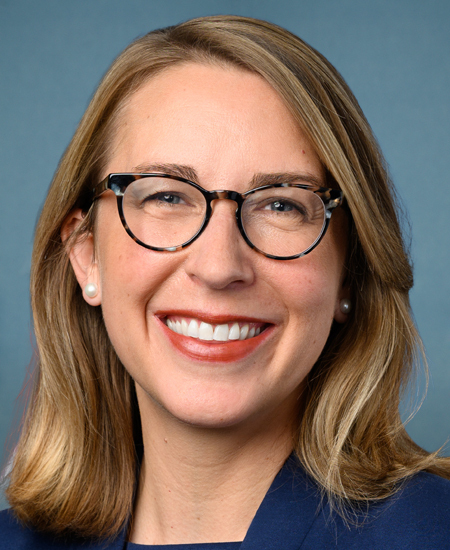
Rep. Hillary J. Scholten
Sponsored bills
Maddy summaryThis bill adds Medicare coverage for multi-cancer early detection screening tests (blood or biological tests analyzing cell-free DNA) starting January 1, 2028. It directly affects Medicare beneficiaries aged 68 and older (starting in 2028, with the age limit increasing by 1 year annually), requiring tests to be FDA-cleared and deemed reasonable/necessary by the Secretary for early cancer detection across multiple organ sites. Payment will initially match current stool DNA test rates before 2031, then shift to a lower rate or new payment system after 2031, with limits preventing more than one test per year. The bill explicitly states it does not alter coverage for existing cancer screenings like breast, colorectal, or prostate cancer tests.
Fair Pay for Federal Contractors Act of 2025 This bill provides back pay to employees of federal contractors who lost pay due to a lapse in appropriations (i.e., government shutdown) in FY2026. Specifically, the bill provides appropriations for federal agencies that are subject to a lapse in appropriations in FY2026 to adjust the price of contracts to compensate federal contractors for providing back pay to employees who were affected by the lapse in appropriations. The agencies must adjust the price of any contract for which the contractor stopped, suspended, delayed, or interrupted all or part of the work under the contract due to the lapse in appropriations. The price adjustment must compensate the contractor for reasonable costs incurred to (1) compensate employees who were furloughed or laid off, were not working, or experienced a reduction of hours or compensation due to the lapse in appropriations; or (2) restore paid leave taken by employees during the lapse in appropriations if the contractor required or permitted employees to use paid leave as a result of the lapse in appropriations. The maximum amount of weekly compensation of an employee for which an adjustment may be made under this bill may not exceed the lesser of (1) the employee's actual weekly compensation, or (2) $1,442 (or a lesser amount pro-rated for an employee who works less than 40 hours per week). The bill also requires the Office of Federal Procurement Policy to submit a report to Congress on the adjustments made under this bill.
Maddy summaryThis bill prevents federal agencies from terminating employees during a government shutdown caused by a lapse in discretionary funding. It prohibits removals of civil service employees at any agency affected by a funding gap, and if an employee is wrongfully removed, they can return to their job with back pay once funding resumes. The law directly protects all federal employees covered by the civil service system during shutdowns. It applies automatically to any funding lapse, requiring automatic reinstatement without needing separate legal action.
Maddy summaryHR 5568, the "Funding Small Businesses During Shutdown Act," ensures certain Small Business Administration (SBA) loan programs continue during government shutdowns by appropriating specific funds from the Treasury. It allocates $500,000 for section 7(m) loans, $2.9 billion for section 7(a) loans, $1.25 billion for Small Business Investment Act loans, and $13.775 million for administrative costs related to section 7(m) loans. These funds cover salaries and expenses to maintain loan servicing during any 30-day shutdown period (or pro-rated for shorter lapses), directly affecting small businesses relying on SBA loans. The bill creates a targeted funding mechanism to prevent program interruptions without requiring new appropriations during shutdowns.
Maddy summaryThe Mental Health Services for Students Act of 2025 would establish a federal grant program to fund school-based mental health services for students in grades K-12, particularly those experiencing trauma, grief, suicide risk, or violence. It directly affects schools (including Bureau of Indian Education schools), students, and community mental health providers through partnerships that must include school districts and local mental health entities. Key provisions require services to be culturally appropriate, trauma-informed, and integrated with positive behavioral supports, with grants capped at $2 million per award for 5 years (renewable) and funded at $300 million annually for 2027-2028. Recipients must report annually on program outcomes, ensure equitable access across urban and rural areas, and comply with privacy laws like HIPAA and FERPA.
Maddy summaryThis bill requires health plans and insurers to create a clear, timely process for patients or doctors to request exceptions when step therapy protocols (which force patients to try cheaper drugs first) might harm them. It mandates approval for exceptions in six specific cases, such as when prior treatments failed, delaying care risks severe harm, or the required drug causes adverse reactions. Plans must respond within 72 hours (24 hours for emergencies) and cover the requested drug for at least one year if approved. Additionally, health plans must report annual data on exception requests, approvals, denials, and reasons to the government for transparency.
Maddy summaryThe Aviation Funding Stability Act of 2025 ensures continued operation of Federal Aviation Administration (FAA) programs during government funding gaps. It allows the FAA to use unspent funds from the Airport and Airway Trust Fund to maintain critical services - including air traffic control, airport infrastructure, and safety research - at the previous fiscal year's funding level if Congress fails to pass a new budget. This prevents shutdowns for up to 30 days or until a new budget is enacted, with spending limited to prior-year rates and subject to existing program rules. The bill directly affects all FAA operations, keeping airports and air traffic systems running during budget delays.
Maddy summaryHRES 746 is a non-binding resolution passed by the U.S. House of Representatives condemning all political violence - including attacks on elected officials, candidates, and public figures - and rejecting rhetoric that dehumanizes opponents. It specifically urges law enforcement to investigate and prosecute such violence, calls on public officials and media to avoid inflammatory language, and references recent incidents like the 2025 assassination of activist Charlie Kirk and targeted shootings of Minnesota legislators. The resolution does not create new laws but formally expresses the House’s commitment to protecting public servants and promoting peaceful political discourse. It directly affects the House’s public stance and serves as a call to action for officials, media, and communities to foster civil engagement.
Maddy summaryThis bill allocates $5 million annually (2026-2030) to states for collecting de-identified stillbirth data through existing health systems, including risk factor analysis. It also provides $1 million yearly to develop standardized guidelines for healthcare providers and public educational materials about stillbirths, requiring consultation with medical professionals, bereavement organizations, and affected families. The bill mandates that all data collection complies with privacy laws and requires the Department of Health and Human Services to publish a public report on stillbirth guidelines within five years. It directly affects state health departments, healthcare providers, and families experiencing stillbirth by improving data quality and access to resources.