This resolution recognizes the importance of Christmas symbols and traditions. The resolution (1) disapproves of attempts to ban references to Christmas, and (2) supports the use of these symbols and traditions by those who celebrate Christmas.
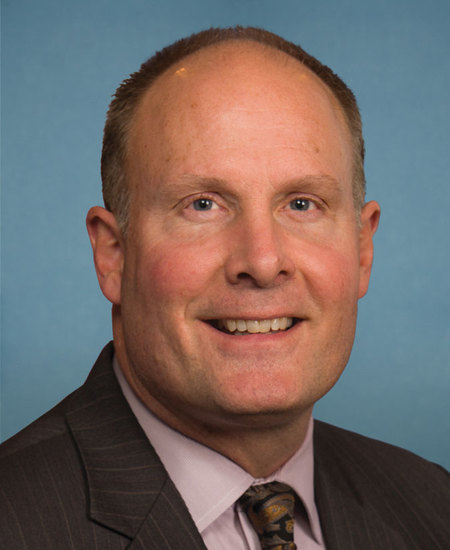
Rep. John R. Moolenaar
Sponsored bills
Ethylene is Essential for Chemistry and Manufacturing Act This bill removes ethylene from the list of taxable chemicals for purposes the environmental excise tax.
Preserving Rights Of Tenants by Ensuring Compliance To the Second Amendment Act or the PROTECT the Second Amendment Act This bill establishes a right for a resident of covered federally assisted rental housing to lawfully possess a firearm within the residential dwelling unit occupied by the resident and any common area of the federally assisted rental housing in which the resident resides in the course of entering or exiting the rental housing.
USA Batteries Act This bill removes lead oxide, antimony, and sulfuric acid from the list of taxable chemicals subject to the environmental excise tax.
Ocean Shipping Reform Act of 2021 This bill revises provisions related to ocean shipping policies and is designed to support the growth and development of U.S. exports and promote reciprocal trade in the common carriage of goods by water in the foreign commerce of the United States. Among other provisions, the bill sets forth requirements for operating a shipping exchange involving ocean transportation in the foreign commerce of the United States; requires ocean common carriers to report to the Federal Maritime Commission (FMC) each calendar quarter on total import and export tonnage and the total loaded and empty 20-foot equivalent units per vessel that makes port in the United States; requires the FMC to publish and annually update all its findings of false certifications by ocean common carriers or marine terminal operators and all penalties assessed against such carriers or operators; revises annual reporting requirements for the FMC on foreign laws and practices to include practices by ocean common carriers; prohibits ocean common carriers and marine terminal operators from retaliating or discriminating against shippers because such shippers have patronized another carrier, or filed a complaint; directs the FMC to establish rules prohibiting ocean common carriers and marine terminal operators from adopting and applying unjust and unreasonable demurrage and detention fees; authorizes the FMC to initiate investigations of an ocean common carrier's fees or charges and apply enforcement measures, as appropriate; directs the Department of Transportation to seek to enter into an agreement with the National Academy of Sciences to study the U.S. supply chain industry, including data constraints that impede the flow of maritime cargo and add to supply chain inefficiencies; and provides authority for the FMC to issue an emergency order requiring ocean common carriers or marine terminal operators to share directly with relevant shippers, rail carriers, or motor carriers information relating to cargo throughput and availability.
Critical Infrastructure Manufacturing Feasibility Act This bill requires the Department of Commerce to study and report on products that are in high demand across the critical infrastructure sectors. Critical infrastructure sectors are those whose assets, systems, and networks are vital to national security, the economy, public health or safety, or any combination of those matters. The study must (1) identify the products in high demand across those sectors that are being imported due to manufacturing, material, or supply chain constraints; and (2) analyze the costs, benefits, and feasibility of manufacturing those products in the United States.
VA Canine Reporting Act of 2021 This bill requires the Department of Veterans Affairs to report on the average time it took to provide a veteran with a service or guide dog in the prior year and legislative recommendations to reduce such wait time.
Department of Veterans Affairs Telehealth Strategy Ac t This bill requires the Department of Veterans Affairs (VA) to submit a strategy to Congress for the telehealth services furnished by the Veterans Health Administration. Additionally, the VA must report on the utilization of end-user devices provided to veterans by the VA to facilitate telehealth during FY2020 and FY2021.
POW Priority Care Act of 2021 This bill increases the priority status of former prisoners of war in the Department of Veterans Affairs health care system to the highest priority for hospital care and medical services.
Conscience Protection Act of 2021 This bill provides statutory authority for certain protections for health care providers that refuse to participate in abortions based on religious beliefs or other convictions. Health care providers include individual professionals, medical facilities, health insurance organizations, and social services providers that refer clients to health care services. The federal government and entities that receive federal funding for health-related activities, including state and local governments, may not discriminate against a health care provider that refuses to be involved in, or provide coverage for, abortions. Currently, similar requirements apply to various related activities, including certain employment or personnel decisions (the Church Amendments), abortion services training (the Coats-Snowe Amendment), qualified health plans offered through health insurance exchanges, and annual appropriations bills for the Department of Health and Human Services (HHS) and other federal agencies (the Weldon Amendment). The HHS Office for Civil Rights must investigate complaints of this kind of discrimination. Furthermore, HHS may terminate or reduce HHS funding for health-related activities if a person or entity fails to comply with nondiscrimination requirements. Additionally, the Department of Justice or any entity adversely affected by such discrimination may bring a civil action to obtain appropriate relief. A plaintiff does not need to seek or exhaust administrative remedies before bringing the action. A plaintiff may also bring an action, including one for money damages, against a governmental entity. In many cases, principles of sovereign immunity shield states and some localities from these kinds of actions.