

Maddy summaryThe SHIP IT Act (HR 471) aims to improve commercial trucking safety and efficiency through several key provisions. It allows states to temporarily permit overweight trucks during emergencies, provides tax credits for truck drivers (up to $10,000), and allocates $175-$200 million annually for grants to build commercial truck parking facilities. The bill also simplifies driver licensing processes, removes seasonal restrictions on agricultural transportation, and creates a pilot program for 6-axle vehicles with safety data collection requirements. These changes directly affect truck drivers, trucking companies, and state transportation agencies, with the goal of enhancing highway safety, reducing congestion, and supporting the trucking workforce.
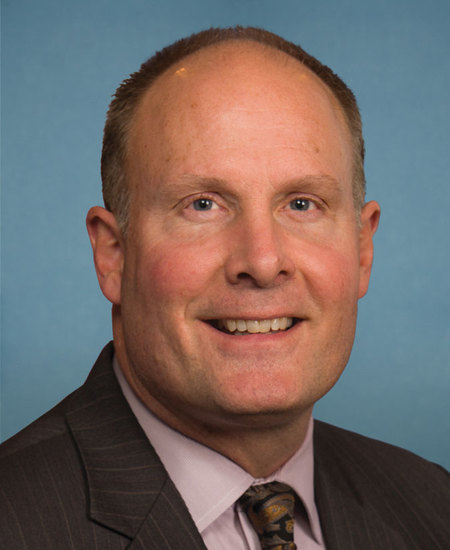
Rep. John R. Moolenaar
Sponsored bills
Maddy summaryHR 382, the "Pandemic is Over Act," terminates the federal public health emergency declaration for the COVID-19 pandemic. The bill ends the emergency status declared on January 31, 2020, effective upon the bill's enactment. This action directly ends the federal authority tied to the emergency, including related public health measures and funding mechanisms under the Public Health Service Act.
Ceasing Age-Based Trucking Restrictions Act This bill exempts drivers who transport goods from a port of entry and another place within the same state from age restrictions and other requirements that apply to federal commercial driver's licenses.
Maddy summaryHR 683 (PASS Act of 2023) expands the Committee on Foreign Investment in the United States (CFIUS) review process to cover foreign investments in U.S. agriculture businesses, agricultural biotechnology, and private farmland. It mandates that the President block transactions involving foreign entities from China, Russia, Iran, or North Korea that would give them control over U.S. agricultural operations or land used for farming. The bill allows limited presidential waivers for national security reasons but requires a 30-day review period before any waiver. Additionally, it requires the Secretary of Agriculture to submit biannual reports to Congress on risks posed by foreign ownership in U.S. agriculture.
Maddy summaryHR 656, the "Head Start for Our Future Act," amends the Higher Education Act to update a funding provision. It replaces the phrase "literacy training" with "child development and early learning (including Head Start programs and Early Head Start programs)" in Section 441(c)(1). This change explicitly directs funds under that section toward early childhood development services, including existing Head Start and Early Head Start programs. The bill does not create new funding but clarifies that these programs qualify for related support.
Maddy summaryThis symbolic House resolution (HRES 72) recognizes independent workers, contractors, and freelancers for their economic contributions to the U.S. It highlights their role in the growing flexible work economy and acknowledges the benefits of flexible work arrangements, such as freedom in hours and locations. The resolution does not create new laws or alter existing policies - it solely serves as a formal acknowledgment of these workers' significance to the economy. It references their $1.35 trillion economic contribution in 2022 and their growing share of the workforce (39% of U.S. workers).
Maddy summaryThe A PLUS Act (HR 631) allows states to consolidate federal education funds into a single funding stream, reducing administrative burdens for school districts. It requires states to submit a "declaration of intent" outlining which programs they’ll bundle (excluding special education funds), report annual student progress data to parents, and ensure federal funds supplement - rather than replace - state education spending. States must limit administrative costs to 1% of consolidated funds (3% if excluding Title I) and maintain public accountability through transparent reporting on achievement gaps and funding use. The act directly affects states, school districts, and students - particularly disadvantaged groups - by streamlining fund management while mandating public reporting on educational outcomes.
This resolution recognizes and appreciates the dedication and devotion demonstrated by the men and women of law enforcement. It also condemns calls to defund, disband, dismantle, or abolish the police.
This resolution expresses support for the Supreme Court's holding in Dobbs v. Jackson Women's Health Organization (that there is no constitutional right to abortion). The resolution also applauds the courage of the Justices for standing by their allegiance to the Constitution and the legitimacy of the Supreme Court, and it expresses a commitment to supporting policies that continue to protect all life.
Prohibiting Abortion Industry's Lucrative Loopholes Act This bill expands the prohibition on the sale or purchase of human fetal tissue in interstate commerce to include any payments associated with the transportation, implantation, processing, preservation, quality control, or storage of such tissue.