

Maddy summaryHJRES 44 is a congressional resolution seeking to block a 2021 rule by the Bureau of Alcohol, Tobacco, Firearms, and Explosives (ATF). The rule classified firearms with stabilizing braces as "short-barreled rifles," which would have required additional licensing and regulation. This resolution uses a specific legal process (under Title 5, U.S. Code) to formally disapprove the ATF rule, meaning the rule would no longer be in effect. It directly affects firearm owners, manufacturers, and dealers who would have been subject to the rule’s requirements.
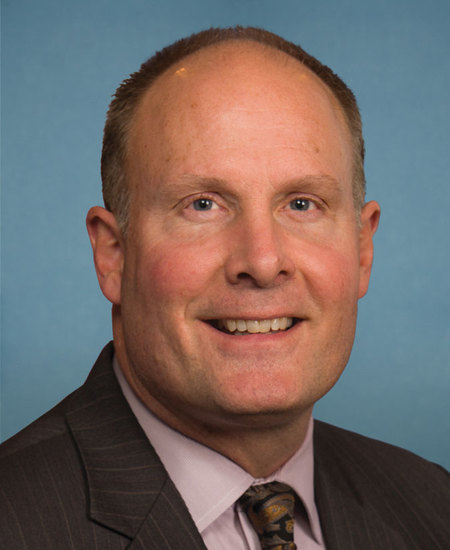
Rep. John R. Moolenaar
Sponsored bills
Maddy summaryHRES 546 is a symbolic House resolution commemorating the one-year anniversary of the Supreme Court's June 24, 2022, Dobbs v. Jackson Women's Health Organization decision, which overturned Roe v. Wade. The resolution expresses support for the Court's ruling that the Constitution does not guarantee a right to abortion and celebrates the decision's impact on returning abortion policy authority to state legislatures. As a ceremonial resolution, it does not create new laws or directly affect any individuals or policies. The resolution focuses solely on marking the anniversary and affirming the position that unborn life should be protected.
Maddy summaryHJRES 45 is a congressional disapproval resolution targeting a specific Department of Education rule about federal student loans. It seeks to block the rule implementing "One-Time Federal Student Loan Debt Relief" (including modifications to Perkins, FFEL, and Direct Loan programs) by invoking the Congressional Review Act. If passed, this resolution would nullify the rule, preventing the Department of Education from using it to modify or waive student loan obligations. The bill directly affects borrowers who might have qualified for debt relief under the targeted rule.
Maddy summaryHR 277 would require Congress to approve major federal regulations before they take effect. Major rules are defined as those with significant economic impact ($100 million+ annually), major cost increases for consumers or industries, or significant adverse effects on competition, employment, or innovation. Agencies must submit detailed information about these rules to Congress, including cost-benefit analyses, before they can take effect. Congress would have 70 session days to approve the rule with a joint resolution; if they don't act within that timeframe, the rule would not take effect. This would increase congressional oversight of federal regulations and require more detailed information about proposed rules before they become law.
Maddy summaryThis bill requires all U.S. flags displayed on federal property or purchased by federal agencies to be 100% made in the United States, meaning all materials and manufacturing must occur domestically. It directly affects federal agencies (including military departments, legislative/judicial branches, and U.S.-owned corporations) and their procurement of flags for display on government property. Key provisions include a 90-day implementation for new flag purchases and a 2-year phase-in for display requirements, with a separate mandate for the FTC to study and report on country-of-origin labeling enforcement for flags within one year. The bill does not apply to private entities or flags displayed off federal property.
Maddy summaryHR 4076 establishes a joint U.S.-Israel program to fund health technology development, authorizing $4 million annually (2024-2026) through the U.S. Health and Human Services Department. It requires Israel to match U.S. funding and focuses on collaborative projects in artificial intelligence, vaccines, telemedicine, diagnostic tests, and data-driven personalized medicine for emerging infectious diseases. The program can either build on an existing U.S.-Israel agreement or create a new one under a 2008 science cooperation framework. This bill directly affects U.S. federal health agencies and the Israeli government, with funds restricted to joint projects meeting specific technological and health priorities.
Maddy summaryThis bill redesignates a specific street area in Washington, D.C. (between International Drive, Van Ness Street, and International Place, NW) and the address 3505 International Place, NW as "Tiananmen Square Memorial Boulevard." It requires the General Services Administrator to install new street signs matching DC's Metro station style at designated locations. The bill has no policy impact beyond administrative naming changes and does not affect any legislation, regulations, or residents.
Maddy summaryThis bill (HR 4145) requires U.S. colleges and universities to disclose foreign gifts or contracts meeting specific thresholds to the Department of Education. Institutions must report gifts/contracts of $250,000 or more from foreign sources not tied to "covered nations" (as defined in 10 U.S.C. §4872(d)(2)), or *any* amount from covered nations. Within 10 days of receiving such reports, the Education Secretary must forward them to the FBI and National Intelligence Director. The law aims to increase transparency around foreign funding in higher education by mandating these disclosures and automatic intelligence sharing.
Maddy summaryHR 1640, the Save Our Gas Stoves Act, prevents the Department of Energy from implementing energy efficiency standards for gas stoves that would make them unavailable in the U.S. market. It amends federal law to require that any new standard for gas stoves must not result in the unavailability of gas stove types, directly affecting gas stove manufacturers and consumers who rely on these appliances. The bill specifically blocks the implementation of the 2023 proposed rule (Energy Conservation Program: Energy Conservation Standards for Consumer Conventional Cooking Products) and any similar rule. This is a policy change focused on maintaining the availability of gas stoves by altering the criteria for energy standard approval.
Maddy summaryHRES 272 is a non-binding resolution passed by the U.S. House of Representatives calling on Russia to immediately release Paul Whelan, a U.S. citizen and Michigan resident imprisoned since 2018 on espionage charges without evidence. It demands Russia provide Whelan with consular access, ensure due process rights, and release him from his 16-year labor camp sentence. The resolution also thanks Canada, Ireland, and the U.K. for their efforts to secure his freedom and expresses sympathy to his family. As a formal statement of congressional position, it does not compel action but underscores the House's stance on Whelan's case.