

Maddy summaryThis bill would grant federal recognition to the Grand River Bands of Ottawa Indians of Michigan, a tribe that has been awaiting formal recognition since filing a petition in 2000. The legislation affirms the tribe's status as a federally recognized tribe, making it eligible for all federal services and benefits (like healthcare, education, and housing programs) without requiring reservation land or specific residence locations. It also directs the Secretary of the Interior to acquire land in specific Michigan counties (Muskegon, Newaygo, Oceana) for the tribe in trust status, and requires the tribe to establish a membership roll within 18 months. The bill addresses decades of delayed recognition, ensuring the tribe gains access to resources and rights it has been denied since its petition was filed.
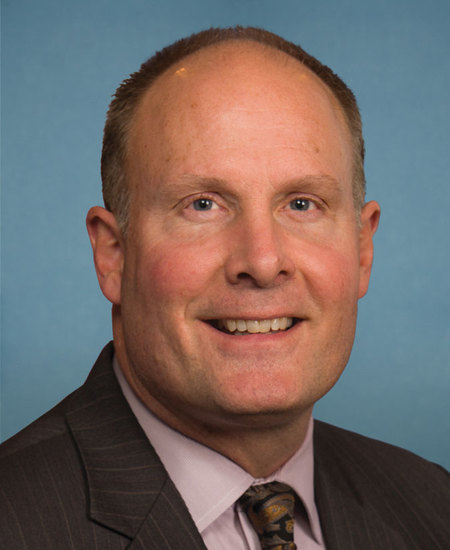
Rep. John R. Moolenaar
Sponsored bills
Maddy summaryHJRES 91 is a resolution to block a Department of Energy rule that established new testing procedures for residential water heaters under the Energy Conservation Program. If approved, it would prevent the rule from taking effect, meaning water heater manufacturers would not need to comply with the updated testing standards. This directly affects the Department of Energy and manufacturers who would have been required to follow the rule, which was published in the Federal Register on June 21, 2023.
Maddy summaryHR 5654, the "Hot Showers Act," directs the Secretary of Energy to withdraw a specific proposed rule on water heater energy efficiency standards. The bill mandates the withdrawal of the "Energy Conservation Program: Energy Conservation Standards for Consumer Water Heaters" rule (88 Fed. Reg. 49058, July 28, 2023), and prohibits the Department of Energy from finalizing, implementing, or enforcing that rule or any substantially similar rule. This action directly affects the Department of Energy and manufacturers of consumer water heaters by halting the proposed efficiency standards. The bill is procedural, focusing solely on withdrawing the rule without creating new policy.
Maddy summaryHR 5652, the Stop Overdose in Schools Act, establishes a federal pilot program to help schools respond to opioid overdoses. It provides grants to school districts to train staff (like resource officers and nurses) in administering opioid reversal medications, purchase necessary kits, and raise awareness about opioid use disorder. The bill prioritizes rural schools (50% of grants) and districts in areas with high youth overdose rates (the other 50%). It also sets aside $5 million annually for fiscal years 2024 and 2025 to fund this program, requiring grant recipients to train designated school personnel in opioid reversal agent use.
Maddy summaryHR 5561, the Protecting the Right to Keep and Bear Arms Act of 2023, prevents federal agencies from using emergency declarations to implement gun control measures. It specifically prohibits the President from declaring a national emergency under the National Emergencies Act or the Robert T. Stafford Act for gun control purposes, and stops the Health and Human Services Secretary from declaring a public health emergency under the Public Health Service Act for the same reason. The bill also amends the Stafford Act to explicitly prohibit any emergency-related restrictions on possessing, manufacturing, selling, or transferring firearms, ammunition, ammunition feeding devices, or firearm accessories. This directly affects how federal agencies can respond during emergencies without violating the Second Amendment. The law aims to limit executive actions during emergencies that could restrict gun rights.
Maddy summaryHRES 684 is a symbolic congressional resolution passed by the U.S. House of Representatives on September 14, 2023, condemning New Mexico Governor Michelle Lujan Grisham's emergency order that temporarily suspended open and concealed carry firearm rights for 30 days. The resolution asserts the order violated the Second Amendment, citing Supreme Court precedents (Heller, McDonald, Bruen) and noting a federal judge had already blocked the order's firearm restrictions. It does not change any laws or impose legal consequences - it is solely a formal expression of disapproval from Congress. The resolution directly addresses the Governor's actions but has no effect on New Mexico's laws or citizens' rights.
Native American Health Savings Improvement Act This bill allows individuals who are eligible for a medical care program of the Indian Health Service or a tribal organization to participate in health savings accounts.
Maddy summaryHR 5455, the Collision Avoidance Systems Act of 2023, allows automakers to install pulsating light systems as rear-end collision avoidance technology on new vehicles. The bill requires the Secretary of Transportation to issue new regulations within 180 days updating Federal Safety Standard 108 to include performance-based rules for these systems. Specifically, it defines a "pulsating light system" as a high-mounted brake light that flashes rapidly (up to 4 times for no more than 1.2 seconds) before switching to steady light, with a 5-second lockout period after braking stops. This directly affects vehicle manufacturers who must comply with the updated safety standards for brake lights.
Maddy summaryHR 5411 blocks the Department of Energy from finalizing, implementing, or enforcing a proposed energy efficiency rule for residential clothes washers. The bill specifically targets the "Energy Conservation Program: Energy Conservation Standards for Residential Clothes Washers" rule (proposed in March 2023). This legislation prevents the rule from moving forward, meaning manufacturers would not be required to meet the new efficiency standards for clothes washers under this specific regulation. The bill directly affects the Department of Energy's regulatory process for appliance energy standards.
Maddy summaryHR 5507 prohibits the use of federal funds to establish a Disinformation Governance Board within the Department of Homeland Security. The bill directly affects the Secretary of Homeland Security by blocking any funding from being used for this specific board's creation. It is a straightforward funding restriction with no additional policy mechanisms or provisions beyond preventing the board's establishment.