

Maddy summaryHR 5996, the "Stop Taxpayer Funding of Hamas Act," restricts all U.S. federal funding in Gaza until the President certifies two conditions to Congress: (1) funds won't benefit Hamas, Palestinian Islamic Jihad, or designated terrorist groups, and (2) all hostages taken by these groups have been freed. The bill also prohibits U.S. funding through UN entities in Gaza if they promote anti-Israel or anti-Semitic content. It applies to all U.S. government spending in Gaza, including aid delivered via international organizations. The law directly affects federal budget allocations for Gaza operations and requires specific congressional oversight before any funds can be used.
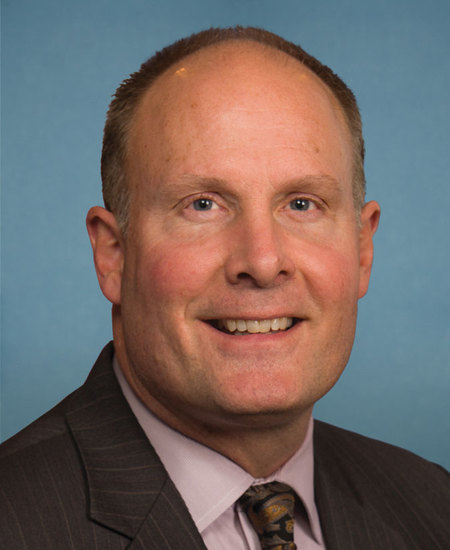
Rep. John R. Moolenaar
Sponsored bills
Maddy summaryThis bill, HR 5920 (Student Loan Marriage Penalty Elimination Act of 2023), changes how married couples can deduct student loan interest on their federal taxes. It amends the tax code to allow each spouse to claim a separate $2,500 deduction limit for student loan interest, instead of a single combined limit for the couple. This directly affects married couples filing jointly who pay student loan interest and qualify for the deduction. The change applies to tax years beginning after December 31, 2022, and ensures the deduction aligns with the tax treatment for individual filers.
'Operation Swords of Iron' Iron Dome Supplemental Appropriations Act This bill provides $2 billion in appropriations for the Department of Defense to provide to the government of Israel for the procurement of the Iron Dome defense system to counter short-range rocket threats. The funds must be provided to address emergent requirements in support of Operation Swords of Iron.
Maddy summaryHR 5830, the American Genetic Privacy Act of 2023, prohibits commercial DNA testing services (like ancestry or genealogy companies) from sharing any individual's genetic data or aggregated genetic information with the People's Republic of China or entities controlled by China. The law treats violations as unfair or deceptive practices under the Federal Trade Commission (FTC) Act, empowering the FTC to enforce penalties and investigate breaches. It specifically defines "genetic information" as data from DNA tests, including results from services that provide ancestry or genealogical insights. This bill directly affects DNA testing companies operating in the U.S. and aims to prevent sensitive genetic data from being transferred to Chinese entities.
Maddy summaryHR 5850 nullifies a January 2023 FDA modification to the safety requirements for mifepristone, a medication used in medical abortions. The bill prohibits federal funding for implementing any similar safety requirements or enforcement policies for mifepristone. This directly affects how the drug can be distributed and accessed, as it reverses the FDA's updated risk management rules. The law aims to prevent federal support for any new restrictions on mifepristone access beyond the pre-January 2023 standards.
Maddy summaryHRES 758 is a symbolic resolution designating the first Wednesday in October as National Energy Appreciation Day. It expresses the House's support for recognizing energy workers - across oil, gas, coal, nuclear, hydro, and renewable sectors - who power the U.S. economy and improve quality of life. The resolution cites statistics on energy's role in job creation (7.8 million U.S. jobs), poverty reduction, and national security, but does not create new laws or funding. As a non-binding resolution, it solely aims to raise awareness of the energy industry's contributions. (HRES 758, introduced October 3, 2023)
Maddy summaryHRES 738 is a non-binding resolution expressing the House of Representatives' view that the U.S. education system should aim for virtually all students to read at grade level or better. It encourages states and schools to implement one-on-one tutoring for students with reading gaps of one year or more, five days a week, until they reach grade level. The resolution also urges collaboration between government agencies and private organizations to address literacy gaps in K-12 students and establish adult literacy programs for those reading below eighth-grade level. It directly affects students struggling with reading and adult learners, but does not create new laws or funding.
Maddy summaryHR 5791, the "Define the Mission Act," requires the President to submit a comprehensive strategy report to Congress within 30 days of the bill's enactment, detailing U.S. involvement in the Ukraine conflict. The report must define U.S. national interests in the conflict, set specific objectives with timelines, benchmarks, and resource estimates (including personnel and funding), list expected European NATO security contributions, and assess Russia’s natural gas market impact on resolving the conflict. It mandates the strategy must aim for a Russia-Ukraine cease-fire agreement and explicitly cannot depend on U.S. funding for Ukrainian reconstruction. The report must be unclassified but may include a classified annex for full transparency. This bill establishes a formal process for Congress to review and oversee U.S. policy toward Ukraine.
Maddy summaryHR 5641, the Pay Our Troops Act, ensures military personnel and their support staff continue receiving pay during fiscal year 2024 if Congress fails to pass regular budget appropriations. It appropriates existing Treasury funds to cover pay and allowances for active-duty troops, reserve components, and civilian employees or contractors supporting military operations. The bill automatically terminates on January 1, 2025, or earlier if Congress enacts a regular budget or continuing resolution. This provision directly affects service members, Department of Defense staff, and Coast Guard personnel (when not under the Navy) during budget implementation gaps.
Maddy summaryHR 5742, the TASK Act, amends the Fair Labor Standards Act to clarify that vocational students performing tasks required by their postsecondary institution to earn a recognized credential are not considered "employees" under federal wage law. This directly affects students in vocational programs at colleges or training schools who complete mandatory work as part of their curriculum. The key provision excludes these students from minimum wage and overtime protections typically afforded to employees. As a result, such student work assignments would not trigger federal labor law requirements like pay for time worked.