

Maddy summaryThis bill proposes changes to the Social Security system that would affect workers, retirees, and survivors. Starting in 2028, it requires individuals to pay Social Security taxes on a decreasing percentage of their earnings above the annual cap, eventually eliminating the tax on excess income by 2032. The legislation also adjusts how benefits are calculated by increasing the portion of high earnings that count toward future payments and creating a new index to track inflation specifically for elderly consumers. Additionally, it modifies benefits for widows and widowers in two-income households and ensures that Supplemental Security Income recipients are not penalized by changes to their Social Security benefits.
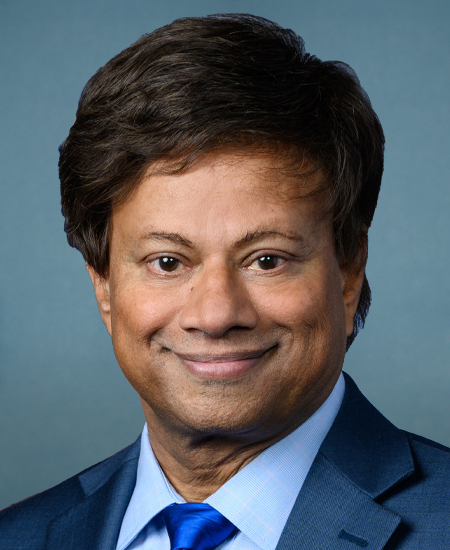
Rep. Shri Thanedar
Sponsored bills
Maddy summaryThe DASH Act aims to expand affordable housing options for low-income individuals, homeless persons, and first-time homebuyers by creating new federal programs and modifying existing tax laws. A primary component is the creation of 250,000 new rental vouchers in 2026 for people experiencing homelessness or at risk of homelessness, which includes funding for supportive services like healthcare and job training, as well as requirements for public housing agencies to prioritize youth and families. The bill also establishes a modular construction pilot program to lower building costs, a grant system to reward local governments that adopt zoning rules allowing denser housing like duplexes and accessory dwelling units, and a new tax credit to help low-income families purchase starter homes in distressed communities. Additionally, the legislation introduces a new refundable tax credit for first-time homebuyers, expands tax incentives for middle-income housing, and makes several adjustments to how homeowners can deduct losses or handle debt discharges related to their principal residences.
Maddy summaryThe Federal Cryptocurrency Theft Enforcement and Coordination Act establishes a new task force within the Department of Justice to coordinate efforts against cryptocurrency theft. Led by the Attorney General, this group will include representatives from agencies such as the FBI and the Treasury to improve how federal, state, and local law enforcement investigate and prosecute these crimes. The task force is responsible for sharing information, providing training on digital evidence collection, and identifying gaps in current laws without creating new criminal offenses or regulating digital assets. Additionally, the Attorney General must submit annual reports to Congress detailing the task force's activities and offering recommendations for future improvements.
Maddy summaryThis bill, titled the Dignity and Due Process for Children Act of 2026, restricts how unaccompanied children under 18 are handled by immigration authorities in the United States. It requires immigration judges to issue an arrest warrant before detaining these children pending removal decisions and prohibits the use of military personnel or Department of Defense vehicles to transport them for deportation, except during declared natural disasters. Additionally, the law forbids government agencies from pressuring children to sign legal documents that affect their status without first ensuring they have confidential access to a lawyer, mandating legal referrals within five business days if a child does not already have one.
Maddy summaryThis bill requires states and tribal organizations that run school lunch programs to also participate in the Summer EBT program, which provides food assistance to children during summer breaks. For the summers of 2024 through 2026, participation in the summer program remains voluntary for these entities. Starting in summer 2027, joining the summer program becomes mandatory for any state or tribal organization that already participates in the school lunch program. The legislation also updates administrative rules to ensure states submit management plans for these programs by specific deadlines each year.
Maddy summaryHR 5408, the Faster Labor Contracts Act, requires employers to begin negotiating a first contract with a newly certified union within 10 days of written request. If no agreement is reached within 90 days, the parties must seek mediation, and if unresolved after 30 days of mediation, the dispute moves to binding arbitration by a three-member panel. The arbitration decision, based on factors like employer finances, industry standards, and cost of living, becomes binding for two years. This bill directly affects newly certified unions and their employers during initial contract negotiations, aiming to reduce delays that currently average 465 days.
Maddy summaryThis resolution expresses support for designating June 5, 2026, as National Gun Violence Awareness Day and June 2026 as National Gun Violence Awareness Month. The bill calls on the public to wear orange on the designated day to honor victims and promote awareness of gun safety. It highlights statistics on gun-related deaths and injuries to underscore the need for community discussions on making neighborhoods safer.
Maddy summaryThis bill modifies the U.S. Bankruptcy Code to allow individuals to request a court determination of whether their student loans should be discharged based on "undue hardship" at the time they file for bankruptcy. Currently, such a request can only be made after a loan repayment plan has failed, but this legislation would enable debtors to seek this relief immediately upon filing. The change applies only to bankruptcy cases that begin on or after the date the law is enacted. By allowing earlier evaluation, the bill aims to provide a clearer path for borrowers facing financial difficulty to potentially eliminate their student loan debt during the bankruptcy process.
Maddy summaryThis resolution expresses support for designating May 2026 as Mental Health Awareness Month to highlight the importance of mental well-being and reduce stigma. It does not create new laws or allocate funding but serves as a formal statement acknowledging the rising rates of mental illness, suicide, and disparities in care across the United States. The text cites various statistics regarding anxiety, depression, and access to treatment to underscore the need for public awareness and continued efforts by medical and community organizations. Ultimately, the bill encourages citizens and institutions to use this month to promote mental health resources and support for individuals and families affected by mental illness.
Maddy summaryThe Celiac Safety Act of 2026 officially classifies gluten-containing grains as a major food allergen under federal law, directly impacting the food industry and individuals with celiac disease or gluten intolerance. This change requires manufacturers to label products containing wheat, rye, barley, or their crossbred hybrids with the same prominence as other major allergens like milk. The new labeling requirements will not take effect until 18 months after the law is enacted, giving businesses time to adjust their packaging and production processes.