

Maddy summaryThis bill establishes an Interagency Task Force to coordinate federal efforts against financial fraud targeting military members, veterans, and military families. The Task Force, created within 90 days of enactment, includes representatives from the Departments of Defense, Veterans Affairs, Justice, FTC, CFPB, and other agencies, plus three veteran service organization experts. Its key duties include collecting fraud data, identifying specific scam types (like pension poaching or fake charity schemes), evaluating existing protections, and issuing annual reports to Congress with recommendations. The bill directly affects military consumers by mandating a coordinated federal response to rising fraud losses, which totaled $584 million in 2024.
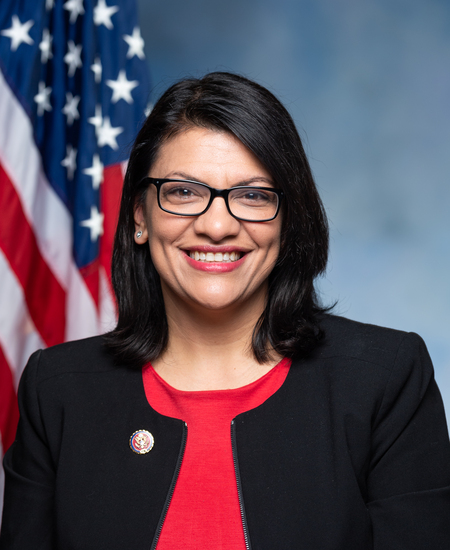
Rep. Rashida Tlaib
Sponsored bills
Maddy summaryThis bill allows federal employees who are furloughed or working without pay during a government shutdown (defined as a funding lapse of at least two weeks) to withdraw up to $30,000 from their Thrift Savings Plan (TSP) retirement savings without the usual 10% early withdrawal penalty. The $30,000 limit adjusts annually for inflation and applies per shutdown period. It also ensures missed TSP loan payments during a shutdown are not treated as taxable distributions, and employees can later contribute back up to the withdrawn amount without penalty. The bill directly affects federal workers facing financial hardship due to funding lapses, providing immediate relief through modified TSP rules.
Maddy summaryThis bill adds Medicare coverage for multi-cancer early detection screening tests (blood or biological tests analyzing cell-free DNA) starting January 1, 2028. It directly affects Medicare beneficiaries aged 68 and older (starting in 2028, with the age limit increasing by 1 year annually), requiring tests to be FDA-cleared and deemed reasonable/necessary by the Secretary for early cancer detection across multiple organ sites. Payment will initially match current stool DNA test rates before 2031, then shift to a lower rate or new payment system after 2031, with limits preventing more than one test per year. The bill explicitly states it does not alter coverage for existing cancer screenings like breast, colorectal, or prostate cancer tests.
Maddy summaryHRES 773 is a symbolic resolution (not a law) honoring the principle of separation of church and state. It commemorates the 65th anniversary of President John F. Kennedy’s 1960 speech to the Houston Ministerial Association and the 150th anniversary of President Ulysses S. Grant’s 1875 speech, both emphasizing government neutrality in religious matters. The resolution affirms the constitutional separation of church and state as a core American value and opposes "extreme right-wing Christian nationalism," though it does not create new policies or affect any specific group. As a non-binding statement, it has no legal effect but expresses the House’s position on religious freedom.
Maddy summaryHRES 781 is a symbolic resolution designating October 1, 2025, as "National Animal Rescue Day" to raise public awareness about animal adoption and spaying/neutering. It does not create new laws or allocate funds but encourages nationwide events like adoption drives and educational campaigns to support shelters and reduce pet overpopulation. The resolution directly aims to benefit animal shelters, rescue organizations, and potential adopters by promoting the importance of adopting pets and responsible pet ownership. As a non-binding gesture, it focuses on awareness rather than policy change.
Fair Pay for Federal Contractors Act of 2025 This bill provides back pay to employees of federal contractors who lost pay due to a lapse in appropriations (i.e., government shutdown) in FY2026. Specifically, the bill provides appropriations for federal agencies that are subject to a lapse in appropriations in FY2026 to adjust the price of contracts to compensate federal contractors for providing back pay to employees who were affected by the lapse in appropriations. The agencies must adjust the price of any contract for which the contractor stopped, suspended, delayed, or interrupted all or part of the work under the contract due to the lapse in appropriations. The price adjustment must compensate the contractor for reasonable costs incurred to (1) compensate employees who were furloughed or laid off, were not working, or experienced a reduction of hours or compensation due to the lapse in appropriations; or (2) restore paid leave taken by employees during the lapse in appropriations if the contractor required or permitted employees to use paid leave as a result of the lapse in appropriations. The maximum amount of weekly compensation of an employee for which an adjustment may be made under this bill may not exceed the lesser of (1) the employee's actual weekly compensation, or (2) $1,442 (or a lesser amount pro-rated for an employee who works less than 40 hours per week). The bill also requires the Office of Federal Procurement Policy to submit a report to Congress on the adjustments made under this bill.
Maddy summaryHR 5664, the Living Wage for Musicians Act of 2025, requires music streaming services to add a $4-$10 fee per subscription (50% of the subscription cost) to fund a new royalty program. This fee is collected from subscribers and deposited into the Artist Compensation Royalty Fund, which then distributes 90% of funds to featured artists based on their share of qualifying streams and 10% to a union fund for non-featured artists like session musicians. The bill directly affects streaming platforms (service providers) and musicians, including those not prominently featured on recordings. It creates a mandatory payment mechanism tied to streaming activity, with funds distributed quarterly after service providers submit required revenue data.
Maddy summaryHR 5655, the "No Shame at School Act of 2025," requires schools to eliminate stigma around unpaid meal fees for students. It mandates that school districts automatically certify eligible students for free/reduced meals (replacing "may" with "shall"), prohibits physical segregation or public identification of students with unpaid fees (like special tokens or name lists), and bans withholding grades or activities due to meal debt. The bill also prevents schools from using debt collectors for meal fees and requires adjustments to past meal claims when eligibility is later confirmed. This directly affects schools, local educational agencies, and students from households with outstanding meal fees.
Maddy summaryThis bill establishes a federal grant program to help low-income homeowners and affordable housing owners adapt properties to climate-driven hazards like flooding and wildfires. It authorizes $250 million annually (2026-2031) for states, tribes, and Native Hawaiian organizations to fund resilience projects for eligible property owners, defined as those at or below 300% of the federal poverty level in high-risk areas. Key provisions require grants to cover natural solutions (e.g., ecological landscaping), prohibit rent increases for two years on funded properties, and mandate resident relocation protections for multifamily buildings. The program mandates adherence to federally developed resilience standards and includes reporting requirements to ensure funds are used effectively. It directly affects vulnerable households in climate-threatened communities who cannot afford property adaptations on their own.
Maddy summaryThis resolution (HRES 770) is a symbolic statement expressing the House's support for "Military Sexual Trauma Awareness Day" observed on September 25. It directly affirms the House's commitment to military sexual trauma (MST) survivors - impacting both women and men in the military - by highlighting the need to reduce stigma and improve support systems. The resolution encourages the Department of Defense and Veterans Affairs to expand access to MST-related services and promote transparency in handling cases, but it does not create new laws or funding. As a non-binding resolution, it serves only to formally acknowledge the issue and encourage existing agencies to prioritize survivor care.