

Maddy summaryHR 5604, the National Guard Proper Use Act, prohibits military and National Guard personnel from being ordered to enforce federal immigration laws. It adds new sections to military law (Title 10 for active forces and Title 32 for the National Guard), explicitly stating members cannot be directed to perform duties related to immigration enforcement. This directly affects military commanders who might attempt to assign such tasks and ensures National Guard members remain focused on their core missions, not civilian immigration enforcement. The bill references the Posse Comitatus Act (18 U.S.C. §1385), a longstanding law that limits military involvement in domestic law enforcement. It clarifies existing legal boundaries without creating new programs or funding.
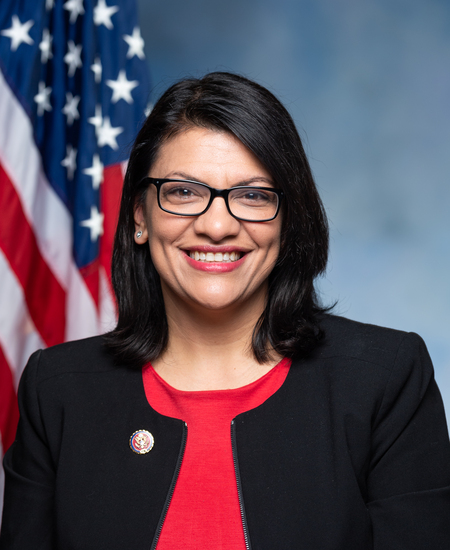
Rep. Rashida Tlaib
Sponsored bills
Maddy summaryHR 5572, the Help FEDS Act, ensures federal employees who must work during government shutdowns (but aren't paid due to the shutdown) can access unemployment benefits through their state's program. The bill requires states to allow these "excepted" employees to apply for and receive unemployment compensation during fiscal years 2026-2027, while also mandating repayment if they later receive pay under a separate federal provision. The federal government will reimburse states 100% of the unemployment benefits paid to these employees plus related administrative costs, funded from the Unemployment Trust Fund. This directly affects federal workers performing emergency work during shutdowns and state unemployment systems managing these claims.
Maddy summaryThis bill prevents federal agencies from terminating employees during a government shutdown caused by a lapse in discretionary funding. It prohibits removals of civil service employees at any agency affected by a funding gap, and if an employee is wrongfully removed, they can return to their job with back pay once funding resumes. The law directly protects all federal employees covered by the civil service system during shutdowns. It applies automatically to any funding lapse, requiring automatic reinstatement without needing separate legal action.
Maddy summaryThe Emergency Responder Protection Act (HR 5603) prohibits U.S. Immigration and Customs Enforcement (ICE) and U.S. Customs and Border Protection (CBP) officers from conducting immigration enforcement actions within 1,000 feet of protected emergency response locations - such as hospitals, shelters, disaster relief sites, or evacuation routes - except in clear cases of immediate danger to life or national security. It requires officers to consult supervisors in real-time if circumstances are unclear, mandates detailed annual reports to Congress on any enforcement near these sites, and creates penalties for violations, including barring evidence from removal proceedings. The law specifically exempts rare, premeditated arrests of terrorism suspects or individuals posing extraordinary public safety threats, with prior written approval. This directly affects ICE and CBP officers, requiring them to adjust operations near active emergency scenes.
Maddy summaryThis bill allows individuals applying for government benefits to deduct certain insurance costs from their reported income when determining eligibility. It covers auto insurance for vehicle owners, home/renter insurance, and flood insurance for primary residences. These deductions apply to both federal programs (like SNAP or Medicaid) and state/local programs receiving federal funding. The change directly affects people seeking assistance by reducing their counted income for benefit calculations.
Maddy summaryHCONRES 51 directs the President to withdraw U.S. military forces from hostilities against Venezuela and designated terrorist organizations (transnational criminal groups listed as Foreign Terrorist Organizations or Specially Designated Global Terrorists) without congressional authorization. It applies to military actions since February 20, 2025, including recent Caribbean operations referenced in the bill's findings. The resolution invokes the War Powers Resolution, requiring removal of forces when no declaration of war or specific statutory authorization exists. It explicitly excludes self-defense against sudden attacks but mandates withdrawal for unapproved military engagement.
Maddy summaryHRES 764 is a symbolic House resolution recognizing persistent disparities in mental health access and treatment for Black youth. It cites alarming statistics, including a 149% rise in suicide rates among Black adolescents (2007-2023) and higher rates of suicide attempts among Black high school students. The resolution calls on the current administration to continue previous efforts addressing these disparities, incorporate recommendations from the Congressional Black Caucus’s "Ring the Alarm" report, and protect the Substance Abuse and Mental Health Services Administration (SAMHSA) as an independent agency. It does not create new laws or allocate funds but serves as a formal acknowledgment of the crisis and a request for policy continuity.
Maddy summaryThe Mental Health Services for Students Act of 2025 would establish a federal grant program to fund school-based mental health services for students in grades K-12, particularly those experiencing trauma, grief, suicide risk, or violence. It directly affects schools (including Bureau of Indian Education schools), students, and community mental health providers through partnerships that must include school districts and local mental health entities. Key provisions require services to be culturally appropriate, trauma-informed, and integrated with positive behavioral supports, with grants capped at $2 million per award for 5 years (renewable) and funded at $300 million annually for 2027-2028. Recipients must report annually on program outcomes, ensure equitable access across urban and rural areas, and comply with privacy laws like HIPAA and FERPA.
Maddy summaryThe Pipeline Accountability Act of 2025 requires pipeline operators to install rupture-mitigation valves on pipelines in high consequence areas within 5 years and demonstrate the ability to isolate ruptured segments within 30 minutes. It establishes new safety standards for carbon dioxide pipelines, mandates public disclosure of safety data including potential impact zones and emergency response plans, and creates an Office of Public Engagement within the Pipeline and Hazardous Materials Safety Administration. The bill prohibits blending hydrogen into natural gas systems without specific regulation, requires reporting of blended products exceeding 1% by volume, and mandates reporting of gas releases of 50,000 cubic feet or more. It also establishes new penalties for safety violations and requires operators to provide accessible safety information to communities near pipelines.
Maddy summaryThis resolution condemns the use of federal regulatory agencies (like the FCC) or lawsuits to suppress lawful speech critical of political parties or the President, specifically referencing concerns about tactics mirroring authoritarian practices. It does not create new laws but formally warns that such actions undermine First Amendment protections and democratic norms. The resolution directly affects media organizations, journalists, and public discourse by calling on government agencies to avoid using their power for political retaliation. It reaffirms the House’s commitment to protecting free expression and urges officials to refrain from pressuring media to silence criticism.