

Maddy summaryHRES 917 is a ceremonial resolution congratulating Korson’s Tree Farms in Montcalm County, Michigan, for being selected to provide the 2025 White House Christmas tree. It recognizes the farm as the first Michigan grower in 41 years to supply the official White House tree and highlights Michigan’s Christmas tree industry, which ranks third nationally in harvests and generates over $40 million annually. The resolution includes no policy changes or funding; it solely offers congratulations, acknowledges the farm’s past contest wins, and invites the farm to the Capitol for recognition. This procedural resolution affects no legislation or regulations, serving only as a symbolic honor.
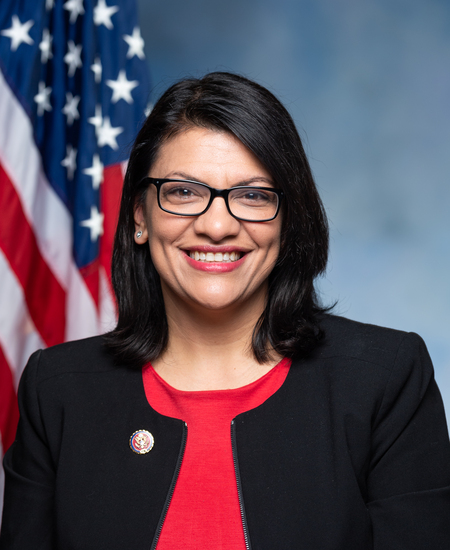
Rep. Rashida Tlaib
Sponsored bills
Maddy summaryThis bill prohibits federal funding for White House construction or renovations during any government shutdown (funding gap), except for projects directly related to health or safety. It directly affects White House maintenance and development projects by blocking non-essential work when Congress fails to pass a budget. The key provision bans all non-essential spending on White House grounds during budget lapses, with explicit health/safety exceptions. The bill aims to prevent new projects from starting during shutdowns without altering existing contracts or ongoing work.
Maddy summaryThe FRESHER Act of 2025 requires the Secretary of the Interior to study stormwater runoff impacts from oil, gas, and mining operations on groundwater and aquifers. It mandates a specific analysis of measurable contamination, groundwater resources, and aquifer susceptibility to contamination in affected areas. The study must be completed within one year of the bill's enactment, with results reported to Congress. This bill directly affects oil, gas, and mining operations by establishing new federal study requirements for their stormwater runoff.
Maddy summaryHR 6318, the No GOUGE Act, prohibits large businesses from excessively raising prices on goods affected by tariffs or planned tariffs (e.g., imports subject to new tariffs) for five years after the tariff takes effect. It specifically targets companies with over $100 million in U.S. revenue, banning price hikes that exceed the actual cost of the tariff plus legitimate operational expenses (excluding executive pay or stock buybacks). The Federal Trade Commission (FTC) enforces this by presuming violations if large firms (over $1 billion revenue) raise prices beyond pre-tariff averages during "tariff shock" periods, though companies can rebut this by proving costs were genuinely tied to the tariff. The law aims to prevent price gouging by ensuring tariff costs - not profit motives - drive price changes for consumers.
Maddy summaryThe CARE for Moms Act aims to reduce maternal mortality in the United States by expanding access to comprehensive care for pregnant and postpartum individuals. It directly affects women, particularly Black women who face disproportionately higher maternal mortality rates, as well as rural and underserved communities. Key provisions include funding State-based perinatal quality collaboratives ($35 million annually), requiring 12-month Medicaid coverage for postpartum individuals, mandating oral health services during pregnancy, supporting doula services through $50 million in grants, and creating regional centers to address implicit bias in healthcare. The bill also establishes rural mobile health units for obstetric care and requires hospitals to notify authorities 90 days before closing obstetric units. These changes aim to address systemic issues contributing to the U.S. maternal mortality crisis, which has the highest rate among developed nations.
Maddy summaryHRES 909 is a House resolution affirming that immigrant justice and reproductive justice are interconnected and must be addressed together. It calls on the Department of Homeland Security to reinstate protections for pregnant individuals in detention, eliminate the 5-year bar restricting immigrants’ access to federal health programs like Medicaid, and implement transparent oversight of reproductive health care in detention facilities. The resolution also urges Congress to remove barriers to health care access for immigrants and requires federal agencies to report on policies affecting reproductive health care for detained individuals. This resolution directly affects policies toward immigrants in detention, particularly regarding access to abortion, prenatal care, and mental health services, but does not create new laws.
Maddy summaryHRES 899 is a symbolic House resolution recognizing the Transgender Day of Remembrance and memorializing transgender people killed by violence in 2024-2025. It directly affects transgender individuals, particularly transgender women of color, by acknowledging the epidemic of violence against them - citing 27 U.S. victims (including names like Rick Alastor Newman and Kyla Jane Walker) and 241 global cases in 2025. The resolution’s key provisions include formally recognizing the violence epidemic, memorializing specific lives lost, and affirming the need for solutions to protect transgender people. It does not create new laws but expresses congressional support for addressing systemic violence and discrimination faced by transgender communities.
Maddy summaryThis bill would expand Medicare Part B coverage to include medical nutrition therapy for beneficiaries with a wider range of chronic conditions beyond current limits (diabetes and kidney disease). It specifically adds conditions like obesity, hypertension, eating disorders, cancer, gastrointestinal diseases, and HIV to the list of covered illnesses, allowing coverage for prevention, management, or treatment. The bill also allows more healthcare providers - including dietitians, nurse practitioners, and clinical psychologists - to deliver these services. This change would directly affect millions of Medicare beneficiaries managing these conditions who previously lacked coverage for medically necessary nutrition therapy.
Maddy summaryThe End Child Poverty Act (HR 6235) establishes a universal child assistance program providing monthly payments to children under 19 who are U.S. citizens, nationals, or qualified aliens residing in the U.S. Payments equal 1/12 of the annual poverty guideline difference between a two-person household and a single individual, adjusted annually using federal poverty guidelines. The Social Security Administration’s new Office of Universal Child Assistance will automatically identify eligible children via IRS data sharing (with an opt-out option) and issue payments starting in 2026, including reconciliation payments when updated poverty guidelines are published. The bill also terminates the Child Tax Credit and Earned Income Tax Credit after 2025, replacing them with new refundable tax credits for adult dependents and families.
Maddy summaryThe Revitalize Our Neighborhoods Act of 2025 creates a competitive grant program administered by the Department of Housing and Urban Development (HUD) to eliminate blight and revitalize neighborhoods. It provides funding specifically for states, local governments, or multi-jurisdictional entities to carry out activities like demolishing deteriorated structures, boarding vacant properties, renovating abandoned buildings, and constructing affordable housing - all limited to low-income communities. Recipients must contribute at least 15% in matching funds (from federal programs, local sources, or property sales) and submit detailed 5-year plans for how the funds will be used. The bill prohibits using funds to acquire occupied homes and requires annual reports on project outcomes, geographic distribution, and populations assisted.