

Maddy summaryHR 6403 expands eligibility for homeless children and youth services to include those verified as homeless through other federal programs (like Head Start, domestic violence assistance, or youth services), with verification timelines extended from 14 to 30 days. The bill requires annual public reporting of detailed homeless data - including age, disability status, and length of homelessness - to HUD, and prohibits service providers from prioritizing specific subpopulations without local data justification. It directly affects homeless youth under 24, unaccompanied youth, and families with children, ensuring consistent access to education, housing, and support services across federal programs.
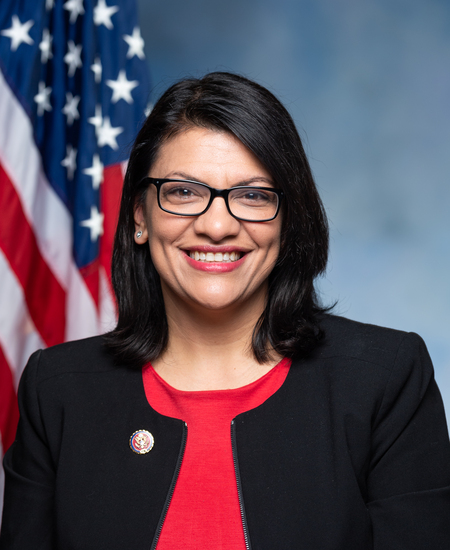
Rep. Rashida Tlaib
Sponsored bills
Maddy summaryHR 6406, the Parental Workforce Training Act, provides federal grants to local workforce boards to help parents cover childcare costs while participating in job training programs. It directly affects parents with dependent children who are enrolled in employment and training activities under the Workforce Innovation and Opportunity Act (WIOA). The bill authorizes $10 million in funding to award competitive grants, allowing local boards to provide direct childcare subsidies to eligible individuals through their chosen providers (as long as they meet state/local quality standards). Local boards must report on participant enrollment and program completion rates within one year of grant implementation. This is a concrete policy change establishing a new childcare support mechanism within existing workforce programs.
Maddy summaryHR 6391, the Save Oak Flat from Foreign Mining Act, repeals Section 3003 of the 2014 National Defense Authorization Act that would have transferred Oak Flat (2,422 acres in Arizona’s Tonto National Forest) to Resolution Copper for mining. The bill withdraws Oak Flat from all public land use, preventing the foreign-owned mining venture (Rio Tinto/BHP) from extracting copper beneath the site for export to China. It directly protects the area, which is a sacred site for Indigenous peoples and a National Register Historic Property, from a mine projected to consume 250 billion gallons of groundwater over 40 years and cause significant land subsidence. The bill halts a process that would have allowed foreign corporations to mine copper from public land without requiring domestic smelting or benefiting U.S. consumers.
Maddy summaryHRES 856 is a non-binding resolution expressing the House of Representatives' view that the U.S. Department of Agriculture (USDA) should use its existing contingency funds and interchange authority to fund the Supplemental Nutrition Assistance Program (SNAP) for November 2025. The resolution cites that the USDA holds over $5 billion in contingency funds set aside for emergencies and has legal authority under the Department of Agriculture Organic Act to transfer funds between nutrition programs to maintain SNAP benefits. This would directly support approximately 42 million people relying on SNAP, including 16 million children, 8 million seniors, 4 million people with disabilities, and 1.2 million veterans, preventing disruption during a potential funding gap. The resolution does not create new law but urges the administration to use existing resources to ensure continued food assistance.
Maddy summaryThe Migrant Due Process Protection Act (HR 6349) would require immigration judges to allow non-citizens in removal proceedings (who are not held in government custody) to request virtual hearings via video or phone. Judges must approve such requests and ensure virtual formats do not disadvantage the individual. This directly affects people facing deportation who are not currently detained by immigration authorities. The bill adds a new procedural option for remote hearings without changing legal standards or outcomes.
Maddy summaryThe Artificial Intelligence Civil Rights Act of 2025 requires developers and deployers of AI systems that make decisions affecting "consequential actions" (such as employment, housing, healthcare, education, and credit) to conduct pre-deployment evaluations and annual impact assessments by independent auditors. The bill mandates transparency requirements including clear disclosures to individuals about how AI is used in decision-making, establishes a right to human alternatives for significant AI-driven decisions, and prohibits discrimination based on protected characteristics like race, gender, or disability. It creates enforcement mechanisms through the Federal Trade Commission, state attorneys general, and private lawsuits, with penalties including civil penalties of up to 4% of annual revenue. The act also requires developers to provide explanations for AI-driven decisions and sets standards for data collection to prevent harm and ensure fairness in critical life areas.
Maddy summaryHR 6358, the Veteran Education Empowerment Act, creates a federal grant program to help colleges establish or improve dedicated Student Veteran Centers. These centers provide veterans, active-duty service members, and their families with lounge space, benefits counseling, academic support, and mental health services. Institutions must serve significant numbers of veterans and have sustainability plans to qualify for grants, with funding capped at $500,000 per institution over four years. The bill directly affects colleges serving veterans and aims to address challenges like isolation and transition difficulties through centralized campus support.
Maddy summaryThe SNAP Back Act of 2025 expands eligibility for the Supplemental Nutrition Assistance Program (SNAP) by adding three new categories of individuals who would qualify as part of a "household" under the Food and Nutrition Act. It directly affects homeless individuals, veterans, and young adults (24 or younger) who were in foster care under state responsibility until age 18 or older. The bill amends Section 6(o) of the Food and Nutrition Act to include these groups in the existing definition of eligible households, removing barriers to food assistance. This change would allow these specific populations to access SNAP benefits under the same rules as current eligible groups.
Maddy summaryHR 5541, the Every Kid Outdoors Reauthorization Act, expands eligibility for the program to include fifth graders (ages 10-11) and home-schooled learners in that age range, replacing the previous requirement for 10-year-olds. The bill authorizes $25 million annually for the National Park Service to support program operations, promote the initiative to schools and families, provide transportation assistance to financially needy schools and organizations, and conduct targeted outreach to underserved communities and children with disabilities. This reauthorization directly affects fifth-grade students and home-schooled learners aged 10-11, as well as schools and youth organizations participating in the program. The key change is broadening the age group served while maintaining the program's funding structure for operational support and equitable access.
Give Kids a Chance Act of 2025 This bill expands the Food and Drug Administration’s (FDA’s) authority with respect to research on rare pediatric diseases, including by permitting the FDA to take enforcement action against drug sponsors that fail to satisfy pediatric study requirements and by reauthorizing programs that support pediatric research. Specifically, the bill modifies requirements relating to molecularly targeted pediatric cancer investigations to permit research on new drugs in combination with active ingredients that have already been approved, provided certain conditions are met; permits the FDA to take enforcement action against drug sponsors that fail to comply with pediatric study requirements, if such sponsors demonstrated a lack of due diligence in satisfying the requirement; renews the FDA’s authority to award priority review vouchers to sponsors of new products intended to treat rare pediatric diseases through September 30, 2029; and reauthorizes through FY2027 certain funding for the National Institutes of Health to support priority pediatric research. The bill also provides statutory authority for the FDA’s interpretation of the orphan drug exclusivity period. The bill specifies, consistent with FDA regulations, that the seven-year market exclusivity period for drugs for rare diseases or conditions (i.e., orphan drugs) prohibits the approval of the same drug for the same approved use or indication with respect to the disease or condition. (In Catalyst Pharmaceuticals, Inc. v. Becerra , a court rejected the FDA’s interpretation and held that orphan drug exclusivity extends to all uses or indications for the disease or condition.)