

Maddy summary# Summary of the Weather Act Reauthorization Act of 2025 This comprehensive legislation reauthorizes and modernizes the National Oceanic and Atmospheric Administration's (NOAA) weather and climate programs through 2030, with several key focuses: ## Core Program Reauthorizations - **Commercial Data Program** ($100M annually): Establishes a formal program to acquire weather/environmental data from private sector entities, including standards, prioritization, and data assimilation practices - **Commercial Data Pilot Program** (15% of Commercial Data Program funds): Tests and evaluates private sector data for use in NOAA operations - **Advanced Weather Interactive Processing System**: Requires transition to cloud-based operations by 2030 to enable more flexible workforce ## Hazard Communication Improvements - **Hazardous Weather Risk Communication Program**: Focuses on simplifying and improving communication of weather hazards through social, behavioral, and risk science research - **Post-Storm Surveys**: Requires systematic surveys after significant weather events, with emphasis on vulnerable populations - **NOAA Weather Radio Modernization**: Expands coverage, enhances reliability, and transitions to internet protocol-based communications ## Operational Modernization - **National Weather Service Workforce**: Includes hiring assessments, health/morale evaluations, and designation of service hydrologists - **Aviation Weather Program**: Enhances turbulence forecasting, data acquisition, and coordination with the Federal Aviation Administration - **Data Management**: Establishes consistent data standards, infrastructure, and sharing practices across NOAA ## Specialized Programs - **Atmospheric Rivers Forecast Improvement Program**: Focuses on improving forecasts of atmospheric rivers that impact the western U.S. - **Coastal Flooding and Storm Surge Program**: Improves coastal inundation forecasting and warning systems - **National Integrated Drought Information System**: Enhances drought monitoring and forecasting capabilities - **National Mesonet Program**: Expands environmental observation networks across the U.S., with 15% of funds for financial assistance to state/local entities - **National Coordinated Soil Moisture Monitoring Network**: Supports soil moisture monitoring for agricultural and drought management - **Precipitation Forecast Improvement Program**: Aims to improve precipitation forecasting across all timescales ## Funding The bill authorizes significant funding across these programs, with annual appropriations ranging from $10M to $70M depending on the program, for fiscal years 2026-2030. The legislation represents a major effort to modernize NOAA's infrastructure, improve weather communication to the public, and better integrate commercial data sources while maintaining NOAA's leadership in weather and climate science.
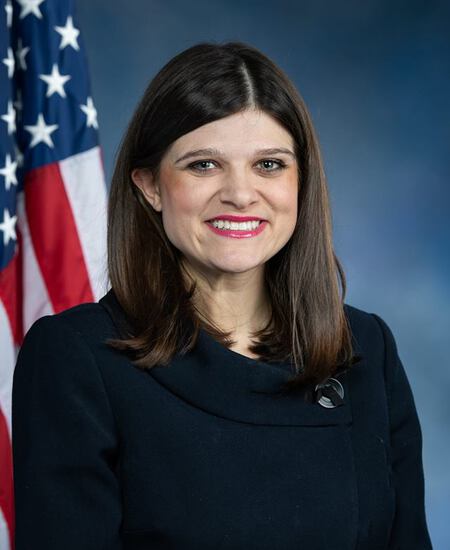
Rep. Haley M. Stevens
Sponsored bills
Maddy summaryThe SHIELD Act of 2025 establishes a one-year pilot program requiring the Secretary of Defense to develop digital literacy training for members of the Armed Forces. The training teaches service members to identify fact-based journalism, disinformation, conspiracy theories, hate-based ideologies (including antisemitism and white supremacy), assess online source credibility, protect personal information, and recognize threats to individual or military security. The program will use in-person, virtual, and hybrid training methods equally, with a geographically and demographically diverse group of service members as participants. After the pilot, the Secretary must survey participants and submit a report to Congress comparing training methods and recommending how often permanent digital literacy training should occur and how often the curriculum should be updated.
Maddy summaryThis bill establishes federal grants to states for programs focused on early detection of colorectal cancer in individuals under age 45. It directly affects young adults (under 45), particularly those with specific risk factors like family history, inflammatory bowel disease, genetic syndromes, or symptoms like rectal bleeding, as well as underserved communities including rural areas, American Indian/Alaska Native populations, African Americans, and those with type 2 diabetes. Key provisions include funding for state-led outreach, education, and screening partnerships with clinics and tribal organizations to identify high-risk individuals early and provide referrals for diagnostic testing and genetic counseling. Grants also support public awareness campaigns, clinician training on early detection, and patient navigation services to help young people access care before age 45. The bill aims to address rising colorectal cancer rates in younger populations by improving targeted prevention efforts.
Maddy summaryHR 4961, the Public Utility Remediation and Enhancement for Water Act, creates a federal grant program to help municipal water systems address harmful chemicals like PFAS (perfluoroalkyl substances) in drinking water. The bill authorizes $200 million annually (2026-2028) to fund 75% of costs for planning, building, or upgrading treatment systems to prevent or treat these emerging contaminants. It directly affects publicly owned water treatment facilities by providing financial support to comply with federal water pollution standards for these chemicals. The program requires states to manage grants similarly to existing water fund programs, with non-federal funds covering the remaining 25% through local or private sources.
Maddy summaryHR 4966 prohibits grocery stores from selling items at "grossly excessive prices," defined as 120% or more above the average market price over the previous six months (with exceptions for unavoidable cost increases like supply chain issues). It bans using facial recognition or personal data to set different prices for individual customers (e.g., adjusting prices based on shopping history) and requires clear signage if facial recognition is used. Stores over 10,000 square feet must replace electronic shelf labels with physical price tags. The Federal Trade Commission enforces these rules, allowing consumers to seek $3,000 per violation or actual damages, with penalties for willful violations.
Maddy summaryThis bill requires employers with 50+ call center employees to notify the Labor Secretary 120 days before moving operations overseas or contracting such work abroad. It creates a public list of these employers, barring them from federal grants or loans for 5 years (with limited exceptions for national security or job loss). Businesses must disclose agent locations and AI use at the start of customer service calls, allowing consumers to request transfer to a U.S.-based human agent. The law applies to all major call center employers and takes effect one year after enactment.
Maddy summaryThis bill requires the federal government to assess and address cybersecurity risks from quantum computers that could break current encryption. It mandates a detailed report within one year (and annual updates) evaluating U.S. progress compared to other countries in developing quantum computers and adopting post-quantum cryptography, identifying vulnerable sectors (like finance or critical infrastructure), and creating a mitigation plan. The plan must facilitate government-private sector collaboration, information sharing, and technical assistance to help entities adopt security measures. The bill also directs the creation of guidelines to define "cryptographically-relevant quantum computers" and includes recommendations for implementing the plan through legislation or policy. This directly affects federal agencies, private companies, and public entities handling sensitive data.
Maddy summaryThis resolution expresses the House of Representatives' opposition to any presidential pardon, commutation, or other clemency for Ghislaine Maxwell, who was convicted in 2021 for conspiring to traffic minors for sexual abuse alongside Jeffrey Epstein. It highlights her 20-year prison sentence for facilitating the grooming and abuse of children, emphasizing that clemency would deny justice to victims. The resolution is non-binding but formally states that her conviction and sentence were warranted, and that her ongoing imprisonment is the only available measure of justice for survivors.
Maddy summaryHR 4903, the Plastic Health Research Act, directs federal agencies to fund and coordinate research on the health effects of plastic exposure, including microplastics and nanoplastics. It authorizes $10 million annually (2026-2030) for grants to academic institutions and nonprofits to develop standardized testing methods, improve research comparability, and fill gaps in understanding plastic-related health impacts. The bill also creates "Centers of Excellence" to advance this research, requiring annual public reports on findings and coordination with agencies like the EPA and FDA. This legislation directly affects researchers, federal health agencies, and public health policy by prioritizing scientific rigor in studying plastic exposure sources (e.g., food packaging, waste disposal) and health outcomes.
Maddy summaryThe Warehouse Worker Protection Act establishes new requirements for employers in warehouse facilities to protect workers from harmful quotas and workplace surveillance practices. It requires employers to provide written descriptions of quotas and workplace monitoring to workers, prohibits quotas that interfere with breaks, safety compliance, or anti-discrimination rights, and gives workers the right to access their work speed data. The bill creates a Fairness and Transparency Office within the Department of Labor to enforce these requirements and investigate violations, with enforcement also involving the Federal Trade Commission. Employers with more than 200 employees at covered warehouse facilities (including distribution centers, couriers, and warehouses) are directly affected by these new requirements, which include new protections against retaliation for workers who exercise these rights.