

Clinical Trial Modernization Act This bill authorizes a grant program and provides certain exemptions to support the participation of individuals in clinical trials. Specifically, the bill authorizes a grant program to support outreach, education, and recruitment efforts for clinical trials that may benefit certain underrepresented populations or communities in need, such as rural or tribal areas. The bill also exempts from anti-kickback laws for federal health care programs (1) remuneration that is offered to cover participants' expenses to participate in clinical trials, (2) the provision of free digital health technologies to support participation of underrepresented populations in clinical trials, and (3) payment for participants' cost-sharing obligations in relation to clinical trials. Finally, the bill exempts up to $2,000 in remuneration that is received for participating in a clinical trial from income tax.
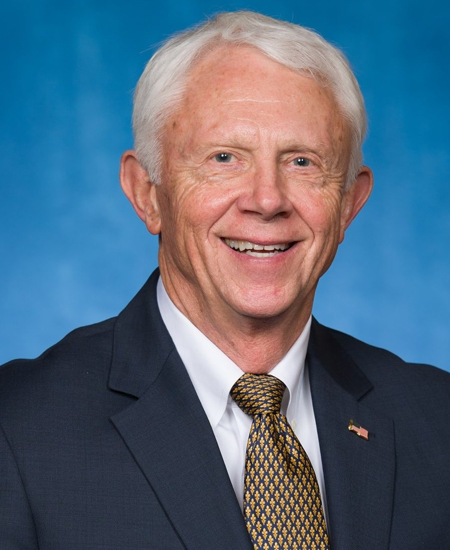
Rep. Jack Bergman
Sponsored bills
Maddy summaryThis bill requires states receiving federal education funds under the Elementary and Secondary Education Act to maintain funding for school resource officer (SRO) programs in public schools at either their prior year's level or a 5-year average. It directly affects State Educational Agencies (SEAs), which must annually certify compliance by reporting their SRO funding amounts and officer counts. If a state fails to meet the funding requirement without a waiver for emergencies like disasters, the federal government will reduce its future education funding proportionally. The bill includes a waiver option for states facing extraordinary financial hardship but does not change SRO program requirements or definitions.
Maddy summaryHRES 411 is a non-binding resolution expressing the House of Representatives' support for strengthening U.S.-Israel defense cooperation. It reaffirms the U.S. commitment to Israel's security, calls for expanded collaboration on missile defense, cybersecurity, and emerging technologies (like AI and counter-unmanned aircraft systems), and urges maintaining Israel's military capabilities. The resolution references existing partnerships, such as joint development of Iron Dome and David’s Sling systems, but does not create new laws or funding. It serves as a symbolic endorsement of deeper security ties to address shared threats.
Maddy summaryHR 3392, the STOP Screwworms Act, requires the U.S. Department of Agriculture to build modular facilities for rearing sterile New World screwworm flies within 180 days of enactment. These facilities will disperse sterile flies into at-risk agricultural areas - identified based on migratory patterns and suitability for dispersal - to prevent infestations that threaten livestock. The bill authorizes $300 million in funding for construction, operation, and annual reporting to Congress on threat assessments and effectiveness. It directly affects livestock producers and agricultural regions vulnerable to screwworm fly migration, using sterile insect technique as a preventive measure.
Maddy summaryThis resolution blocks a Department of Energy rule that would have set new energy efficiency standards for gas-fired instant water heaters. It prevents the rule from taking effect, meaning appliance manufacturers would not have to meet the proposed efficiency requirements. The rule, submitted in December 2024, directly affected manufacturers of these water heaters and consumers purchasing them. Congress approved this disapproval through a joint resolution passed on May 9, 2025.
Maddy summaryThe Fiscal Commission Act establishes a 16-member commission to address the federal government's fiscal challenges, including reducing debt and deficit while aiming for a debt-to-GDP ratio of 100% by 2039. The commission must educate the public about fiscal issues, identify policy recommendations, and submit a detailed report with legislative language by November 2026 (with possible extension to April 2027). This report requires bipartisan approval, needing at least two Republican and two Democratic members for majority support. If approved, the recommended legislation would become an "implementing bill" considered under expedited procedures in both congressional chambers. The commission's work directly affects federal budget decisions and public awareness of fiscal policy, with hearings required to gather input from experts and government officials.
Maddy summaryHR 3277, the Ensuring Lasting Smiles Act, requires group health plans and health insurance issuers to cover medically necessary outpatient and inpatient treatments for congenital anomalies or birth defects primarily affecting the eyes, ears, teeth, mouth, or jaw. This includes reconstructive procedures, dental/orthodontic support during treatment, and follow-up care, but excludes purely cosmetic surgery not tied to a medical diagnosis. Cost-sharing (like copays) for these services must not be stricter than for other medical benefits. The law takes effect for plan years beginning January 1, 2026, and mandates insurers to provide notice about this coverage to beneficiaries.
Maddy summaryHR 3294, the "Justice for Victims of Illegal Alien Murders Act," amends federal murder sentencing to mandate the death penalty or life imprisonment for first-degree murder, and life or long-term imprisonment for second-degree murder, committed by non-citizens classified as inadmissible (e.g., due to prior criminal convictions) or deportable under specific immigration laws. The bill directly affects non-citizens who fall under these immigration categories and are convicted of murder in the U.S. It changes sentencing provisions under Title 18, U.S. Code, by adding these mandatory penalties for such offenses. The law focuses solely on modifying criminal penalties for specific convicted non-citizens, not on immigration enforcement or new legal standards. It does not alter immigration status requirements or create new procedures.
Maddy summaryHR 2623, the Innovative Therapies Centers of Excellence Act of 2025, directs the Department of Veterans Affairs to establish at least five specialized medical centers focused on treating veterans with specific conditions like PTSD, depression, chronic pain, and substance use disorders using innovative therapies. These centers must meet strict criteria, including academic partnerships with medical schools, research capabilities, veteran advisory committees, and data-sharing systems for evaluating treatment effectiveness. The bill authorizes $30 million annually for these centers' research and education activities and requires the VA to submit annual reports to Congress on their operations and findings. It directly affects veterans seeking advanced treatments for covered conditions through VA facilities and establishes a peer review process to select designated centers based on scientific merit.
Maddy summaryThis bill grants federal recognition to the Grand River Bands of Ottawa Indians of Michigan, a tribe that has sought recognition since filing a petition in 2000. It affirms their status as a federally recognized tribe, making them eligible for all federal services and benefits (including social services, education, housing, and elder care) regardless of reservation status or member location. Key provisions include requiring the tribe to submit a membership roll within 18 months and authorizing the Secretary of the Interior to acquire land in specified Michigan counties for the tribe’s trust. The bill addresses decades-long delays in recognition that prevented the tribe from accessing federal resources.