

Maddy summaryThis bill provides $33.9 million in compensation to the Keweenaw Bay Indian Community (a federally recognized tribe in Michigan) for 2,743 acres of "Reservation Swamp Lands" and 1,333.25-2,720 acres of "Reservation Canal Lands" wrongfully taken by the federal government without just compensation under the Fifth Amendment. Upon receiving the payment, the tribe's claims to these lands are extinguished, and current non-Indian landowners (who acquired the land in good faith) gain clear title. The tribe may use the funds for government services, economic development, natural resources protection, or land acquisition, but not for gaming purposes.
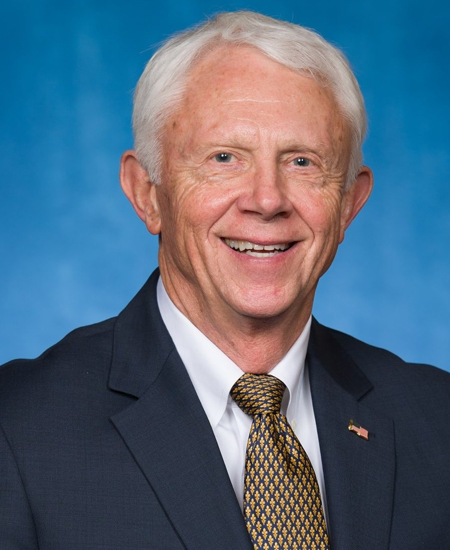
Rep. Jack Bergman
Sponsored bills
Maddy summaryThis bill would require the Attorney General to annually identify state or local governments that fail to comply with federal immigration cooperation laws, such as sharing immigration status information or honoring detainer requests. Jurisdictions found non-compliant would lose eligibility for all federal financial assistance (including grants and programs) for at least one year. The law mandates annual reports to Congress and allows any member of Congress to request compliance reports on specific jurisdictions. It directly affects cities, counties, and states that do not follow federal immigration enforcement directives.
Maddy summaryHR 3780, the Border Operations Service Medal Act, establishes a new service medal for military personnel who served in designated border security operations between January 1, 2025, and the conclusion of those operations. It directly affects active-duty service members, National Guard, and Reserve personnel who participated in these operations. The bill requires the Secretary of Defense to design and issue the medal within 60 days of enactment, authorizing its wear according to standard military uniform regulations. This is a procedural measure to formally recognize service during specific border operations authorized by the President in January 2025.
Maddy summaryThis resolution (HRES 459) is a symbolic gesture recognizing National Poppy Day, observed the Friday before Memorial Day. It supports the tradition of wearing red poppies as a symbol honoring U.S. military veterans who died in service, referencing the historical connection to World War I poetry and veterans' organizations. The resolution encourages all U.S. citizens, residents, and visitors to wear poppies on this designated day to express appreciation for those who died preserving freedom. It does not create new laws, funding, or obligations, but formally acknowledges the poppy's role in commemorating military sacrifice.
Maddy summaryHR 3694, the VALID Act of 2025, requires lenders to include specific information about VA loans in mortgage disclosures. It amends the National Housing Act to mandate that disclosures state the loan-to-value ratio and clarify that VA loans are available under Chapter 37 of Title 38 (veterans' benefits law), assuming prevailing interest rates. The bill also requires the Federal Housing Finance Agency to add a military service question to the Uniform Residential Loan Application form, placing it above the signature line within six months of enactment. This directly affects veterans and active-duty service members applying for VA-guaranteed mortgages, as well as the lenders processing those applications.
Maddy summaryThis bill aims to stabilize rural hospitals by modifying Medicare payment policies. It eliminates sequestration for rural hospitals, reverses bad debt reimbursement cuts for critical access hospitals, and permanently extends payment levels for low-volume and Medicare-dependent hospitals. The bill also makes permanent telehealth enhancements for rural health clinics, restores state authority to waive the 35-mile rule for hospital designations, and creates flexibility grants for rural hospitals to transform services. These changes directly affect rural hospitals, critical access hospitals, and Medicare beneficiaries who face significant barriers to accessing care in rural areas. The bill addresses the closure of 151 rural hospitals since 2010 and the vulnerability of 432 more hospitals, aiming to prevent further loss of critical health care access.
Maddy summaryHR 3697, the RAVES Reporting Act of 2025, requires the Secretary of Defense to conduct a study and publish guidance on converting abandoned rural factories, space centers, and military bases into space-related manufacturing facilities. The study must analyze costs, environmental impacts, workforce needs, funding options, and national security implications for such conversions across rural communities (defined as areas outside cities over 50,000 population). It mandates a report to Congress within one year, covering 14 specific elements including economic impacts, collaboration with community colleges, and AI's role in workforce development. The bill does not create new programs or funding but directs a comprehensive assessment of potential conversions. This affects rural communities with abandoned industrial sites seeking space industry opportunities.
Maddy summaryHR 3656 amends the Agricultural Research, Extension, and Education Reform Act of 1998 to allow the Secretary of Agriculture to waive the matching funds requirement for grants under the Specialty Crop Research Initiative. This directly affects specialty crop researchers and institutions applying for these grants, as they would no longer be required to provide their own matching funds for awards made after the bill's enactment. The key provision adds a new subsection (C) to Section 412(g)(3), authorizing the Secretary to grant waivers for matching funds on a case-by-case basis. The change simplifies funding access for specialty crop research projects without altering the initiative's core purpose. This is a procedural adjustment to grant administration, not a policy change to research priorities.
Maddy summaryHR 3597, the Protecting Circuit Boards and Substrates Act, creates two main incentives to boost domestic production of printed circuit boards and integrated circuit substrates. It provides a 25% tax credit for businesses purchasing US-manufactured circuit boards and substrates, and establishes a federal financial assistance program offering up to $300 million per project (with larger amounts possible with presidential approval) for manufacturing or research and development facilities in the United States. The program prioritizes small businesses, minority-owned businesses, veteran-owned businesses, and projects that expand domestic production capacity or relocate manufacturing from foreign-controlled areas. Recipients must use funds for specific covered incentives like facility construction, equipment, or workforce training programs, with strict clawback provisions for delays or inappropriate technology sharing with foreign entities of concern. The program requires coordination with multiple federal agencies and includes annual reviews by the Government Accountability Office to track outcomes.
Maddy summaryThis bill reauthorizes the VA's suicide prevention grant program for veterans at risk of suicide. It reduces annual grant funding from $750,000 to $500,000 per nonprofit or community organization, adds $10,000 per veteran served, and requires grantees to notify veterans about emergency crisis care options. The bill also mandates quarterly coordination meetings between grantees and nearby VA medical centers within 100 miles. Funding is extended through 2028, with $174 million allocated for 2021-2025 and $157.5 million for 2026-2028.