

Agricultural Fairs Rescue Act This bill directs the Agricultural Marketing Service of the Department of Agriculture to establish a program to award grants to states or state departments of agriculture to provide support to agricultural fairs for losses sustained by such fairs due to COVID-19. As a condition of receiving a grant, recipients shall agree to (1) prioritize supporting agricultural fairs in the state facing the greatest financial hardship, and (2) use not more than 5% of grant funds for administrative costs incurred in providing support to agricultural fairs.
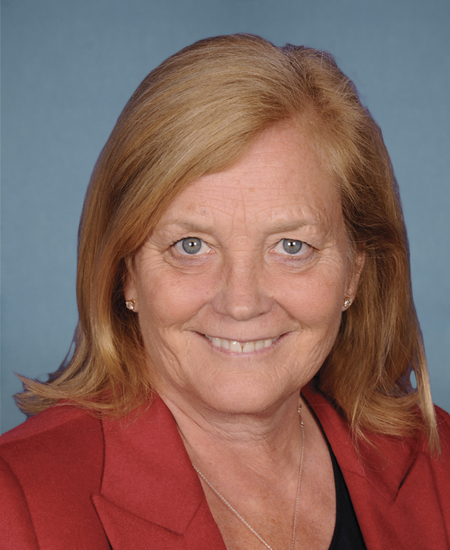
Rep. Chellie Pingree
Sponsored bills
Medically Tailored Home-Delivered Meals Demonstration Pilot Act of 2021 This bill requires the Centers for Medicare & Medicaid Services to establish a demonstration program to allow hospitals to provide medically tailored, home-delivered meals to Medicare beneficiaries who have a diet-impacted disease (e.g., kidney disease) and have daily living limitations. Participating hospitals must (1) retain a physician, registered dietitian or nutrition professional, or clinical social worker to screen, monitor, and coordinate services for individuals who receive meals through the program; and (2) contract with experienced organizations for meal delivery. Hospitals may choose to also provide meals to an individual's primary caregiver or to a dependent under the age of 18 who resides in the same household.
This resolution condemns and denounces the actions of the Customs and Border Patrol agents who confronted Haitian migrants on horseback using their reins as lashes.
ESP Family Leave Act This bill allows education support professionals to meet the hours of service requirements for family and medical leave if they have worked a number of hours equal to not less than 60% of the total monthly hours expected for their job descriptions and duties, as assigned for the previous school year. Education support professionals are employees within a public school or public institution of higher education which may include specified staff, such as paraeducators, administrative support staff, custodians, skilled trade workers, and nursing support staff. The Department of Labor may provide a method for calculating such leave for these professionals.
Tyler Clementi Higher Education Anti-Harassment Act of 2021 This bill addresses harassment at institutions of higher education (IHEs). Specifically, the bill requires each IHE to include in its annual security report a statement of policy regarding harassment on the basis of a student's actual or perceived race, color, national origin, sex (including sexual orientation, gender identity, pregnancy, childbirth, a medical condition related to pregnancy or childbirth, and a sex stereotype), disability, or religion. In addition, the Department of Education may award grants to IHEs to initiate, expand, or improve programs to (1) prevent the harassment of students; (2) provide counseling or redress services to students who have been harassed or accused of subjecting other students to harassment; or (3) educate and train students, faculty, or staff to prevent harassment or address harassment if it occurs.
Securing the Rights our Veterans Earned Act or the SERVE Act This bill provides eligibility for specified Department of Veterans Affairs benefits to former members of the Armed Forces who were separated or discharged (honorably or otherwise) by reason of sexual orientation or gender identity.
Small Farm to School Act of 2021 This bill directs the Department of Agriculture (USDA) to award three-year grants to eight states or tribal organizations to provide school food authorities with an increased reimbursement for free and reduced price lunches that include at least one component that is comprised entirely of locally-produced and unprocessed foods procured directly from certain agricultural producers. USDA must select at least one state or tribal organization located in each of the following regions: (1) the Mid-Atlantic Region, (2) the Midwest Region, (3) the Mountain Plains Region, (4) the Northeast Region, (5) the Southern Region, (6) the Southwest Region, and (7) the Western Region. USDA must give the highest priority to applications that propose to carry out certain projects, including projects that (1) serve a high proportion of children from socially disadvantaged backgrounds, and (2) increase the availability of locally-produced foods to children. Additionally, priority must be given to states or tribal organizations with a high quantity and variety of growers of local fruits and vegetables on a per capita basis, and with a demonstrated commitment to farm-to-school activities. Each state or tribal organization that receives a grant must provide, from nonfederal sources, an amount equal to 100% of the awarded grant amount.
Community Wood Facilities Assistance Act of 2021 This bill makes changes to grant programs administered by the Forest Service to promote wood products. Specifically, the bill reauthorizes through FY2026 and modifies a program that supports capital costs for installing community wood energy systems and building innovative wood products facilities, including by increasing the maximum grant amount per facility. The bill also modifies a program that provides grants to develop and expand the market for innovative wood products. Specifically, the bill (1) modifies the grant priorities, and (2) increases the portion of a project's cost that may be covered by such a grant.
Streamlining Nutrition Assistance Paperwork Act of 2021 or the SNAP Act of 2021 This bill provides statutory authority for a Department of Agriculture (USDA) waiver that allows states to use a written record to document telephonic signatures for Supplemental Nutrition Assistance Program (SNAP) applications. Under current law, states may allow individuals to sign their SNAP applications over the telephone, but states must preserve audio recordings of those telephonic signatures. During the COVID-19 emergency, USDA waived the requirement to preserve the audio recording and allowed states to document the telephonic signatures through written records.
John R. Lewis Voting Rights Advancement Act of 2021 This bill establishes new criteria for determining which states and political subdivisions must obtain preclearance before changes to voting practices may take effect. Preclearance is the process of receiving preapproval from the Department of Justice (DOJ) or the U.S. District Court for the District of Columbia before making legal changes that would affect voting rights. A state and all of its political subdivisions shall be subject to preclearance of voting practice changes for a 10-year period if 15 or more voting rights violations occurred in the state during the previous 25 years; 10 or more violations occurred during the previous 25 years, at least 1 of which was committed by the state itself; or 3 or more violations occurred during the previous 25 years and the state administers the elections. A political subdivision as a separate unit shall also be subject to preclearance for a 10-year period if three or more voting rights violations occurred there during the previous 25 years. States and political subdivisions that meet certain thresholds regarding minority groups must preclear covered practices before implementation, such as changes to methods of election and redistricting. Further, states and political subdivisions must notify the public of changes to voting practices. Next, the bill authorizes DOJ to require states or political subdivisions to provide certain documents or answers to questions for enforcing voting rights. The bill also outlines factors courts must consider when hearing challenges to voting practices, such as the extent of any history of official voting discrimination in the state or political subdivision.